These Miami-Dade teachers are facing a $16,000 pay cut — unless voters step in
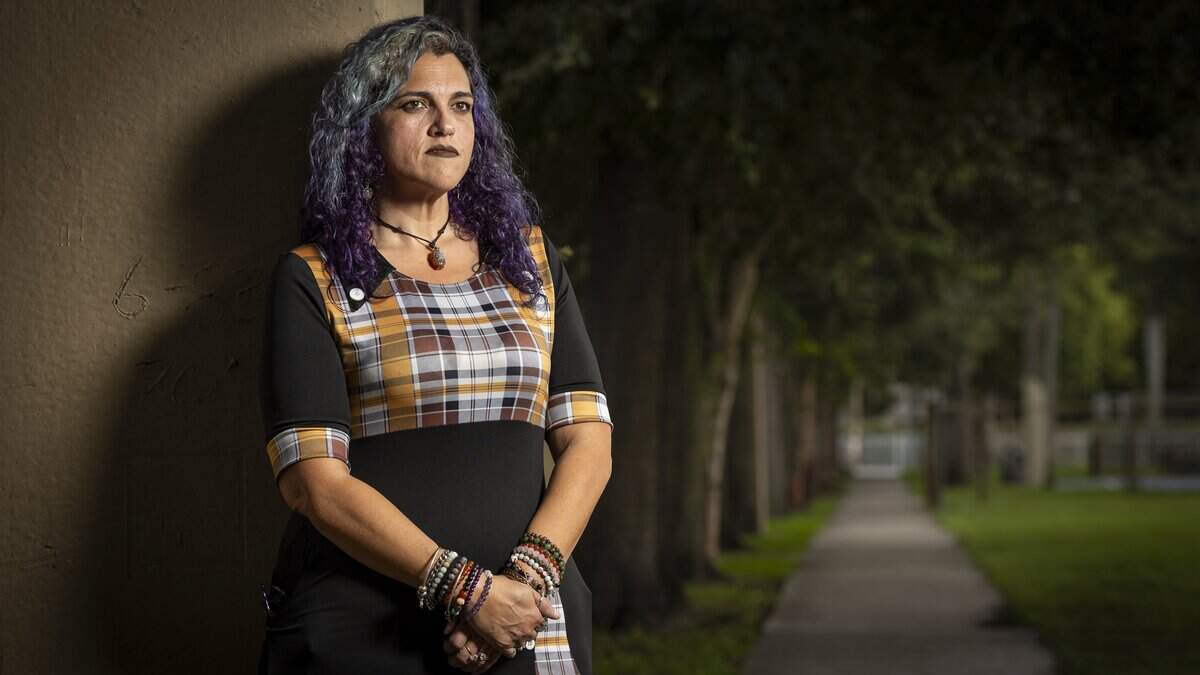
On a recent Wednesday evening, Osmarie Fortich threw back her third coffee of the day as she steeled herself for the two-hour drive home. Her bug-caked sedan testified to her daily 180-mile trek from Clewiston, down through the Everglades, to Hialeah, where she’s a middle school language arts teacher, and back again.
Read more Coral Gables gives $500K for Underline as it prepares to make tough choices ahead
A Miami-Dade County Public Schools educator for 21 years, Fortich moved from Hialeah to the small city on the southern edge of Lake Okeechobee two years ago, when she bought her first home. On her school teacher salary — $72,500 this year — she said it would’ve been impossible to purchase in Miami-Dade, but she’d always wanted to own.
Now she fears she might soon not even be able to afford Clewiston — or teaching.
In November, Miami-Dade voters will be asked to renew a property tax that supplements district teachers’ pay. The levy is one “mill,” which means owners pay a dollar for every $1,000 of their property’s taxable value. The tax was first passed by voters in 2018, then again in 2022, but it needs to be reapproved if the county’s teachers are to keep their current pay.
For the median homeowner, that means forking over $188 a year on their $3,000 tax bill, according to a Miami Herald analysis of Miami-Dade Property Appraiser data. The tax generates more than a half-billion dollars for county public schools, district estimates show, and the vast majority of it supplements the salaries of teachers like Fortich.
Should the referendum fail, Fortich, 47, is facing a $16,000 pay cut, nearly 22% of her total salary.
“I would lose my home. I might lose my car.” Her voice trembled. “I may have to walk away from everything I love and know.”
Of the 126 teachers who filled out a recent Herald survey asking what the loss of the pay supplement would mean for their households, all but five said the impact would be somewhere between bad and disastrous.
Dozens said it would make teaching in Miami-Dade County — already a financially dubious undertaking for many — untenable, a foreboding sign for the district’s future should voters reject the referendum. Fortich foresees a mass exodus of teachers if the supplement isn’t extended.
So does Antonio White, president of United Teachers of Dade, the county’s teachers union.
“If the referendum were to fail, that would be catastrophic to the system,” he said. “Traditional public schools as we know them [would] go into chaos.”
READ MORE: This Miami school tax is up for a vote. A broad, unlikely coalition supports it
Even with the supplement, known as the RRAS (Referendum Retirement Accruing Supplement), Fortich’s finances are flimsy.
She leaves home every day at 6 a.m. to make it in time for first bell. After school lets out at 3:50, she shuttles to one of her side gigs — private tutoring or house cleaning. Most days she doesn’t get home until after 10 p.m.
And three, sometimes four, of those many waking hours are spent in the car — bouncing from home to school to her second or third job and home again — with music at full blast to drown out the babble of anxiety, most of it financial.
“‘How am I gonna pay for this, who am I not paying this week?.… What are we gonna do for Thanksgiving? What am I gonna buy [my granddaughter] for Christmas?’” Fortich is missing a lower incisor, and though she’s scraping together money to fix it, her car’s also nearly 8,000 miles overdue for an oil change.
“It all ties back to money.” She sighed.
And that’s with the teaching supplement. Fortich has already considered leaving the profession — or jumping ship to teach in closer-to-home Lee County, but her job security from so many years in the Miami-Dade County school district has anchored her here.
So have her roots. As she spoke, a tinny rendition of Beethoven’s Für Elise wandered into earshot. “I grew up listening to that.” She laughed and cocked her head to hear. “That’s the sound of the ice cream truck in Hialeah.”
“I’m a Hialeah kid, and my students are Hialeah kids,” she went on. “I had to work two or three jobs to get through school. I know what these kids are going through, and that’s one of the reasons why I love teaching them. Because I know where they come from.”
Read more Miami has universities. Why Ken Griffin bet $2 billion on building a new one
And if she loses the supplement?
Fortich rubbed her eyes, then her temples. “There would be no reason for me to continue this.”
Which seems to be the prevailing sentiment.
Nearly 40% of the 126 respondents to the recent Herald survey of county public school teachers said they might have to leave teaching or Miami-Dade if the salary supplement is not renewed.
Daniel Goodfriend said both. A middle school science teacher of two decades, Goodfriend said losing the supplement would cost him, his wife — a college professor — and their 5–year-old daughter their house.
“I can’t take a 22% pay cut and survive, especially when we’re already just barely treading water.” The couple is still digging themselves out of the debt they took on to send their daughter to preschool.
“Either I would have to find another job that paid more, or we would have to leave South Florida,” said Goodfriend, 50.
Nearly all of the survey’s respondents — 96% — said losing the supplement would be a serious financial blow. The majority said their households, like Goodfriend’s and Fortich’s, are struggling to get by as-is.
To lose the supplement would be “the end of our public school system in Miami,” predicted Goodfriend.
Going into the referendum, both Goodfriend and Fortich are conscious of the fact that affordability is on people’s minds — and that another high-profile property tax question, Florida’s Amendment 3, is on their ballots.
But both are hopeful the local supplement will pass. Voters have weighed the question every four years since 2018, and each time they’ve passed it overwhelmingly.
The tax measure was first proposed eight years ago in response to flagging state funding for public schools. Florida public school teachers are the second-worst paid in the nation, pulling only slightly more than their counterparts in Mississippi, according to the National Education Association.
In Miami-Dade, the for new teachers is $50,150, and it increases slightly with years taught — though not until they have 28 years of experience do district teachers’ base salaries break $60,000.
And while all public school educators receive supplemental pay through the property tax, just how much depends on their tenure. New teachers get $3,000 on top of their base salary, bringing their total take-home pay to $53,159. For reference, a single person with no kids needs to earn at least $54,037 to survive in Miami-Dade, according to MIT’s Living Wage Calculator.
The supplement is greater for veteran teachers, like Goodfriend, whose $16,000 add-on brings his total pay to just under $72,000.
But Miami, which is now costlier than New York and Los Angeles, “is unaffordable for average people,” said Goodfriend.
“I didn’t go into teaching … to get rich, but I didn’t expect to be struggling every day, scrounging every dollar, cutting every corner all of the time, wondering if we’re going to have to move,” Goodfriend said.
“I just would like a middle of the road, middle-class life.”
Austin Horn contributed reporting to this piece.
This story was produced with financial support from supporters including The Green Family Foundation Trust and Ken O’Keefe, in partnership with Journalism Funding Partners. The Miami Herald maintains full editorial control of this work.
Read more Recall of Walmart and Trader Joe’s fruit on E. coli concerns has been expanded










Post Comment