The Jockey Club Releases 2027 Foal Crop Estimate, 2026 Report Of Mares Bred Statistics
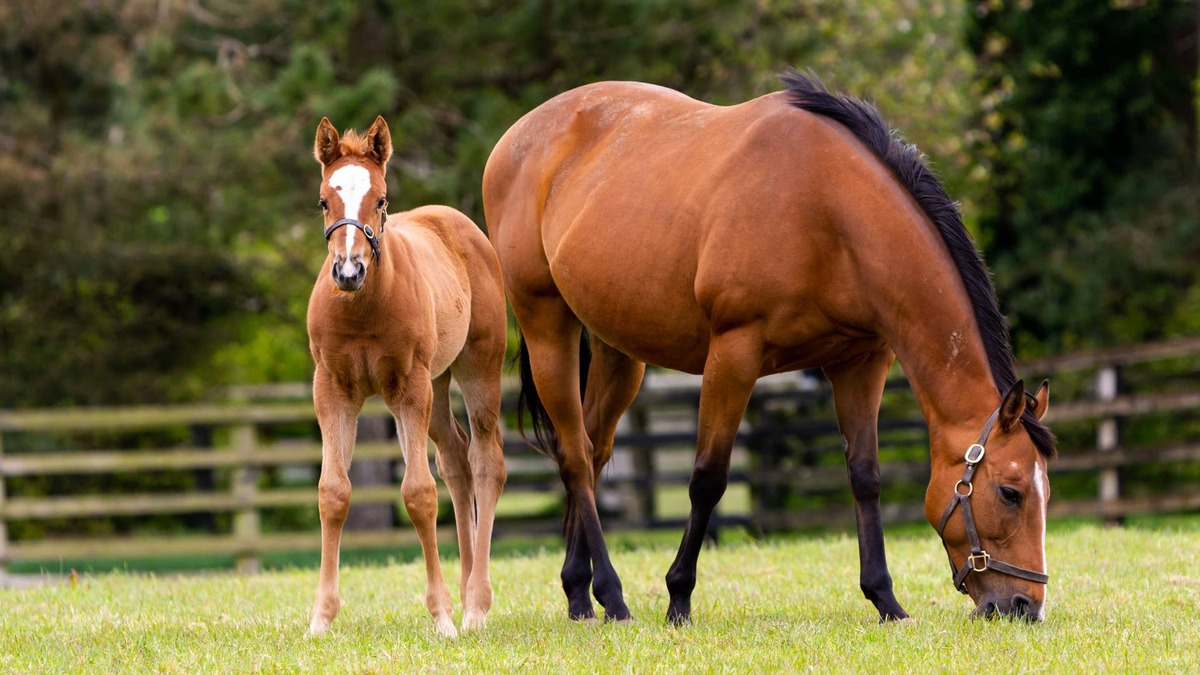
The Jockey Club is projecting a North American registered Thoroughbred foal crop of 16,500 in 2027. For reference, the 2026 foal crop estimate was 17,000.
Read more Kyle Shanahan Reveals What Makes Brock Purdy So Easy to Coach
The foal crop projection is computed by using Reports of Mares Bred (RMBs) received to date for the 2026 breeding season. RMBs are to be filed by Aug. 1 of each breeding season.
For the RMBs received through Oct. 1, 2026, The Jockey Club reports that 670 stallions covered 23,932 mares in North America during 2026.
The Jockey Club estimates an additional 2,000 to 3,000 mares will be reported as bred during the 2026 breeding season.
Of the RMB reports received, 180 mares were part of the Mare Incentive Program, which waives registration fees for certain 2027 foals of mares that meet criteria defined by The Jockey Club. This initiative was announced in December 2024 to stimulate interest in mares that appear to have left production. The report of Mare Incentive Program mares is available through Interactive Registration and is filterable by 12 data elements, including sire, dam sire, age, money earned, and class of race achieved.
The following table shows the number of covering stallions and the number of mares bred over the past five years in North America as reported to The Jockey Club through Oct. 1 of the breeding year.
RMB statistics, sortable by stallion, mares bred, or state, for all reported stallions in 2026 are available through the Fact Book section of The Jockey Club’s website.
Kentucky traditionally leads North America in Thoroughbred breeding activity. During 2026, Kentucky’s 187 reported stallions covered 16,677 mares, or 69.68 percent of all mares reported bred in North America. Data based on stallion location is available in the Fact Book.
The following table shows a segmentation of the number of mares bred by stallion for 2026 as reported to The Jockey Club through October 1, 2026.
The following stallions covered 200 or more mares: Sierra Leone had the highest number of mares bred in 2026 with 293 followed by Tiz the Law (288), Citizen Bull (261), Gun Runner (250), Gunite (236), Not This Time (230), Drain the Clock (227), Locked (226), Vekoma (224), Girvin (223), Golden Pal (221), Practical Joke (219), Corniche (216), Yaupon (214), Barnes (211), Justify (205), and Goal Oriented (201).
In addition, Report of Mares Bred information on stallions that bred mares in North America is available through report 36P or a subscription service at Equineline.com.
Stallion owners who have not returned their RMBs for the 2026 breeding season are encouraged to do so as soon as possible. Interactive Registration, which enables registered users to perform virtually all registration-related activities over the Internet, is the most efficient means of submitting RMBs and is available using Interactive Registration.
Read more Florida State boots top ’26 recruit Chuck Kennon after one snap
The 2025 breeding statistics, which include data for Live Foal Reports for the 2026 foaling season, will be released later this month.
The Jockey Club Insights: What the 2026 Breeding Numbers Tell Us
The Jockey Club has historically released Report of Mares Bred statistics without commentary. This year, alongside the data, we are sharing our view of what the numbers show in an effort to think through new programs and initiatives that can drive meaningful results. Figures in this section reflect mares reported bred in North America through October 1, 2026, compared with the same point in 2025.
North American breeding continued to contract, but the stallion population declined even faster. Through Oct. 1, 23,932 mares were reported bred in North America in 2026, down 3.0 percent from 24,662 at the same point in 2025. Over the same period, the number of reported stallions fell 9.2 percent, from 738 to 670. As a result, the average book size increased from 33.4 mares per stallion to 35.7 mares per stallion, reflecting continued concentration within the breeding market.
|
Through October 1 |
2025 |
2026 |
Change |
|
North American mares bred |
24,662 |
23,932 |
−3.0% |
|
North American stallions |
738 |
670 |
−9.2% |
|
Average book, mares per stallion |
33.4 |
35.7 |
2.3 mares |
|
Kentucky mares bred |
16,370 |
16,677 |
1.9% |
|
Kentucky stallions |
189 |
187 |
−1.1% |
|
Kentucky share of North American mares bred |
66.4% |
69.7% |
+3.3 pct pts |
|
Mares bred outside Kentucky |
8,292 |
7,255 |
−12.5% |
|
Stallions outside Kentucky |
549 |
483 |
−12.0% |
Kentucky continued to gain market share. Kentucky reported 16,677 mares bred, an increase of 1.9 percent from 2025, despite standing two fewer stallions. Kentucky’s share of all North American mares bred increased from 66.4 percent to 69.7 percent, while the average book size rose from 86.6 mares to 89.2 mares. Kentucky now stands just 27.9 percent of North America’s stallions but accounts for nearly 70 percent of all mares bred.
Outside Kentucky, breeding activity declined sharply. Excluding Kentucky, mares bred across North America declined 12.5 percent, from 8,292 to 7,255, while stallion numbers fell 12 percent, from 549 to 483. The data show that virtually all of the contraction occurred outside Kentucky, with many regional breeding programs continuing to face headwinds.
Some major regional breeding jurisdictions declined. California reported a 13.9 percent decline in mares bred and a 14.9 percent decline in stallions. Florida was down 14.6 percnet in mares bred and 22.0 percent in stallions. Ontario declined 23.2 percent, Louisiana fell 43.3 percent, Puerto Rico dropped 32.7 percent, and West Virginia decreased 20.2 percent. These figures illustrate the continuing pressure on many traditional regional breeding programs.
|
Jurisdiction |
2025 mares bred |
2026 mares bred |
Change |
|
Texas |
195 |
94 |
−51.8% |
|
Louisiana |
988 |
560 |
−43.3% |
|
Ohio |
120 |
77 |
−35.8% |
|
Puerto Rico |
260 |
175 |
−32.7% |
|
Ontario |
483 |
371 |
−23.2% |
|
West Virginia |
248 |
198 |
−20.2% |
|
Florida |
1,065 |
909 |
−14.6% |
|
California |
1,267 |
1,091 |
−13.9% |
New York saw growth. New York increased mares bred by 14.2 percent, from 1,119 to 1,278, while stallion numbers increased from 29 to 34. Among major breeding states, New York continues to stand out as a growth market and demonstrates the impact a strong state-bred program can have even amid broader industry contraction.
Several smaller jurisdictions also posted meaningful gains. Oklahoma increased mares bred by 25.8 percent and stallions by 25.0 percent. Virginia more than tripled its mares bred over the last two years and reported a 206.7 percent increase from 2025. Manitoba, Wyoming, Arizona, and Iowa also recorded increases in mares bred. While these jurisdictions represent a smaller share of the overall market, they demonstrate that growth remains possible when breeders have confidence in local opportunities and incentives.
|
Jurisdiction |
2025 mares bred |
2026 mares bred |
Change |
|
New York |
1,119 |
1,278 |
14.2% |
|
Oklahoma |
225 |
283 |
25.8% |
|
Virginia |
30 |
92 |
206.7% |
|
Arizona |
76 |
88 |
15.8% |
|
Manitoba |
56 |
80 |
42.9% |
|
Iowa |
32 |
50 |
56.3% |
|
Wyoming |
22 |
47 |
113.6% |
Why this matters. The industry’s challenge is no longer simply declining foal crops. The data show breeding activity becoming increasingly concentrated in one state and among fewer stallions. A healthy Thoroughbred industry depends on strong regional breeding programs that support local farms, jobs, owners, breeders, and racetracks. Identifying successful state-level initiatives and helping replicate them elsewhere will remain a priority as the industry works to strengthen its long-term foundation.
Leadership to drive state-level growth. That focus is why The Jockey Club created the director of State Breeder and Provincial Programs position, recently filled by Najja Thompson who will join The Jockey Club starting Oct. 28. Najja will work with state breeding organizations, racing associations, and partners to identify the programs and partnerships that are working and to help adapt and expand them in other states. Those who would like to meet with Najja can email [email protected].
Read more Insight, thoughts on the Marlins’ broadcasting dismissals and factors in play
Copyright 2026 The Arena Group, Inc. All Rights Reserved
This story was originally published October 13, 2026 at 10:34 AM.











Post Comment