See if you qualify for car loan relief under Credit Acceptance deal
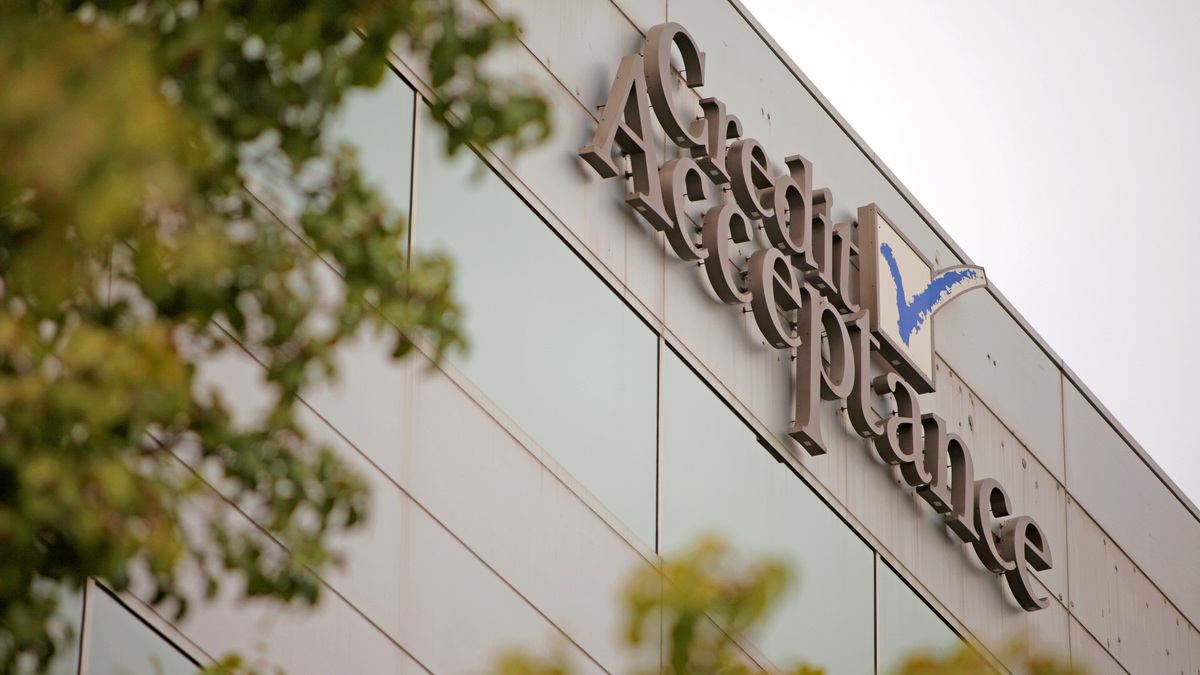
Many Michigan drivers with shaky credit could be eligible for major debt relief under a complex settlement involving a bipartisan coalition of state attorneys general and Southfield-based Credit Acceptance Corp.
Read more Agents say they found Keys man with child porn. They arrested him 3 years later
Credit Acceptance Corp. – one of nation’s largest auto finance companies – made its mark offering auto loans to consumers with bad or limited credit histories who might not qualify for an a traditional car loan.
But regulators charged the 54-year-old auto finance company of making predatory, high-cost deals that set financially vulnerable buyers up to fail. The auto lender specializes in making subprime loans to consumers with low or no credit scores.
The multistate settlement resolves allegations that Credit Acceptance Corp. originated loans that regulators say the company knew or should have known their consumers could not afford.
“Predatory lending practices can pull those already struggling financially into a downward spiral of inescapable debt,” said Michigan Attorney General Dana Nessel in a statement.
Nessel announced that Michigan entered into the settlement, along with attorney generals for 40 other states, including the District of Columbia, that provides $694 million in cash and debt relief to eligible consumers in connection with their subprime car loans.
Michigan will receive $790,474 from the settlement.
About $70.3 million in debt forgiveness in total will be provided to eligible Michigan borrowers who had these questionable car loans, according to the Michigan AG’s office.
In entering into the agreements, the Credit Acceptance made no admission of wrongdoing or liability, according to its filing with the Securities and Exchange Commission.
“Credit Acceptance is pleased that the resolution provides greater clarity to industry participants regarding regulatory expectations and allows the management team to focus on serving customers, supporting dealer partners and executing the company’s long-term strategy,” according to a statement in its press release dated Sept. 17.
What car buyers might qualify for relief
As part of the terms, Credit Acceptance will pay $60 million for remediating alleged consumer losses, according to the company.
Certain risky loans were made from Nov. 1, 2015, through Nov. 30, 2025. As part of the settlement, consumers who took out certain loans during this time frame and ended up seeing their cars repossessed could be eligible for $388 million in debt relief nationwide, according to the Michigan AG.
Another $246 million in debt relief would be available to consumers nationwide who did not have their cars repossessed but received the risky loans. Theoretically, debt relief would allow those consumers to keep their cars.
Consumers eligible for debt relief will be notified by Credit Acceptance Corp. Consumers eligible for restitution will be notified by a settlement administrator.
Credit Acceptance Corp. also must pay an additional $15.5 million to the attorneys general, according to the company.
A spokesperson for Credit Acceptance told the Detroit Free Press that “Credit Acceptance has not modified the terms of customers’ existing contracts, and the settlement does not require us to do so.”
“The settlement does provide for partial forgiveness of deficiency balances for certain eligible accounts originated on or after Dec. 1, 2025, if the conditions specified in the settlement are met,” according to Credit Acceptance.
The settlement does not specify the number of Michigan consumers who may ultimately receive relief, according to Credit Acceptance. “Eligibility determinations and administration of certain settlement benefits will be handled pursuant to the settlement process,” according to the company’s spokesperson.
Under the settlement, regulators said Credit Acceptance will provide “off ramps” for some loans that fail quickly.
This relief will apply to consumers with certain risky Credit Acceptance loans that were made beginning in December 2025.
Qualifying consumers, according to the Michigan AG’s office, will get 95% debt relief. In addition, Credit Acceptance will be prohibited from filing collections lawsuits against these consumers. Credit Acceptance must provide these “off ramps” for a five-year period starting on Nov. 2.
The company stated that the agreements require Credit Acceptance for five years to implement changes to its debt-collection practices for consumer loans originated after Dec. 1, 2025, that meet specified criteria.
For seven years, according to the Michigan AG’s office, Credit Acceptance must institute a price cap for vehicle prices at 109% of retail book value for certain consumers. The company also must implement processes to prevent dealers from raising car prices due to credit worthiness or above advertised prices.
Under the settlement, Consumer Acceptance Corp. is required to provide consumers disclosures about loan risks.
Why some of these loans grew so burdensome
Part of the problem was that consumers weren’t just covering the cost of the car or truck when they took out these loans.
Many times, according to regulators, dealers would pack auto-loan contracts with Credit Acceptance Corporation with costly, unwanted add-on products, such as vehicle service contacts and guaranteed asset protection products that drove up overall borrowing costs.
The vehicle service contract would promise to repair or replace certain parts, and a guaranteed asset protection product or “GAP” would cover the amount borrowers owe after an insurance payout if the used car or truck is stolen or totaled in an accident.
The attorneys general alleged that the Credit Acceptance Corp.’s method for compensating dealers, as well as a lack of reasonable dealer oversight, encouraged participating dealers to aggressively sell such add-on products with loan packages.
Read more Agents say they found Keys man with child porn. They arrested him 3 years later
In many cases, according to the Michigan AG, consumers were either unaware they were buying the add-on products, or some were even led to believe that they were required to buy the add-ons if they wanted any financing.
The settlement mandates procedures to protect consumers from getting hit with similar deceptive practices, including a process to cancel such agreements involving add-ons.
Credit Acceptance noted in its press release that these requirements are “broadly consistent” with its focus and do not fundamentally alter the company’s business model.
Credit Acceptance notes online that its lending programs enable participating dealers to approve potential buyers that other dealers cannot approve – including customers on fixed incomes, first-time buyers, and customers with poor, limited or no credit, as well as buyers who had experienced previous car repossessions.
The company says it offers dealers financing programs that enable them to sell vehicles to consumers, regardless of their credit history.
“This resolution provides certainty for our business, our dealer partners and the customers we serve. We believe the provisions we agreed to are constructive, customer-focused and consistent with the direction of regulatory expectations in our industry,” according to a statement by Vinayak Hegde, chief executive officer of Credit Acceptance.
He noted that the resolution allows the company to continue “helping consumers who may have limited financingoptions obtain access to reliable transportation and the opportunity to improve their financial lives over time.”
The auto financing company noted in its statements that the resolution ends the litigation filed by the New York Attorney General in the United States District Court for the Southern District of New York in 2023 and resolves the multistate investigation initiated in 2020.
How the case against Credit Acceptance evolved
In January 2023, New York Attorney General Letitia James and the Consumer Financial Protection Bureau jointly sued Credit Acceptance Corp. saying it deceived thousands of low-income New Yorkers into risky, high-interest car loans, which included these costly add-ons.
In 2023, Credit Acceptance defended its practices in a short statement given to the Detroit Free Press: “Credit Acceptance operates with integrity and believes it has complied with applicable laws and regulations. We believe the complaint is without merit and intend to vigorously defend ourselves in this matter.”
A few years later, several major lawsuits initiated by the Consumer Financial Protect Bureau on behalf of consumers, including the one targeting Credit Acceptance Corp., ended up being dropped by the federal agency. .
President Donald Trump’s second administration launched a massive rollback in 2025 on many CFPB actions, which many financial powerhouses applauded. The American Financial Services Association, for example, said in April 2025 that it was pleased that the CFPB dropped its lawsuit against Credit Acceptance Corp., calling the litigation a clear overreach of a government agency.
Celia Winslow, president and CEO of the AFSA, said in a statement then: “Continued pursuit of this action would have limited the availability of auto financing and deprived those most in need of financing from being able to acquire the cars they need to get to school and work.”
And yet, it begs the question: If you take on a car loan with terms that are so predatory that you’re likely to see that car repossessed, how do you get to work anyway?
One issue raised by regulators involved a proprietary scoring method used by Credit Acceptance that essentially predicted how much a borrower was likely to repay. In some cases, the Michigan AG’s office noted, the score model predicted that some consumers would not pay back even the loan’s principal loan amount.
“Unsurprisingly, many of those low ‘score’ loans resulted in consumers defaulting on their loans and losing their cars when they were repossessed and sold at auction,” according to the Michigan Department of Attorney General.
The interest rate charged on many loans in the CFPB case was often around 22%, according to the 2023 joint complaint by the federal consumer watchdog agency and the New York Attorney General.
The company notes that interest rates vary based on numerous factors, including applicable state law, the customer’s credit profile, the vehicle being financed, and other transaction-specific factors.
“The settlement does not require changes to our underwriting methodology, and we intend to continue providing financing options to consumers across the credit spectrum,” according to a Credit Acceptance spokesperson.
While the federal government agency permanently dismissed the lawsuit in 2025, the Office of the Attorney General in New York continued the case.
Tara Mikkilineni, who had served as a senior enforcement official at the CFPB until 2025, said in a statement that building a business model that essentially puts some borrowers into car loans they cannot afford is harmful from a financial and practical standpoint.
“A car isn’t a luxury – it’s how people get to work, to school, to the doctor,” said Mikkilineni, who is now a senior fellow at Protect Borrowers, a nonprofit advocacy organization that fights against predatory lending.
Mike Pierce, executive director at Protect Borrowers, once again criticized the Trump administration for letting companies off the hook even as attorneys general from both parties are holding them accountable.
“Dozens of attorneys general found that Credit Acceptance took advantage of people living paycheck to paycheck -desperate for a car – driving them deeper and deeper into debt they couldn’t afford,” according to Pierce.
Contact personal finance columnist Susan Tompor: [email protected]. Follow her on X @tompor.
This article originally appeared on Detroit Free Press: See if you qualify for car loan relief under Credit Acceptance deal
Read more Extreme overcrowding and abuse plague Florida ICE facilities, whistleblowers say
Reporting by Susan Tompor, Detroit Free Press / Detroit Free Press
USA TODAY Network via Reuters Connect
Copyright Reuters or USA Today Network via Reuters Connect
This story was originally published September 21, 2026 at 6:11 PM.











Post Comment