School choice is thriving in Miami-Dade, but who gets left in dying schools? | Opinion
Miami-Dade’s public schools are shrinking. There are some well-known reasons for that: families having fewer children or leaving the county. But it’s also clear that increased competition from other education options also plays a key role in the loss of 90,000 students attending traditional schools since 2012
Read more Man arrested after flying from Jamaica with bag of stolen credit cards, feds say
For the advocates of Florida’s school choice programs, the dwindling public school numbers offer some validation: When given the option, many parents opt out of their neighborhood school and send their children to a different public school, a charter or a private school on a state-funded voucher because they think their children will get a better or more specialized education at a school beyond the usual boundaries. That makes sense.
But one point gets less attention: the students who are left behind in shrinking public school districts, especially those from less affluent homes with parents who are less involved and perhaps likely to shop around for different options.
American public education is supposed to offer children an equal footing, educating the citizenry regardless of socio-economic background. Florida believes it can achieve that, in part, through privatization, including universal vouchers that use taxpayer dollars to pay for tuition at private schools.
One big drawback: Those schools don’t have to follow the same academic standards as their public counterparts, including the requirement that teachers be certified.
Florida Republican leaders have said that competition will make education better. That may be so for some. But could it also make it worse for others?
If public schools were part of the free market, this would be simple. Schools that attract students with prestigious programs would survive. Those that didn’t would close or consolidate — as nine already did in Miami-Dade this year.
But this is not just a supply-and-demand equation. Florida could be making a grave mistake by looking at parents merely as customers. The expansion of vouchers, in particular, creates the possibility that two separate educational systems, under different rules and standards, are emerging — one boosted and another left to languish.
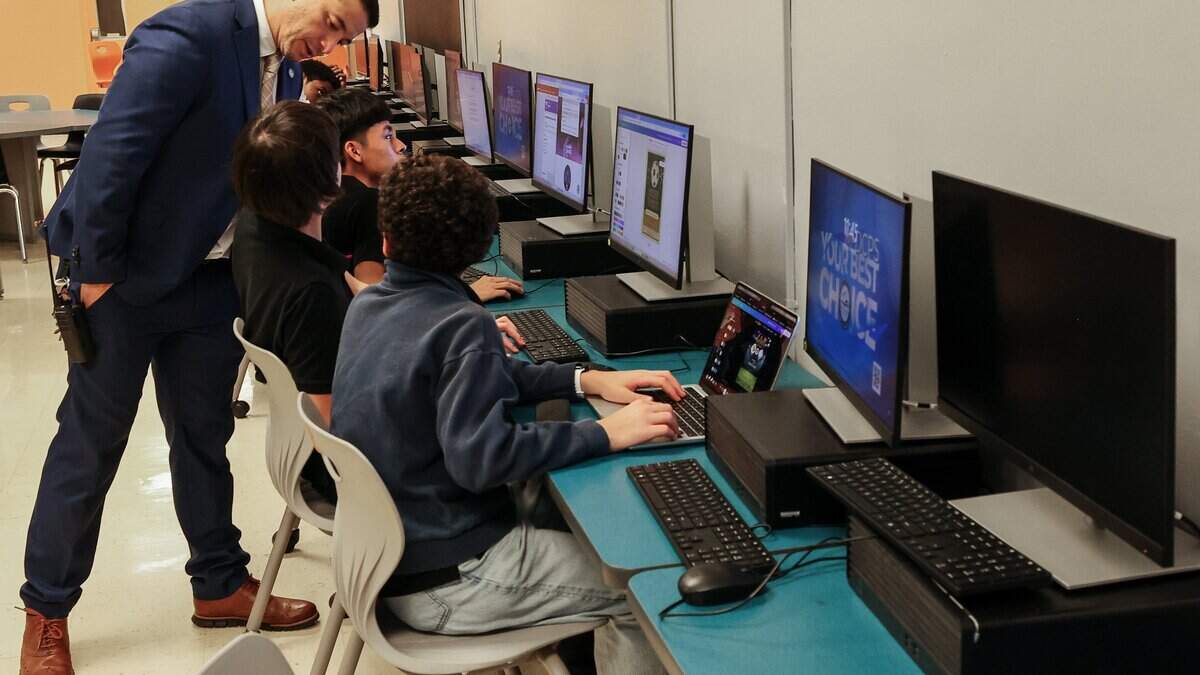
Some schools are already falling behind the competition. At Miami Killian Senior High in Kendall, enrollment plummeted from 3,700 students in 2004 to only 430 this year. That was the focus of a recent Herald story about Killian’s attempt to survive by creating a business-of-sports magnet program that we hope succeeds.
Although vouchers to attend private schools have grown in popularity, Killian is losing students to other public schools. More than 3,000 students live within the high school’s attendance boundaries, but three different public high schools — Coral Reef Senior High, Terra Environmental Research Institute and Palmetto Senior High — each enroll more students from within Killian’s boundary lines than Killian itself, the Herald reported.
Since 2017, Florida has required school districts to let families enroll their children in that has space for them, and, in 2025, the Miami-Dade School Board made it even easier for parents to bypass their neighborhood schools.
Read more Erika Donalds wants more AI in Florida classrooms and fewer laws slowing it down
Those decisions created flexibility and fairness we agree with. A student’s educational opportunities should not be determined by where they live. And, as the Killian example shows, parents have taken advantage of this freedom. We can see why: Coral Reef High, Terra and Palmetto High all score above average on most state assessments, according to the Herald. Killian had below average test scores, though it maintains a B rating overall.
This may be natural selection: parents electing schools with better outcomes. But the danger — and potential unfairness — lies in the possibility that higher performing students are flocking to the same schools while their lower-performing peers stay behind. A student’s ability to attend a different school than the one they are assigned to rests heavily on having parents invested in their education. Unfortunately, not all children have that.
Supporters of vouchers and the expansion of charter schools will argue that’s exactly why Florida has expanded charters and funding for students who wish to attend private schools: so that children don’t have to be confined to lower-performing traditional public schools. Certainly, the rising numbers of vouchers used in Miami-Dade shows there’s an appetite for school choice.
Where there’s competition, there are winners and losers, but in public education we shouldn’t accept that the losers are children.
BEHIND THE STORY
MORE
What’s an editorial?
Editorials are opinion pieces that reflect the views of the Miami Herald Editorial Board, a group of opinion journalists that operates separately from the Miami Herald newsroom. Miami Herald Editorial Board members are: opinion editor Amy Driscoll and editorial writers Isadora Rangel and Mary Anna Mancuso. Read more by clicking the arrow in the upper right.
What’s the difference between an op-ed and a column?
Op-Eds, short for “opposite the editorial page,” are opinion pieces written by contributors who are not affiliated with our Editorial Board.
Columns are recurring opinion pieces that represent the views of staff columnists that regularly appear on the op-ed page.
How does the Miami Herald Editorial Board decide what to write about?
The Editorial Board, made up of experienced opinion journalists, primarily addresses local and state issues that affect South Florida residents. Each board member has an area of focus, such as education, COVID or local government policy. Board members meet daily and bring up an array of topics for discussion. Once a topic is fully discussed, board members will further report the issue, interviewing stakeholders and others involved and affected, so that the board can present the most informed opinion possible. We strive to provide our community with thought leadership that advocates for policies and priorities that strengthen our communities. Our editorials promote social justice, fairness in economic, educational and social opportunities and an end to systemic racism and inequality. The Editorial Board is separate from the reporters and editors of the Miami Herald newsroom.
How can I contribute to the Miami Herald Opinion section?
The Editorial Board accepts op-ed submissions of 650-700 words from community members who want to argue a specific viewpoint or idea that is relevant to our area. You can email an op-ed submission to [email protected]. We also accept 150-word letters to the editor from readers who want to offer their points of view on current issues. For more information on how to submit a letter, go here.
Read more Detectives ID killer in the 1973 murder of two sisters in the Florida Keys









Post Comment