Salazar’s biggest donor accused in Honduras of environmental crimes, corruption
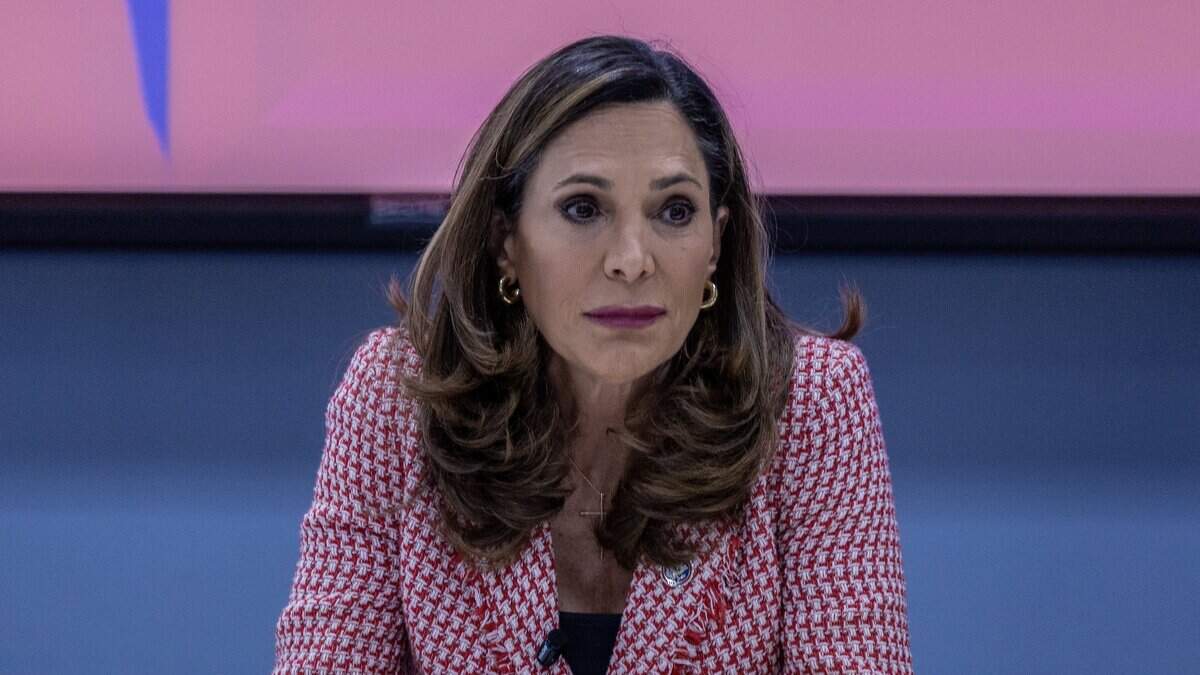
Miami Republican Rep. María Elvira Salazar’s largest campaign donor this election cycle is Lenir Pérez, an industrial titan in Central America charged with environmental crimes in Honduras.
Read more Report: Bears TE Cole Kmet (knee) likely out for season
He has been accused of overseeing a mine and an ore processing plant that, under his leadership, illegally exploited mineral and forest resources in the Carlos Escaleras Mejía National Park in the northern part of the country, according to charging documents.
The site, named Los Pinares, has been at the center of controversy for over a decade. Local communities and environmental groups oppose the open-pit iron oxide excavation, whose permits, they say, should never have been granted. At least five local environmental activists and a Catholic human rights leader opposing the mine have been shot dead since 2019.
Campaign finance records show Pérez — who maintains his innocence — has contributed a total of $105,000 to Salazar’s joint fundraising and leadership political committees this year, plus an additional $7,000 to her candidate committee on May 5. He also contributed $88,000 to the National Republican Congressional Committee that day.
Later that week, he touted hosting Salazar at his sprawling $10 million equestrian estate in Wellington, which the FBI raided in 2023. He posted a photo of the two of them together on social media. The president of the National Congress of Honduras, Tomás Zambrano, also posted photos on Facebook with Salazar at what appeared to be the same event.
The Honduran National Congress approved a decree in 2024 reversing previous state actions that opened the door to mining in Carlos Escaleras Mejía National Park. Environmentalists have expressed concerns, however, that the law won’t be enforced against Pérez under the country’s conservative National Party, of which Zambrano is a member. He was sworn in as congressional leader earlier this year.
Salazar, who has used her position as chairwoman of the U.S. House Western Hemisphere Subcommittee to wade into Honduran politics, did not respond to questions from the Miami Herald about her conversations with the men at Pérez’s home. Pérez has also touted meetings with the U.S. Department of State officials in recent months.
The Herald sent requests for comment to her office and her communications director, and called and texted her on her cell phone. Salazar is locked in a competitive campaign against Democrat Eliott Rodriguez to represent Florida’s 27th Congressional District, which encompasses Coral Gables, South Miami, Pinecrest and Palmetto Bay.
Neither Pérez nor Zambrano answered questions about what they discussed, or what motivated Pérez to invest so heavily in her race. Billionaire financier J.W. Childs is the only other donor matching Pérez’s $112,000 to Salazar this cycle, according to federal campaign finance records.
Pérez’s Wellington home was “raided by the FBI” in April 2023, according to , who believe it was part of a federal probe into an American steel giant that was allegedly doing business with Los Pinares. News cameras showed FBI and Palm Beach County Sheriff’s Office agents at the property.
The 2024 indictment against Perez from Honduras’ special environmental prosecutor’s office was obtained and shared with the Miami Herald by Honduran investigative news outlet Contracorriente, which first reported Pérez’s contributions to Salazar’s reelection campaign.
Legal scrutiny in Honduras
Little is publicly known about Pérez’s past beyond his modest beginnings.
In his telling, Pérez arrived in Tocoa, a major commercial city in northern Honduras, in 2002, when his construction company was employed for a job on a farm then run by Corporación Dinant. The company was founded by the late industrial magnate Miguel Facussé, whose daughter Pérez later married.
Read more Thoughts, postscripts on Aikman-Buck tension; Watt promotion; and NFL TV changes
From that foothold, Pérez built Grupo Emco Holding, a multinational conglomerate spanning mining, airports, energy and logistics. Much of the company’s business came from government leases to run public projects under the administration of former Honduran president Juan Orlando Hernández, who was later extradited to the U.S. and sentenced in 2024 to 45 years in prison for cocaine-trafficking. President Donald Trump pardoned him last year.
What made Pérez a household name in Honduras was the Los Pinares project.
In 2011, the Honduran government designated around 250,000 acres of forest in the north of the country as a protected national park and named it after Carlos Escaleras Mejias, an environmentalist killed in 1997 during a conflict over a palm oil extraction plant owned by Facussé. In 2013, Pérez requested permission to explore a part of the park for iron oxide. Honduran lawmakers redrew the park’s boundaries that December so he could proceed.
Local communities and environmentalists resisted the move. Petition campaigns, demonstrations and clashes between the protesters and police followed. At least five of the leaders of the movement against the mine were shot and killed under mysterious circumstances between 2019 and 2024 — part of a broader pattern of violence in the country against environmental activists.
The most recent assassination was that of Juan Antonio López, a municipal councilman and the local Catholic bishop’s aide. López was gunned down as he left church on the night of Sept. 14, 2024. Earlier that year, he had successfully led a movement that forced the Honduran congress to revert the national park back to its original boundaries and deny extensions to the licenses to excavate the region.
Ten days after López’s killing Honduran prosecutors charged Pérez and others of flouting environmental laws in the Los Pinares site from around 2013 to May 2021 by operating in areas beyond the limits of what had been permitted.
López’s murder sparked global outcry, with Pope Francis, the United Nations and the human rights arm of the Organization of American States condemning the incident and calling for an independent investigation.
In September last year, three Democratic lawmakers wrote to Secretary of State Marco Rubio about the killings of the activists opposing Pérez’s project, describing their deaths as part of “a broader pattern of corruption and impunity in cases linked to powerful corporate and political interests.”
They wrote that Pérez and his wife, Ana Facussé, “have repeatedly been accused by local communities and both national and international human rights organizations of corruption, involvement in violent land conflicts, unlawful influence over the judicial system, and ties to drug trafficking.”
Those lawmakers noted that defenders of the national park “have been subjected to persistent harassment, criminalization, and assassination,” and called on the U.S. State Department to work to guarantee the safety of the activists and pressure the Honduran government to protect the national park.
The former mayor of the region where the mine is located was arrested in Honduras on May 12 this year — the same week as Pérez’s contributions to Salazar — for his alleged involvement in López’s killing. Some local environmental groups have called for Pérez to be indicted in that case as well, but there has been no formal connection between Pérez and the killings of the activists.
Pérez has denied any wrongdoing. His company has long argued that its operations are environmentally responsible and it brings jobs in an underdeveloped region.
Read more Why the Jets game offers a chance for young Dolphins to show growth
His environmental crimes case is ongoing.







Post Comment