‘Really gross’: Miami Beach hopes to restore a waterway so filthy it’s been closed for years
North Beach’s Park View Island neighborhood is a tucked-away coastal gem — but its defining canal has been plagued by poop for years.
Read more What’s next for Alexander brothers? Twins face Miami-Dade rape charges
A new cleanup pilot might finally get people safely back in the water.
“People live on the water,” Miami Beach Commissioner Alex Fernandez said. “They pay to be on the water, yet they can’t touch the water.”
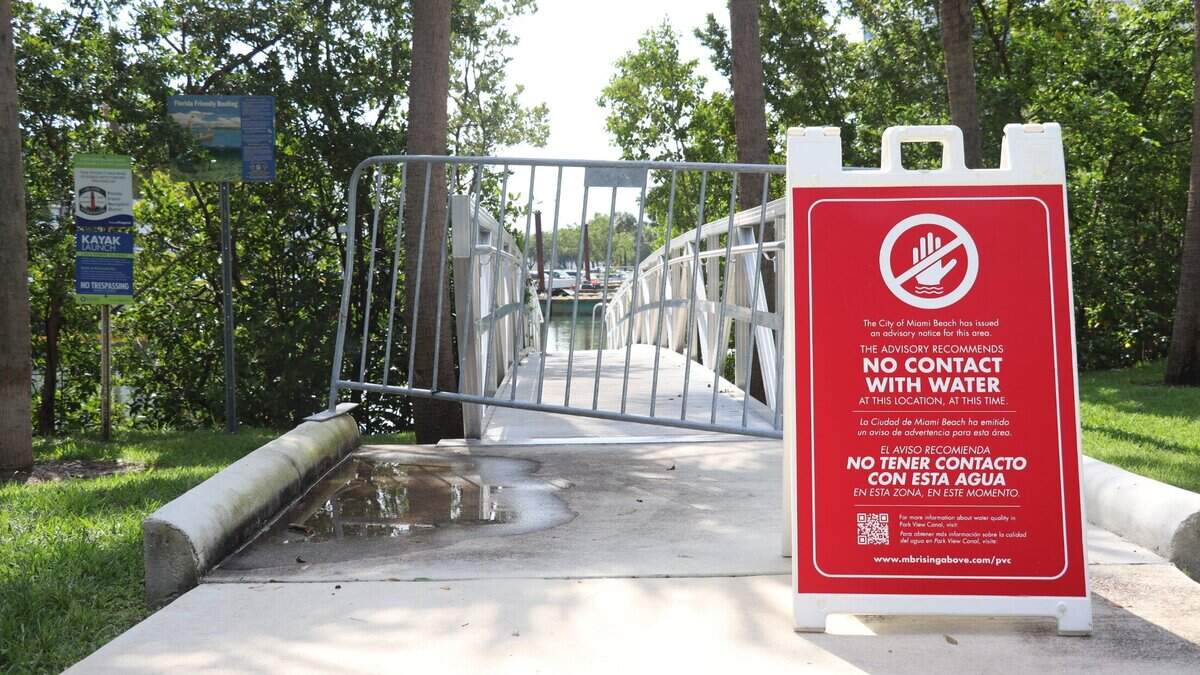
Park View Canal is located in a park at 73rd Street and Dickens Avenue within the Tatum Waterway. The canal has been under a “no contact advisory” for its public kayak launch and surrounding waters since March 2020. But the city of Miami Beach has hopes that the introduction of tiny oxygenated bubbles, which are around 2,500 times smaller than a grain of salt, may be the answer to fecal contamination in the waterway.
The technology is a cleanup machine that can inject bubbles into bodies of water that stay suspended rather than rising to the surface and bursting. The bubbles deliver oxygen and other gases that naturally purify water and eliminate bad bacteria.
This month, the Miami Beach City Commission approved a more than $1 million purchase of nanobubble technology from Moleaer Inc. to restore the Park View Canal. People might be swimming, kayaking and otherwise spared from the stench as early as next year if this “very promising solution” goes as expected, according to Fernandez.
The Park View Canal has been among the most polluted waterways in Miami Beach for years, with extremely high levels of fecal-indicator bacteria known as enterococcus bacteria — “a fancy term for poop,” Fernandez said.
Park View Canal has been a major priority for the city, which has invested millions of dollars to improve infrastructure in the area, city spokeswoman Melissa Berthier said in a statement. There have been two independent studies by the University of Miami that found the primary driver of high enterococci levels is rainfall picking up land-based pollutants that discharge to the canal through the stormwater system, she said.
In May, the environmental nonprofit Surfrider Foundation released its annual Clean Water Report, finding that Park View Kayak Launch in Miami Beach was among the nation’s top 10 beach bacteria hot spots. Park View Kayak Launch, which has been on the top 10 list since 2021, reached a high bacteria rate of 92%, the third highest in the country, according to the report.
The city of Miami Beach has already implemented measures such as relining sewage lines to prevent leaks, but the water-quality issue persists, Fernandez said, adding that the “single most important” goal of the cleanup efforts is to lift the no-contact water advisory.
Read more Racist chats, expulsions and free speech: FIU trial gets under way in Miami
An agreement should be reached with Moleaer by the end of the year, Fernandez said. It will likely take a few months for the company to build and deliver the machine. Once nanobubbles begin pumping into a body of water, people typically start to notice a reduction in muck accumulation, fecal indicators, odor and algae within six to 12 months, he said.
Leigh-Anne Krometis, a professor of biological systems engineering at Virginia Tech, said enterococcus bacteria naturally occurs in the intestines of warm-blooded animals. When researchers find consistent, high levels of the bacteria in water, such as in the Park View Canal, it can suggest fecal contamination from a range of animals, including dogs, seagulls and even humans, she said.
“It’s basically like an open sewer,” Krometis said.
Those who swim or kayak in poop-filled waters can experience gastrointestinal illnesses, respiratory distress, and ear and skin infections, she said. For example, some people developed sepsis after wading through sewage-filled waters during Hurricane Katrina. People who get water from the Park View Canal in their eyes, ears, mouth or open wounds might experience similar issues, “which is really gross,” Krometis said.
“Wading through open sewage … zero stars,” she said. “Do not recommend.”
Studies have confirmed that the city’s sanitary sewer system is not a contributor to the canal’s challenges, and Miami Beach does not have septic tanks, said Berthier, the city spokeswoman.
“Per the Florida Department of Health Healthy Beaches Program, Miami Beach has excellent swimmable beaches,” Berthier said. “Water quality challenges are common in urban canals in South Florida. Park View Canal is characterized as a narrow, shallow, and low flushing (slow moving water) canal.”
Omar Jimenez, a North Beach resident who founded an advocacy group called the Park View Island Sustainable Association, said he misses the days when he was able to jump into his kayak and take it out in the canal after work. It put a damper on his and other locals’ daily lives when they lost access to the water in their neighborhood, he said.
Some residents have concerns that the nanobubble technology doesn’t address the root causes of fecal contamination, serving as a short-term solution to a multifaceted, long-term problem, Jimenez said. He also worries the canal will only improve temporarily while the technology is in use. That said, it would be a win if people could enjoy the canal again, he said.
“I bought a waterfront home because I wanted to enjoy a waterfront-living lifestyle,” Jimenez said.
Read more How Black Yacht Day is building community on the water in Miami
This story was originally published October 28, 2026 at 11:47 AM.









Post Comment