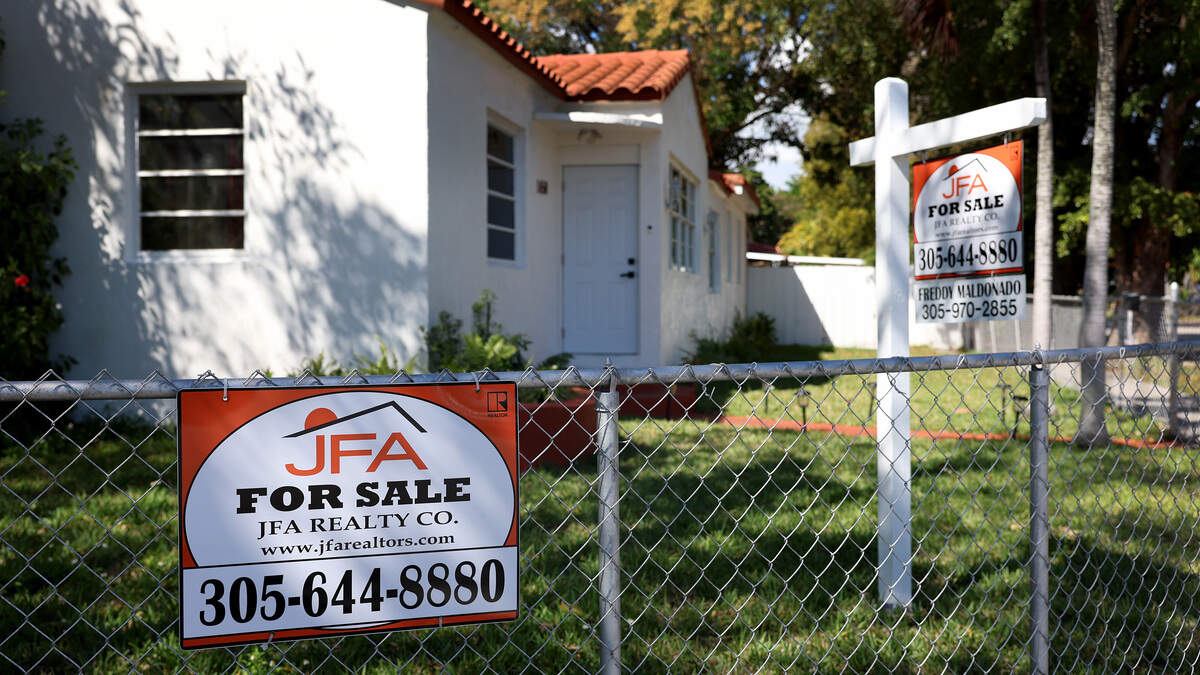
Prices are up for food and gas. What does that mean for Miami homebuyers?
While rising prices at the pump and grocery checkout might give you sticker shock, home prices — especially for middle-income buyers in South Florida — could remain high, at least for now.
Read more Coast Guard takes six people back to Cuba from two separate interceptions
Inflation figures released Wednesday paint a picture of an economy in which consumer prices, particularly for energy, are surging largely due to the war with Iran.
That makes the Federal Reserve even more likely to raise interest rates before the end of the year, meaning mortgage rates — which already sit north of 7% — are less likely to come down in the near term, warned Ana Bozovic, a broker and founder of Analytics Miami, a local real estate market analysis firm.
How did prices change?
Energy costs hit the hardest with gasoline prices up 9% in September alone and 34% over the last year. Driven by rising energy prices, the cost of plane tickets has jumped more than 22% since September 2025, while electricity, a big bill in air-conditioned South Florida, is up 4.4% this year.
Food costs went up 2.5% on the year — an increase that’s lower than overall inflation. The prices of some goods, like medical products and used cars, dropped slightly.
The inflation numbers, overall up 3.7% over this time last year, complicate an already tricky economic landscape for the Federal Reserve, and, in turn, South Florida homebuyers.
Just two weeks ago, the Bureau of Labor Statistics announced that unemployment had increased in September, giving house shoppers reason to hope the Fed wouldn’t raise borrowing costs.
Read more NFL responds to Mike Tirico’s proposal to change how the league schedules games
No longer.
More than 90% of traders now see a rate hike as likely before the end of the year, with 3 in 10 saying it could be as high as half a percentage point, according to financial firm CME Group.
So, South Florida house hunters, especially first-time and middle-income buyers, might find themselves kicking contract signings down the road. When mortgage rates go up — as they do when interest rates jump — people become less likely to buy, and if they own, they become less likely to sell, Bozovic said.
And elevated borrowing costs, especially over long periods of time, can slow building, stiffening supply in an already squeezed Miami housing market and making buying even less affordable for many, she added.
Who won’t be affected by higher rates? Wealthier buyers who purchase homes in cash, said Bozovic.
“Really it’s just further pressure on the price attainable” — that is, affordable — “portions of the market.”
This story was produced with financial support from supporters including The Green Family Foundation Trust and Ken O’Keefe, in partnership with Journalism Funding Partners. The Miami Herald maintains full editorial control of this work.
Read more Pastor accused in Haiti president’s murder was sidelined by plotters, defense says
This story was originally published October 14, 2026 at 3:34 PM.










Post Comment