Pressure mounts on city of Doral to call quits on its policing agreement with ICE
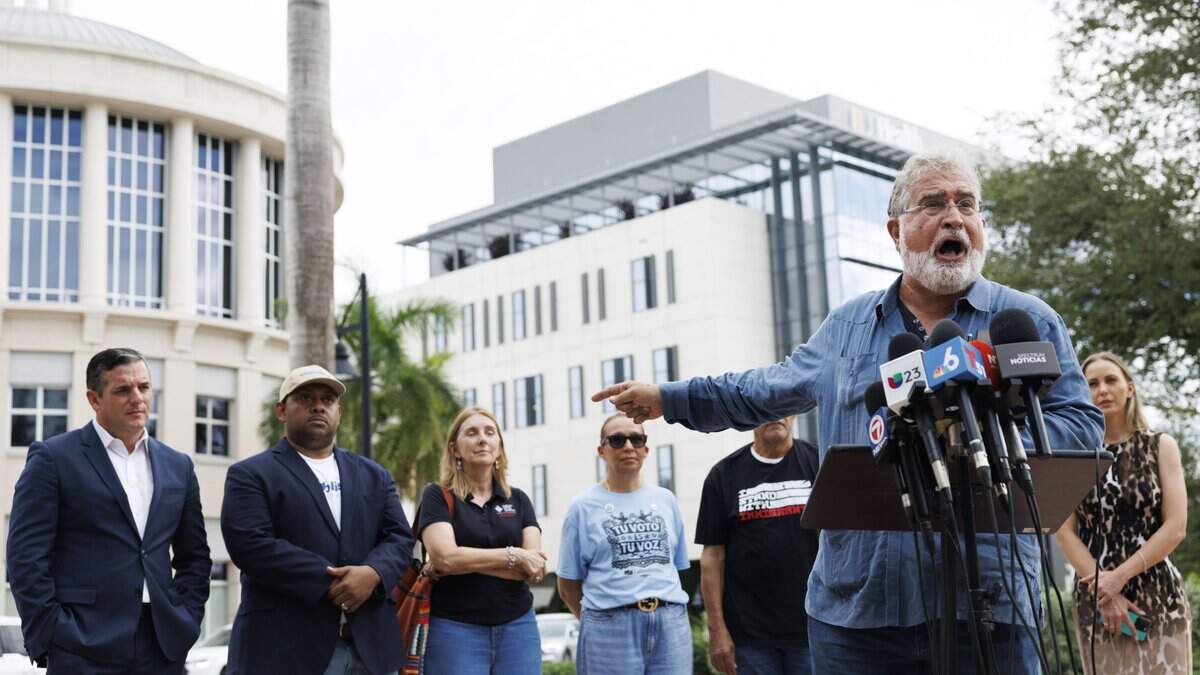
Community leaders gathered in Doral on Tuesday to demand that its leadership end a police partnership with immigration authorities and warned that President Donald Trump’s crackdown is turning the city with the largest population of Venezuelans in the U.S. into a ghost town.
Read more Pressure mounts on city of Doral to call quits on its policing agreement with ICE
“It’s undignified what these leaders did. They could have chosen to have compassion and they chose to be cruel,” said former Democratic Congressman Joe Garcia during a press conference outside City Hall.
The public showing is the latest action from activists, residents and officials who are pushing local governments to move away from 287(g) partnerships with Immigration and Customs Enforcement, which confer on certain police officers the limited functions of federal immigration agents.
Doral is not the only city facing pressure to end the agreement. Last month, roughly a dozen organizers gathered outside Miami’s City Hall to push Mayor Eileen Higgins to drop out of the program as well.
There are 379 such 287(g) agreements in the Sunshine State as of Tuesday. That includes several in Miami-Dade County, including Hialeah, Coral Gables, Miami Springs, Sweetwater, North Bay Village and West Miami. The City of Doral approved the agreement last year and signed it in January. So far, officials say that no officers have been trained under the program in its police department.
Doral Mayor Christi Fraga told the Miami Herald in a statement that the city’s leadership is “heartbroken to see families in our community suffering” and that she would advocate for the city’s residents. But she added that the “pain and uncertainty the people of South Florida are feeling should not be used to score political points or to make Doral the face of a national immigration crisis.”
“The City of Doral did not create federal immigration law, and we did not create Florida’s immigration enforcement laws. Our responsibility as elected officials is to follow the law as it exists and advocate to change it responsibly if we don’t agree with it. Repealing the 287(g) resolution does not change federal immigration law or federal enforcement policy. Immigration enforcement is a federal responsibility, and federal activity does not end at Doral’s city limits,” she said.
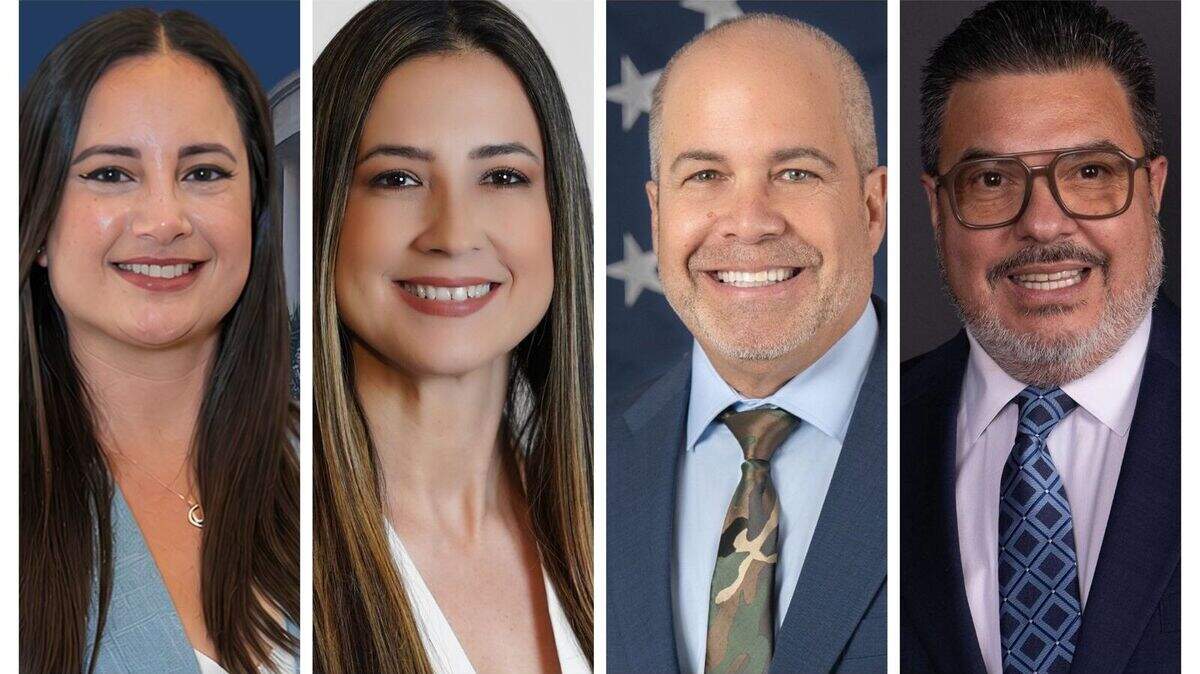
Rafael Pineyro, a Republican and the only Venezuelan-American member of the Doral City Council, has previously described intensified immigration enforcement in Doral as “a tragic moment” without specifying whether he would vote to rescind the 287(g) agreement. He did not respond to a Herald query on Tuesday. Neither Vice Mayor Digna Cabral nor Councilwoman Nicole Reinoso responded to Herald questions about whether they would be willing to reverse the federal agreement.
Activists during the press conference on Tuesday criticized Doral officials for agreeing to it in the first place.
“They say their hands were tied. I have news for them. There were cities that didn’t sign this agreement. They stood for their community. They stood for the people,” said Adelys Ferro, a Venezuelan-American activist.
The administration of Gov. Ron DeSantis has pressured Florida cities to enter the agreements. In cases where officials have rejected them, Attorney General James Uthmeier has threatened them with removal from office, claiming they are required to sign under Florida’s Sanctuary city laws, which bar local governments from not collaborating with ICE. Some, like Key West, reversed course after first refusing to go along.
Read more Killer whose execution is on pause asks Miami judge for hearing on mental state
But not all Miami-Dade cities have opted to agree. The City of South Miami, for example, asked a judge in March 2025 to intervene and clarify whether Uthmeier’s interpretation of the law was correct. While the state judge dismissed the case in September 2025, state lawyers said that Florida did not mandate all municipalities to join as long as they don’t oppose entering the agreements.
READ MORE: Judge dismisses South Miami’s 287g lawsuit, but mayor says he got his answer
“Our small city’s lawsuit showed the way, and that the social and economic harm caused by the Trump and DeSantis administrations can be stopped,” said South Miami Mayor Javier Fernandez during the press conference on Tuesday. “We allow this to happen when we forget who we are. I’m the son of Cuban exiles… I will not dishonor the sacrifice of my grandparents and parents by helping to vilify hardworking people.”
Fernandez also addressed city officials who had entered the agreements.
“While you may have forgotten where you came from, we are here to remind you that it’s not too late to act. We are here to support you in this fight. It’s time to step forward, to lead, and protect what generations before us have built and what we’ve been called to defend,” he said.
Maureen Porras, a Doral councilwoman and immigration attorney, told the Herald after the press conference that she “would support rescinding the city’s 287(g) agreement if the city attorney said it wouldn’t have any legal implications for the city based on the South Miami case results.”
Resolution in the South Miami case was still pending when Doral decided to approve the agreement with ICE. But other Miami-Dade cities have not signed the agreement, including Miami Beach and Miami Gardens.
“We relied on his advice when we voted for it,” Porras said, referring to the city attorney. “I think his advice would have changed in light of the South Miami case.”
Tuesday’s press conference took place near Doral’s downtown, where streets were largely empty at around 11 a.m. The Miami-Dade County Library was empty, as was the barber shop and Cuban restaurant across from it on the street. There were also barely any pedestrians. At a traditional Venezuelan bakery near Northwest 107th Street, a worker staffing the cake fridge said that sales had decreased as a result of immigration enforcement.
Last week, the owner of a location of the Gyroville franchise, which sells gyros in Doral, took to social media to speak about the impact the 287(g) agreement had on her business and the wider community. The Venezuelan woman did not give her name on the video but said that she had come to the United States on a business visa in 2018, opened up her business, and provided employment for families in the area. She spoke up against the economic impact of the city signing the agreement with ICE.
“Today my people are afraid to go out to the street,” she said. “It reaches our cash registers. Clients don’t leave their homes, employees don’t go to work for fear of a traffic stop. This is a chain. You aren’t deporting one person. You close the business that person frequented.”
Read more Vice City rises on the Miami waterfront with the county’s blessing. Good or gasp?
This story was originally published September 22, 2026 at 4:42 PM.








Post Comment