Party’s over: Crypto crook who lived it up in Miami admits guilt in $245M case
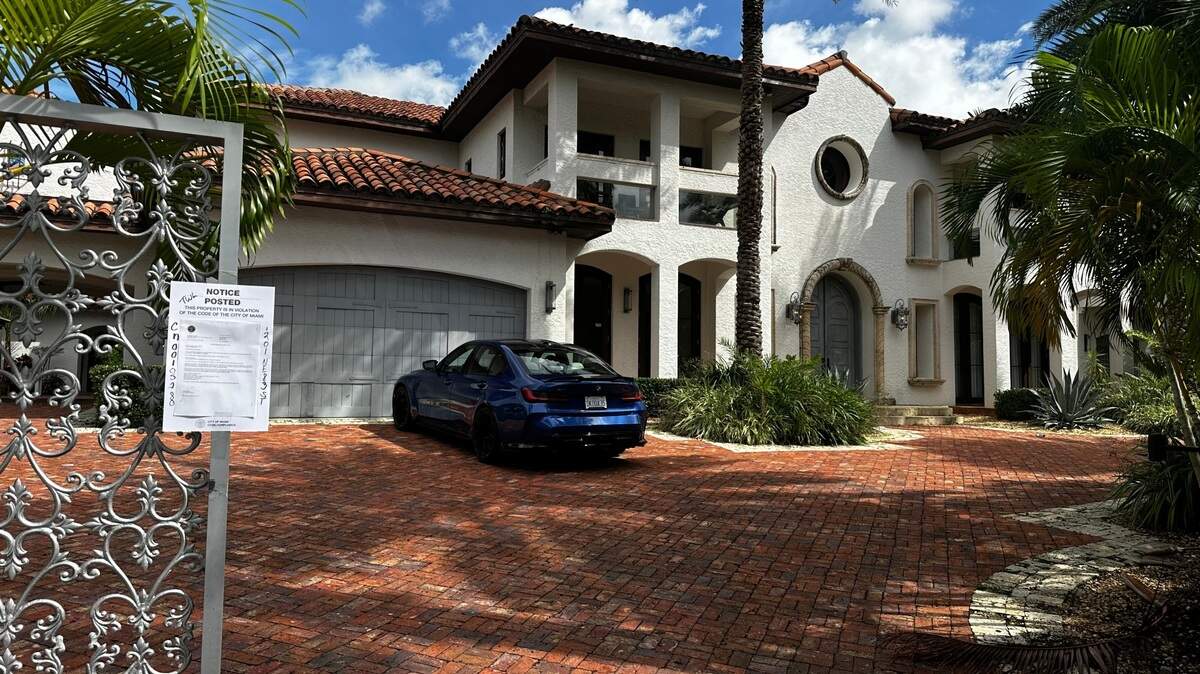
When Malone Lam learned that federal agents were coming to arrest him, prosecutors say, he walked behind the luxury waterfront Miami home that he was renting and threw his cellphone off the boat dock into Biscayne Bay.
Read more Florida AG James Uthmeier sues Netflix, saying tech giant monitors kids’ activity
FBI agents soon descended on the 10-bedroom, 10-bathroom house at 1201 NE 83rd St., a property that was listed at the time for $11.5 million. Neighbors had grown accustomed to seeing Maseratis and Lamborghinis parked outside. As agents searched the property, flatbed trucks arrived to haul away cars.
Lam, then 20, was arrested in September 2024 in what federal prosecutors initially described as a $230 million cryptocurrency theft.
Now, the Singapore citizen has agreed to plead guilty to participating in a cybercrime enterprise that prosecutors say stole and laundered hundreds of millions of dollars while paying for Miami mansions, private jets, exotic cars, expensive watches and nightclub spending that reached as much as $500,000 in a single evening.
In a plea agreement filed Tuesday in Washington, D.C., federal court, Lam agreed to plead guilty to conspiracy to violate the Racketeer Influenced and Corrupt Organizations Act, or RICO. The charge carries a maximum sentence of 20 years in federal prison.
Under the agreement, prosecutors will not pursue the remaining charges against Lam. His sentence will be determined by U.S. District Judge Colleen Kollar-Kotelly.
The plea agreement says approximately $245.1 million is owed in restitution by Lam and other members of the conspiracy. He also agreed to a forfeiture money judgment of $245.1 million and to forfeit cryptocurrency traceable to the offenses.
A cybercrime network formed online
Federal prosecutors call the group the “SE Enterprise” (SE is short for social engineering). According to a superseding indictment filed last year, the organization operated from at least October 2023 through May 2025 and grew largely out of friendships developed through online gaming platforms.
Members had different jobs. Some hacked or purchased databases containing information about cryptocurrency holders. Others searched the information to identify cryptocurrency holders who appeared to be the most valuable targets. Callers posed as representatives of cryptocurrency exchanges or email providers. Money launderers converted stolen cryptocurrency into cash and paid for luxury goods and services. One member allegedly specialized in breaking into victims’ homes to steal physical cryptocurrency wallets.
Lam, who prosecutors say used online aliases including “King Greavys,” “$$$,” “7” and “Kg,” was identified as one of the organizers who helped identify targets.
An earlier charging document also identified him as using the online name “Anne Hathaway.”
According to the later indictment, members of the group sent unauthorized account notifications to victims and followed up with fraudulent support calls. Posing as employees of cryptocurrency exchanges or email providers, they allegedly persuaded victims to provide passwords, cryptocurrency seed phrases and private keys that could be used to access their accounts.
The largest alleged theft occurred on Aug. 19, 2024.
Prosecutors say Lam and several associates targeted a man at his Washington, D.C., home and persuaded him to download a remote desktop program. They then accessed his computer and stole approximately $245.1 million in cryptocurrency, according to the indictment.
At the time of Lam’s arrest, the Justice Department valued the stolen cryptocurrency at about $230 million.
Miami mansions, jets and exotic cars
Prosecutors say Lam and his associates relied on money exchangers who could convert stolen cryptocurrency into cash or use it to pay for cars, homes, private jets and other expenses while concealing who owned the assets.
Several members of the group traveled to Miami in July 2024. While there, prosecutors say, money exchangers helped them convert hundreds of thousands of dollars in stolen cryptocurrency into cash through a local network. Stolen cryptocurrency was also used to obtain Miami rental mansions, private jet service and nightclub services.
The indictment says members of the enterprise spent as much as $500,000 for a night at a club, bought watches valued from $100,000 to more than $500,000, handed out expensive handbags at parties and rented mansions in Miami, Los Angeles and the Hamptons.
Exotic cars were another major expense. Prosecutors say vehicles acquired by members of the group ranged in value from $100,000 to $3.8 million.
Lam allegedly purchased more than 30 vehicles in August and September 2024, including Ferraris, Lamborghinis, Mercedes G-Wagons, Rolls-Royces, a McLaren and a Pagani. Prosecutors say he created a company called Crypto Administration LLC to hold title to the vehicles and conceal their true ownership.
Read more Take a look inside Fort Lauderdale police’s new $165 million headquarters
The cars had already attracted attention at his Miami rental home before the full scope of the federal investigation became public.
Neighbors interviewed by the Miami Herald after the FBI raid said Maseratis and Lamborghinis were frequently parked at the property.
“It’s usually rented out to, you know, visiting musicians or celebrities, sometimes it’s a film set,” neighbor Mark Ehrlich told the Herald at the time. “As we went to bed, flatbed trucks started showing up and loading whatever cars were at the property.”
Soumare Barkowski, who had lived in the neighborhood since 1991, said she had never seen that kind of police presence there.
“I think everyone in the neighborhood was surprised at the amount of cars that were inside the yard or on the property,” she said. “There were a lot of fancy cars.”
The later indictment says Lam’s spending included more than 30 cars, multiple homes in Miami and Los Angeles, a $2 million watch and private jets used to fly friends from Los Angeles to Miami.
Prosecutors also describe large amounts of cryptocurrency being converted into cash. After a separate $14 million cryptocurrency theft in July 2024, Lam allegedly sent an associate more than $500,000 in stolen cryptocurrency and received a duffel bag containing about $500,000 in cash.
Cash was sometimes shipped around the country hidden inside Squishmallows stuffed toys, with about $25,000 packed into each one, according to the indictment.
The FBI raid in Miami
By September 2024, prosecutors say, members of the group had learned that federal authorities were investigating them.
On Sept. 18, Lam obtained information from an off-duty law- enforcement officer that agents were coming to arrest him, according to the indictment.
Lam walked to the rear of his Miami rental home and threw his cellphone from the dock into Biscayne Bay in an attempt to destroy incriminating evidence, prosecutors say.
FBI agents searched the property. An associate in Los Angeles allegedly used remote access to security cameras at Lam’s Miami rental homes to watch agents conduct the search and shared the video with other members of the group. Prosecutors say associates later recovered and destroyed digital devices belonging to Lam and another member of the organization.
The indictment says Lam continued communicating with associates after he was jailed in Miami.
In one recorded conversation, Lam was told that an associate was selling cars to raise money for lawyers. He objected.
“Why is he selling [their] M3s,” Lam said, according to the indictment. “Tell Conor not to give back those other cars. It’s FXXking 200k.”
Prosecutors allege that other members of the enterprise continued committing cryptocurrency thefts and laundering money after Lam’s arrest.
Lam’s plea agreement does not mean he has admitted to every allegation contained in the indictment. The agreement refers to a separate statement of offense setting out the conduct he admits to, while many of the details about the organization’s spending, money laundering and activities in Miami come from the indictment.
Lam could be deported after completing his sentence. His plea agreement says he is not a U.S. citizen and acknowledges that his conviction makes it “very likely” he will be removed from the United States.
Read more When will all this rain end in South Florida? It depends on the dust









Post Comment