Miami ‘miracle’: Zoo Miami’s bonneted-bat houses make up planet’s largest colony
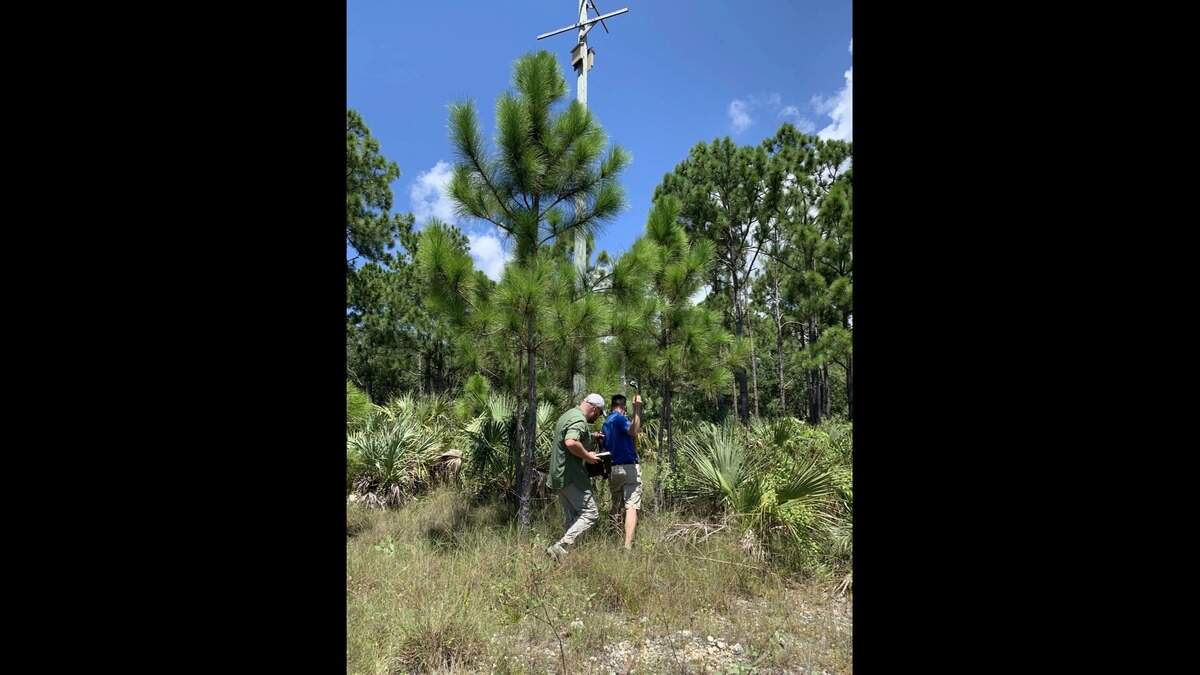
On a back trail at Zoo Miami, the silence broken only by an occasional braying zebra, wildlife veterinarian Frank Ridgley attaches a tiny camera to a painter’s pole and hoists it through the steamy morning air to what looks like a bird house atop a towering pole.
Read more Hire Full-Service Movers Across The USA
Inside, he spies what few people have ever observed in real life: a half-dozen Florida bonneted bats.
Once driven to the brink of extinction, the bats are now rebounding thanks to Ridgley, the director of the zoo’s conservation program, and a team at Bat Conservation International. In just a few years, by erecting specially-designed bat houses at the zoo and around Miami-Dade County, Ridgley and the team have documented what now stands as the world’s largest population of the very rare bat. At last count, they had identified more than 200 bats.
READ MORE: Zoo Miami created an oasis for bonneted bats. It’s getting in the way of a water park
“To go from zero in 2018 to that many may not sound like a lot to some people,” Ridgley said. “But think how long it’s taken the Florida panther to get from a dozen or two dozen cats to over 200. It took them until now from the early ‘70s, right?”
The bats, like the panthers, are by no means out of the woods yet when it comes to their survival. But hitting this milestone has provided a new trove of research that will make mapping the secretive bats’ future far easier.
”They are like this incredible miracle of Miami,” said Elise Bennett, a senior attorney and the Florida and Caribbean director at the Center for Biological Diversity. The nonprofit serves as a de facto pro bono law firm for endangered species, with clients as diverse as polar bears in the Arctic and skinks in the Florida Keys.
“It just tickles me to no end that Miami has its own endangered species that the community and the scientists are caring for,” Bennett said. “It’s just huge.”
Getting here has been years in the making, an epic tale that tends to follow endangered species.
By the time the U.S. Fish and Wildlife Service agreed to add bonneted bats to the endangered species list in 2010, biologists weren’t even sure how many remained. Bats, like early South Florida settlers, lived primarily in pine rockland. But as those pinelands were replaced with cities and neighborhoods, the bats largely disappeared.
“ They were probably foraging along the edges of hammocks, pinelands, prairies, and those transitional glades that used to cut across,” Ridgley said. “Those were the big wide open spaces next to the forest that were making all the food for them.”
That meant the large stand of pine rockland around Zoo Miami became a bat oasis. Until the zoo was built, the former World War II-era blimp base had remained largely undeveloped. By night, the zoo’s sprawling parking lot became an insect smorgasbord for the large voracious bats. A single colony can consume more than 20 pounds of bugs in a night.
At the time, outside of scientists and animal lovers, the secretive bats largely went unnoticed.
What happened next changed that. In 2014, the University of Miami, which owned part of the tract, agreed to sell nearly 90 acres to a developer planning a Walmart and apartments, enraging conservationists who had long pushed Miami-Dade County to acquire the land for its Environmentally Endangered Lands program.
Critics mounted a fierce battle to block the plan, holding protests, starting petitions and heading to court, where they ultimately lost.
Fast-forward to 2020, when the county revived plans to build a water park and hotel on part of the zoo’s parking lot where bats foraged, just a few months after federal wildlife managers announced plans to designate critical habitat to help revive the population. County commissioners approved the plans. Conservationists sued. Even popular zoo spokesman Ron Magill spoke out against it. In June, a judge finally terminated the deal.
Read more Man dies during immigration encounter in Florida, the third ICE-involved death in a week
All the while, the bat experts kept working on studying the bats. Ridgley says that has led to some surprising findings.
From golf-course sightings and other work, they learned that bats had moved from roosting in pineland to roosting in rooftops. They seemed to prefer the many barrel-tiled roofs in Coral Gables. But that made them vulnerable to hurricanes and construction. So beginning in 2018, Ridgley and Bats Conservation started building bat houses around the county and at the zoo. Within weeks of erecting the first 12, bonneted bats had moved in.
“All of a sudden, now we had bonneted bats in safe roosts in the middle of Miami, and we were watching their population grow. They’re having babies every year, and they’re occupying more and more of the houses,” he said. “We’re like, ‘Well, this is fantastic.’ ”
Bats that were tagged with GPS trackers revealed far-reaching night-time feeding flights.
“Bats here at the zoo actually fly all the way down to Everglades National Park and through the Redlands and come back. And then all the way up north,” he said. “We’ve seen them go along the farmlands along Krome, almost up to the Cemex plant on Krome [Avenue].”
Also bats from all over, even those that don’t live at the zoo, will meet up in the same place to forage night after night.
“Somehow, they all know where the food is,” he said.
At the zoo, the bat houses were erected around one of the zoo’s manmade lakes, which were created when it was built. The lake abuts one of the largest remaining tracts of pine rockland at Larry and Penny Thompson Park. If there is a hub for bat activity, this seems to be it. The bat team regularly visits the bat boxes to assess the bats, keep up with the babies and make sure the boxes aren’t attracting uninvited visitors like wasps and scorpions.
For bat-watchers, these bat houses offer the best viewing, with the bats emerging in the evenings to swoop down for a drink from the lake or feed over the pineland before heading further afield.
Ridgley has also done a test-run on a bat cam installed in one of the bat houses so bonneted bats can be viewed live online, and he hopes, build a fan following like other animals’ nests have. Solar panels now power the camera and Wi-Fi has been installed for broadcasting. The only thing missing is a correct camera lens.
“At night, you’ll be able to see them come and go, and if they have a baby, you’ll get to see them raise their baby,” he said.
The video feed will also provide researchers with a rare view of what happens inside the bat houses.
“When they hear us and they wake up, so they start moving around,” he said. “But when no one’s around, we have no idea what they do.”
The bats are also helping renew attention to the plight of pine rockland. This week, the Center for Biological Diversity, the Miami Pine Rocklands Association, the South Florida Wildlands Association and the Tropical Audubon Society announced a $925,000 donation to Miami-Dade County to acquire more pineland.
“If the bats go extinct, we’ve lost. There’s nowhere to go,” said Bennett, the Center’s attorney. “Now, we have this population. It’s surviving, and it’s just a reminder to us that we need to push towards that recovery.”
It’s also a reminder that urban conservation can work.
”They’ve adapted to live here in this really rapidly changing environment,” Ridgley said. “Most species, when your entire habitat almost disappears and everything changes fast, they just can’t adapt. Luckily, these guys have adapted enough.”
Read more Travis Kelce was just spotted in Palm Beach. He had a mystery guest
This report was produced by Miami Herald news partner WLRN Public Media.









Post Comment