Miami Beach’s plan to revive Washington Avenue: Make room for more locals
It’s been a long while since Washington Avenue was a glamorous hotbed of South Beach dining, clubbing and live music. But city efforts to restore its lost vim and vigor have fallen flat.
Read more Salsa icon Marc Anthony 57, is a father again: ‘Over the moon’
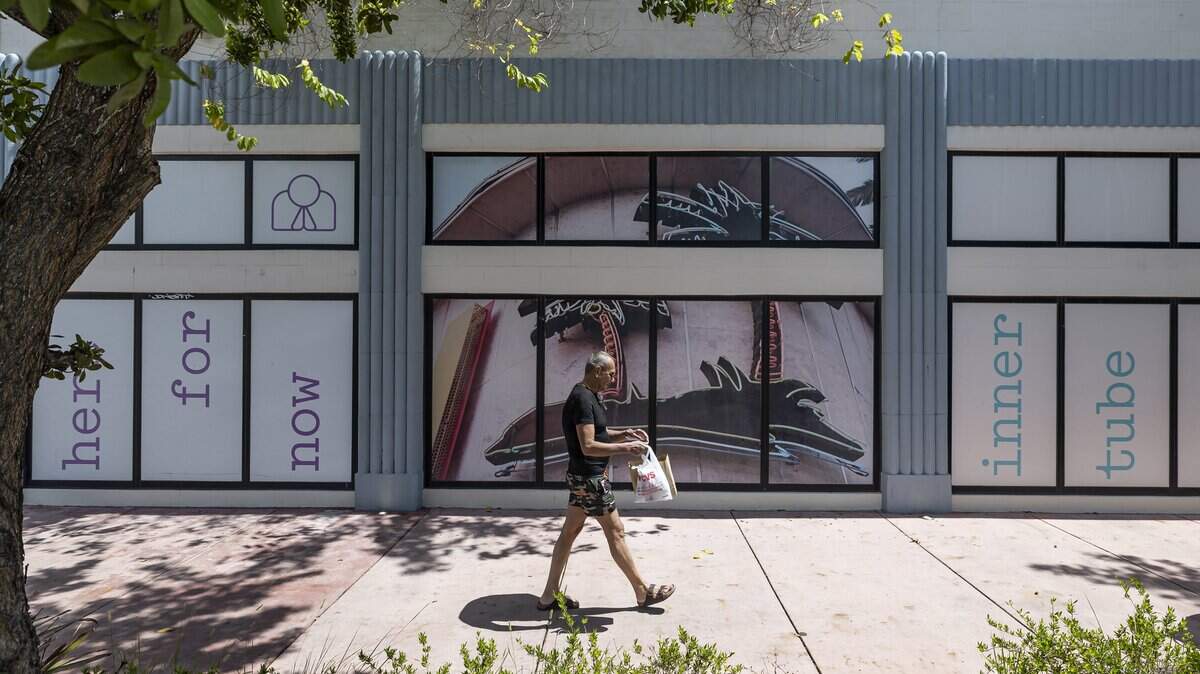
Today, some bright spots aside, the Art Deco District’s historic commercial spine is a drab length of vacant and unkempt storefronts, smoke shops, liquor stores, fast-food outlets, cheap T-shirt emporia and other varieties of tourist trap.
The solution? Forget lavish hotels and party spaces, the fix the city previously banked on, but which has proven a losing bet.
According to a sweeping proposal by one Miami Beach commissioner, the answer to Washington Avenue’s long slide into “unsavory” disrepute is instead a radical reconception.
Think housing, Commissioner David Suarez says — not the usual luxury condos or vacation cribs that have proliferated like sargassum on the Beach, but apartments that middle-income residents and workers, many of them priced out of the city, can afford.
His plan, scheduled for a vote at the Beach commission on Wednesday after two years of often-intense debate and revision, comes in the prosaic form of a technical zoning change. It’s meant to entice developers to build as many as 1,000 apartments by markedly increasing allowable height and density along a full mile of Washington — but for a limited time only.
If it works — and its critics are skeptical — the proposal would propel a turnabout along Washington Avenue that’s focused on locals, not just on tourists or winter residents here only for a few weeks, Suarez says.
To discourage luxury development, apartments could be no bigger than 1,500 square feet. Short-term rentals, which have displaced locals across Miami and Miami Beach, would be prohibited. To prevent speculation that drives up land price without actual construction, the zoning benefits would be granted only on submission of building-permit applications.
To make it financially feasible to build at a modest scale and cost on small lots while encouraging the kind of walkable neighborhood and foot traffic that businesses need to thrive, there would be sharply reduced or no on-site parking. Keeping a lid on project costs should make apartments more affordable, Suarez says, though the plan doesn’t restrict rent amounts.
And to encourage developers to take advantage of the changes right away, the offer’s good only through 2033.
Suarez says the zoning plan would address several problems at once. It would boost Washington Avenue’s economy while also helping stem an ongoing loss of city population that’s driven in large part by high rents and the Beach’s failure for years to develop new non-luxury housing, he said. The city’s population has dropped from a peak of 92,000 in 1990 to under 82,000 today.
“The status quo on Washington undeniably is a downward trajectory,” Suarez told fellow commissioners during an initial meeting to consider the plan early this year. “Miami Beach, meanwhile, has not kept up when it comes to housing. It’s an opportunity to reimagine Washington Avenue as one of greatest places in Miami Beach for residents, not just visitors.”
What’s next for Washington Avenue?
Suarez’ proposal, drafted by city Planning Director Thomas Mooney, has undergone substantial scrutiny for two years as it bounced back and forth between the city’s planning board, the commission and a commission land-use subcommittee.
They developed the plan in response to what they describe as the failure of the city’s previous attempt to repair Washington by providing zoning incentives for hotel construction.
A fundamental issue on the street, they say, is its commercial designation, which has left the stretch of Washington between Fifth Street and 17th Street largely bereft of residents to support services and local businesses. That’s a sharp contrast to the section of Washington below Fifth, which they said has succeeded because it already mixes retail and dining with apartments and condos.
While housing is allowed on Washington north of Fifth, none has been built because restrictions on height and square footage and parking requirements have made it unfeasible to build.
Nearly a decade ago, a city task force spurned proposals to ease those restrictions to foster housing development north of Fifth along Washington, said Mooney, who is retiring from the city effective July 31. Instead, the commission adopted the group’s recommendation to focus on hotels by allowing hospitality developers to build up to 75 feet high, or 50% more than allowed by the underlying zoning.
Read more Canadian man is jailed after illegal Florida Keys lobster hunt, FWC says
That measure led to development of three hotels, including the Moxy and Goodtime, which Suarez said have struggled.
Goodtime, originally with celebrity backing from musician Pharrell Williams and entertainment mogul David Grutman, was auctioned off by lenders in a foreclosure action earlier this year. The historic Art Deco shops fronting the new hotel along Washington that its developers were obligated to renovate remain fully vacant.
Suarez’ plan would reverse the existing incentives, restricting new hotel development to a height of 50 feet while upping the cap for residential to 75 feet, with a doubling of the allowable square footage in most places. Suarez initially proposed a “bonus” height for apartment buildings up to 100 feet but scaled the provision back after fellow commissioners balked.
Suarez has said his plan would also mark a departure from what’s become common practice on the Beach for new construction where developers request variances and other breaks for projects. He also has positioned his proposal as an attractive alternative to the state’s controversial Live Local Act, which overrides local zoning restrictions, including in historic districts, if developers include a certain percentage of “workforce” apartments.
Mooney said developers could build from 30 stories to 50 stories under Live Local on Washington in some cases, though it would require aggregation of small lots that would be hard to pull off.
“Here, the city sets the rules, not the state,” Suarez told commissioners earlier this year. “This is real urban planning. The developers follow the rules. They don’t set them.”
In March, at a town hall meeting hosted by the Washington Avenue Business Improvement District, some influential Beach figures sharply questioned whether the zoning benefits would be sufficiently generous to lure developers.
David Wallack, owner of Mango’s Tropical Cafe on Ocean Drive, vociferously criticized Suarez’ plan as insufficient. Given high land values, he said, it won’t be cost-effective for developers unless they can build at least 15 stories — double the height allowed under the proposed new zoning for housing developments.
Wallack’s critique was echoed by former Beach Commissioner Saul Gross, a real estate investor who has played a significant role in Art Deco district preservation and whose Streamline Properties is on Washington.
Preservationists, meanwhile, worried about the impact of taller new development on Washington Avenue’s historic scale, typically running to one or two stories in most places. The avenue lies within the city’s original historic district, where preservation rules tightly regulate new construction and alterations.
But Suarez said he and Mooney tried to strike a careful balance between the street’s historic scale and providing enough new development capacity to lift Washington out of its stagnant state. He noted the city’s Historic Preservation Board would still have to review and approve any new development on Washington.
The proposal now appears to enjoy support from a majority of his colleagues, including several who were initially concerned that the blanket reach of the zoning benefits would amount to a free reward for property owners, some of who haven’t properly maintained their buildings. But they were finally satisfied by the guardrails to deter speculation.
The plan passed a subcommittee vote in May with no dissenters. If it’s approved Wednesday by the full City Commission, a second and final vote would follow later.
Commissioner Tanya K. Bhatt congratulatued Suarez for piloting the initiative through what she called “a bumpy flight.”
“Well done,” she said.
Commissioner Joseph Magazine, a cosponsor of the legislation, said it was past due for the city to tackle Washington Avenue. Referring to a corner of Washington opposite Española Way that he said has a new “chicken and frozen daiquiri store” next to a pawn shop and a sordid nightclub, Magazine said: “I’m embarrassed.”
“This can be a gem if we have a comprehensive vision that we get right,” Magazine said of Washington Avenue.
Read more Salsa icon Marc Anthony 57, is a father again: ‘Over the moon’









Post Comment