‘Larger than life’: Renowned Miami architect Kenneth Treister dies at 96
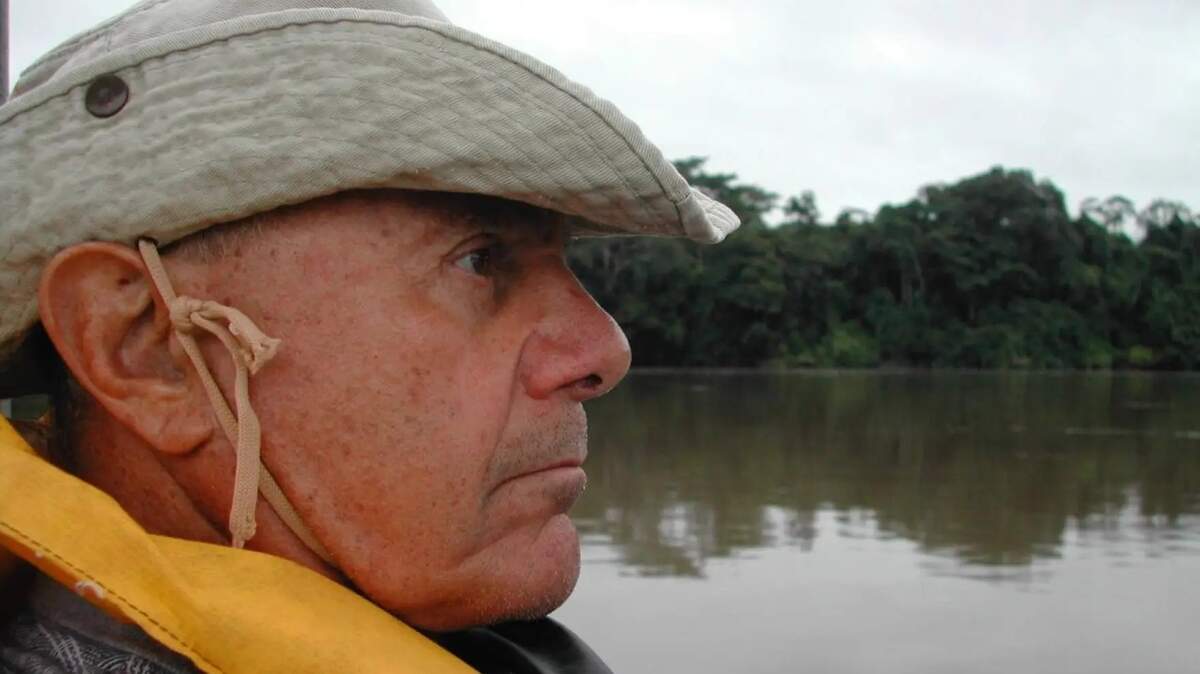
Miami architect Kenneth Treister’s work was, undeniably, one of a kind.
One of Miami’s most notable architects, Treister was known for his unique artistic style which helped shape much of Miami’s visual character, particularly in Coconut Grove, where he lived for 30 years in a home of his own design. Influenced by Barcelona legend Antoni Gaudí and American architect Frank Lloyd Wright, Treister’s work in Miami blended modern architecture with art, sculpture and the lush subtropical South Florida landscape.
Read more Teen sentenced to life for Miami high schooler’s murder now has a release date
Treister died on Friday at age 96.
Treister’s family described him as a “larger-than-life” man with grand ideas and an appreciation for all of life’s beauty.
“He was one of those kinds of people who loved life, and he loved people. He was a beautiful person,” his son Charles Treister told the Miami Herald. “He treated everybody with respect and friendship. He touched a lot of people throughout his life.”
Treister’s daughter-in-law Lisa Treister described him as a true “Renaissance man” who possessed gifts in almost every artistic facet. In addition to being a renowned architect and designer, Treister was a trained sculptor and artist, as well as a photographer, author and lecturer.
Tresiter’s artistic vision was reflected in many of his well-known works, including the Mayfair Hotel in Coconut Grove, the Office in the Grove, Elizabeth Virrick Park in Coconut Grove and the notable Gumenick Chapel at Temple Israel in Miami. Treister received early recognition for the Gumenick Chapel, a large, luminous igloo-like structure, which opened in 1969 and was inspired by Treister’s perception of God’s commandment, “Let there be light,” according to a description of the chapel on Temple Israel’s website.
“Nothing stopped him. If he had an idea, you couldn’t say ‘you’ll never accomplish that, or you can’t do that.’ He wanted what he wanted, and he had big ideas,” said Lisa Treister. “He thought big, he dreamt big, he had a big canvas.”
His greatest challenge
Treister was perhaps best known as the designer and architect behind the Holocaust Memorial in Miami Beach, a monumental work that has become one of South Florida’s most recognizable places of Holocaust remembrance. The striking bronze sculpture depicts an outstretched arm reaching to the sky as hundreds of small human figures cling to it and each other with expressions of agony.
The memorial, which Treister later called the “greatest challenge” of his life, opened in 1990 and has since been called a masterpiece by prominent architects in the design community. Sheri Zvi, CEO of the Holocaust Memorial Miami Beach, said Treister created “far more than a monument” but a “a place of memory, reflection, and education that has touched millions of people and will continue to do so for generations.”
The Holocaust monument took Treister five years to design and sculpt, and included research in Jerusalem and work in Taiwan and Mexico City, where his sculptures were cast. The Memorial received criticism after it was built, with some residents calling “grotesque” and a “brutal intrusion on the cityscape,” according to the Memorial’s website. Holocaust survivors and committee members later responded to the criticism by saying this was exactly the point of the sculpture.
“The totality of the Holocaust cannot be created in stone and bronze … but I had to try. The rich diversity of the European culture, now lost, cannot be expressed … but I had to try. The murder of one and a half million children, whose joy turned to sorrow suddenly on September 1, 1939, when World War II broke out, cannot be sculpted … but I had to try. Six million moments of death cannot be understood … but we must all try,” Treister said in an interview with the Holocaust Memorial following the opening of the monument in 1990.
A lifelong member of Temple Israel, Treister was proud of his Jewish heritage, his son Charles Treister said. Even after he retired, he poured his heart into projects that gave back to the Jewish community, such as the renovation of Temple Emanu-El in Miami Beach. He also spent some of his career in the 1960s building affordable housing.
“He loved helping people, and that’s why he devoted a big part of this career to building public housing, public parks, and the last part of his career, to giving beauty to the Jewish community,” said Charles.
Read more Haiti businessman Dimitri Vorbe, Trump administration strike deal to end his detention
As someone who loved Miami — his home for most of his life — Treister told the Miami Herald in 2017 that he often tried to reflect the environment and tradition of Miami in his design.
“Most architects today build objects. They’re one-dimensional,” he said in an interview from his home in Winter Haven in Central Florida in 2017. “What I’ve done in all my career is integrate art and architecture and landscape, and the community.”
Family was everything
Born in New York in 1930, Treister moved with his family to Miami Beach when he was just an infant. He spent his childhood in Miami Beach, studied music at the University of Miami, then transferred to the University of Florida where he graduated in 1953 with a degree in architecture. UF holds a collection of his architectural drawings, writings and photographs spanning eight decades. Treister was elected a fellow of the American Institute of Architects by his peers, and won the gold medal in 2013 from the organization’s Florida chapter.
“He was quite an accomplished guy, even until the end,” Lisa Treister said. “Still making us laugh with his card tricks and jokes, and beating my husband at chess.”
Treister also has a smart sense of humor, often performing magic and card tricks for anyone who would come over to his home. He was a lifelong Miami Hurricanes fan and even attended the first Orange Bowl game in 1935 as a child, his son said.
Treister was married to his late wife Helyne for 67 years until her death in 2021. Treister was happiest when he was with his family, who his son describes as “everything” to him.
“My mom was everything. They had an incredible marriage. He loved his children. He loved his grandchildren. He was lucky to have great grandchildren, and he had a wonderful family … and that made him the happiest,” Charles Treister told the Herald.
Treister is survived by his two sons, Charles and Eliot; their wives, Lisa and Michele, three grandchildren and two great-grandchildren.
A funeral service will take place at 1 p.m. Sunday, Aug. 30 at Temple Beth Sholom, 4144 Chase Ave., Miami Beach, followed by a burial at Graceland Cemetery North, 4420 SW Eighth St., Miami. Donations can be made in his memory to the Holocaust Memorial Miami Beach.
This story was produced with financial support from Trish and Dan Bell and donors in South Florida’s Jewish and Muslim communities, including Khalid and Diana Mirza and the Mohsin and Fauzia Jaffer Foundation, in partnership with Journalism Funding Partners. The Miami Herald maintains full editorial control of this work.
Read more Miami Dade College regains control of Tower Theater years after city takeover










Post Comment