La Carreta waitress’ killer gets first Miami-Dade death sentence in a decade
For the second time in his life, Rafael Andres sat quietly in a Miami courtroom Friday morning and heard a judge condemn him to die by execution for the beating, stabbing and strangling of a La Carreta waitress.
Read more ‘Unusual’: How a Trump attorney became interim dean of FIU’s up-and-coming law school
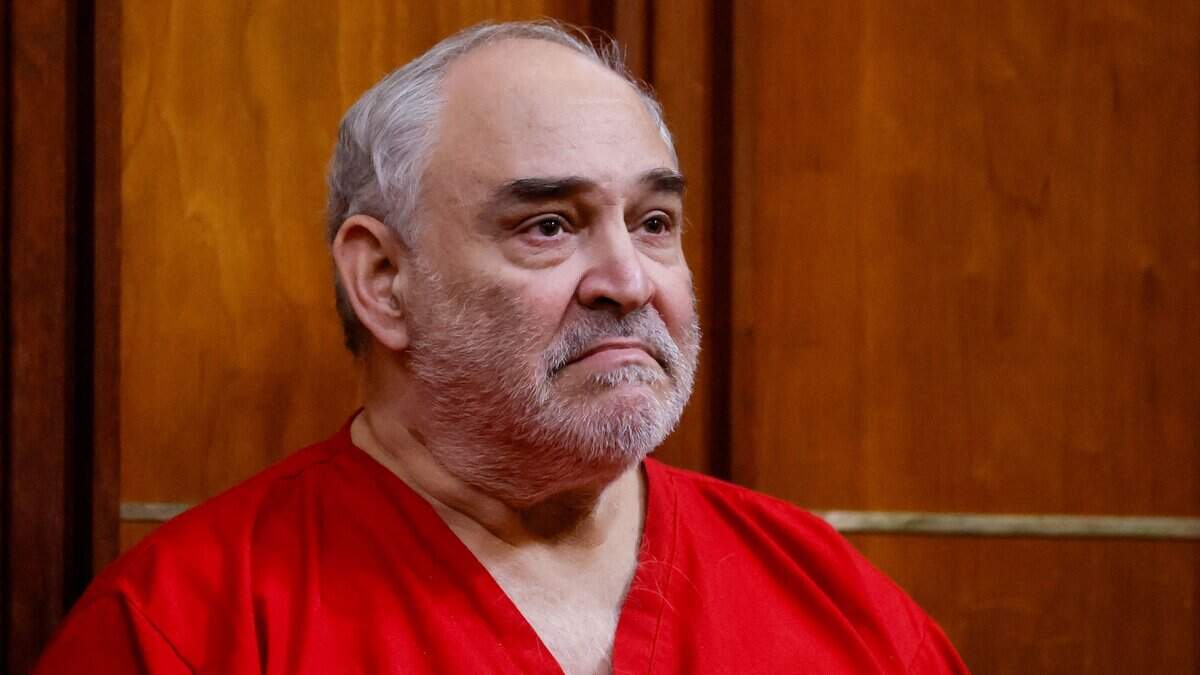
Shackled and wearing red jail attire, Andres, 62, remained stoic — but appeared defeated with pouting lips and bags under his eyes — as he looked toward Miami-Dade Circuit Court Judge Zachary James and learned his fate. Andres’ attorney, Joyce Brenner, put her hand on his shoulder as the judge read the sentence.
In November, a jury recommended in a 9-3 vote that Andres be executed for Fariñas’ Jan. 24, 2005, slaying, but Judge James had the final say. In Florida, judges can override a jury’s recommendation if jurors say the defendant should be sent to Death Row.
Andres’ sentence is the first in more than a decade to land a Miami-Dade inmate on Death Row.
Andres, who was originally sentenced to execution in 2015, was granted a new sentencing trial due to constitutional issues surrounding the state’s death penalty. The previous Miami jury recommended Andres get death, also in a 9-3 vote.
After the judge pronounced the sentence, corrections officers handcuffed Andres and took him to the courthouse’s back doors. Outside the courtroom, Fariñas’ sister Lisbet Fariñas and Rene Azcarreta, the son of a woman murdered in the 1980s by Andres, embraced prosecutors.
In 1988, Andres was convicted of stabbing to death 32-year-old Linda Azcarreta, a friend of his wife. Andres claimed he killed Azcarreta on March 9, 1987, in a frenzy of drug use. He cashed a $100 check meant for her after the murder. Andres pleaded guilty to the killing and was sentenced to nine years but walked free after just 18 months due to his good behavior while behind bars.
“Having to do this again, it’s not easy,” Rene Azcarreta told reporters. “… It’s finally closure. I feel a massive weight [lifted.]”
Azcarreta and the Fariñas family, he said, are forever tied because their loved ones were taken by Andres.
“The man does not deserve his existence,” Azcarreta told reporters after the sentencing. “He forfeited it when he killed my mother … and then he did it again.”
READ MORE: Killer who stabbed, strangled La Carreta waitress should get death, jury says
During the trial, prosecutors argued that Andres should be executed due to the brutality of the killing and the murder of Linda Azcarreta. The defense said the killer should be spared because years of cocaine abuse damaged his brain and, while in prison, Andres has embarked on a journey of spirituality and redemption.
Andres murdered Fariñas, a 31-year-old server at La Carreta’s Miami International Airport location, at her home on Jan. 24, 2005. Andres, a handyman, had been hired to do renovations at the efficiency that she lived in with her boyfriend.
The handyman used a spare key to enter the efficiency and beat her in the face until she gave up her ATM card’s PIN code, prosecutors say. Andres held her wrists and stabbed her three times in the chest — but Fariñas didn’t die.
Read more How to help remote employees create a healthy work-life balance
He then put a dish towel over her face and strangled her with a rice-cooker cord, according to prosecutors. He attempted to light a fire to destroy the evidence — but his plan was foiled by a neighbor who had spotted Andres leaving the scene.
Final efforts to spare his life
After Andres’ death verdict, several Death Row inmates sung Andres’ praises in his Spencer hearing, where his attorneys presented final arguments in the hopes of saving Andres from the death penalty.
One of the men, Chadwick Willacy, 58, was set to be executed days before his testimony. He said he and Andres were “neighbors” on Florida’s Death Row and frequently discussed religion, family and recipes. Willacy, who received the death penalty for beating his neighbor with a hammer and setting her on fire in 1990 in Palm Bay, was executed on April 21.
READ MORE: Hoping to spare his life, fellow inmates testify for killer of La Carreta waitress
During that hearing, Andres addressed the judge in a long-winded statement in a bid to spare his life. He said he never claimed to be an angel but has since dedicated his life to Jesus Christ.
Andres didn’t mention his victims or the impact their murders had on their families. Instead, he said executing him will not bring them back — and that he would dedicate his prison stay, whether on Death Row or in a prison’s general population, to preaching religion and mentoring fellow inmates.
“My actions speak louder than any words,” Andres said.
Victim’s families tied by brutal killings
During the Spencer hearing in April, Lisbet Fariñas testified about how her sister’s killing changed her life.
“Nobody understands what it’s like to be in the place of a person who lost a daughter and a sister,” Lisbet said. “I have to continue with my life, but I don’t understand why this happened to me and my family.”
Azcarreta, the son of the first woman Andres killed, spoke about how he discovered her body when he, as a 7-year-old boy, came home from school.
READ MORE: La Carreta waitress’ murderer had killed before. ‘That is who he is,’ victims say
“That image never leaves you,” Azcarreta said. “It becomes part of who you are, whether you want it to or not. Rafael Andres took my mother … from this world — and from me — in the most violent and senseless way imaginable.”
And when Andres was given a second chance, Rene said, he used it to “deliberately, repeatedly, violently” tear another family apart.
“The same hands, the same violence. A different family destroyed,” he said. “That is not a mistake. That is who he is.”
Read more Florida’s deportation orders surged in June, new data shows








Post Comment