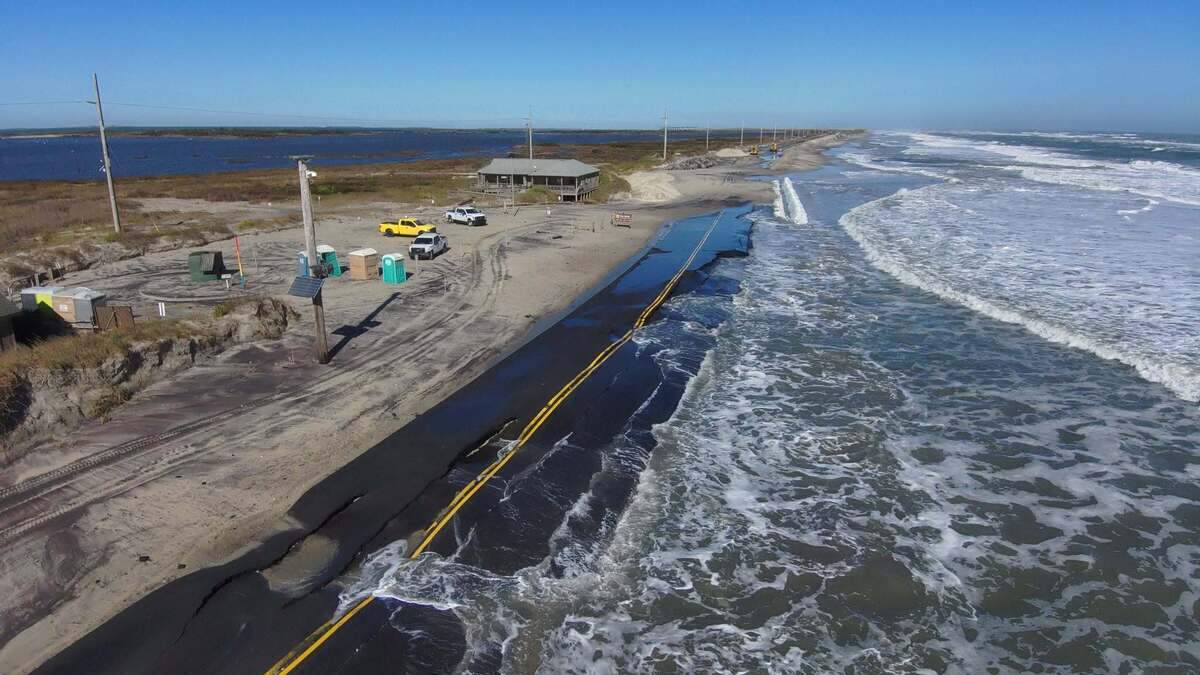
King tides flood NC’s coastal roads, signaling dangers of sea level rise
AI-generated summary reviewed by our newsroom.
Read our AI Policy.
- King tides flooded roads on the Outer Banks and Crystal Coast this week.
- King tides happen when the moon reaches perigee, the closest point to Earth in its orbit.
- Another king tide is expected to hit North Carolina from Nov. 23 to 27.
North Carolina’s embattled coast was once again awash with floodwaters this week — not from a hurricane or a nor’easter, but from a king tide, a cyclical weather event during which high tides reach abnormally high levels.
Read more Mississippi man who read to kids at mom’s daycare faces child pornography charges in 2 states
King tides are driven by the gravitational pull of the moon as it reaches perigee, the point in the moon’s orbit when it’s closest to Earth. These tides are most common during a new moon, or in the case of this week’s tides, a full moon.
As a result, North Carolina’s Outer Banks and Crystal Coast saw water wash onto roads this week, according to Rohan Jain, a meteorologist with the National Weather Service’s Newport office.
“The tides will be improving and coming down in the coming days here, but we’re no stranger to king tides in Eastern North Carolina,” Jain said. “Fall into winter is when we tend to see them, and with how low-lying some of our areas are, we’re definitely no stranger to them.”
This week has been far from the highest king tides North Carolina has seen, though other parts of the country were hit with record flooding this week as a result of these tides. The tides peaked Monday through Thursday, and high tides are expected to come down over the weekend, Jain said.
But along the coast, king tides serve as a stark reminder of North Carolina’s vulnerability to sea level rise, said Lisa Rider, director of the Coastal Carolina Riverwatch.
“Growing up on the coast, we’ve always experienced some type of flooding, especially in the low-lying areas,” Rider said. “But I have definitely seen an increase in the number of days that we’re seeing flooding during sunny days or non-storm events … People are more aware of it as an issue, but that awareness isn’t necessarily solving some of the concerns that are building.”
A 2025 study by researchers at the University of North Carolina at Chapel Hill found that roads in Carteret County are flooded more frequently than federal tide gauges report; over the course of a year, researchers tracked 26 days of flooding in Beaufort, 65 days of flooding in Carolina Beach, and 128 days of flooding in Sea Level.
Rider, who tracks coastal flooding with her team at the Riverwatch, says she is also seeing king tides wash farther inland than before. Research shows the tides have been compounded by sea level rise; the N.C. Coastal Resources Commission found in 2024 that sea levels are on track to rise by one foot by 2050, compared to 2000 levels.
Read more After canceling rally, Trump reschedules Kansas visit amid close Senate race
This week’s king tides were most visible in “areas that are typically vulnerable to water rises,” Jain said, especially in Morehead City, Carteret County and near Pea Island on the Outer Banks.
The latter location, one of the narrowest stretches of North Carolina’s barrier islands, is home to an embattled stretch of N.C. 12, the 148-mile state highway that serves as the only road running up and down the Outer Banks. The N.C. Department of Transportation has been repairing N.C. 12 at Pea Island, an area that often floods during storms.
After a nor’easter earlier this month, NCDOT had to pause repairs on the road, and the king tide coming on the heels of the storm delayed those efforts even further, Jain said.
“The additional waves on top of the water with the elevated king tides kind of extended the overwash longer than it maybe typically would have, which may have delayed efforts to fix it,” Jain said on Thursday, “but conditions are improving, and king tides are going down. Waves should be coming down in the next 24 hours, so hopefully that helps NCDOT, and they’re able to do their job.”
Another king tide is expected to hit North Carolina from Nov. 23 to 27, Jain said, in line with the next full moon.
This story is available free to all readers thanks to financial support from the Hartfield Foundation and Green South Foundation, in partnership with Journalism Funding Partners, as part of an independent journalism fellowship program. The N&O maintains full editorial control of the work. If you would like to help support local journalism, please consider a digital subscription, which you can get here.
This story was originally published October 30, 2026 at 2:28 PM with the headline “King tides flood NC’s coastal roads, signaling dangers of sea level rise.”
Read more NC State police got tip about date rape drug use in hazing at an unnamed fraternity









Post Comment