Kelly: Malik Willis isn’t Miami’s problem, but he also isn’t the solution | Opinion
Malik Willis is presently the worst starting quarterback in the NFL.
No matter how you slice it, or what justification we put on this stink, his performance in the first five games has been subpar.
Read more Tiny Kentucky distillery just named top whiskey tour in North America
Willis’ 68.4 passer rating ranks him 34th, which is last among all quarterbacks who have attempted at least 50 passes this season.
That means there have been backups such as Chicago veteran Case Keenum (89.7), New York Giants’ Jameis Winston (81.2) and Tampa Bay’s undrafted rookie Jalen Daniels (74.6) who have played better than Miami’s top free agent addition this season.
Among 19 quarterbacks who have started all five games, Willis is last in passer rating (68.4), completion percentage (56.2), touchdown passes thrown (two) and passing yards per game (169.8) and first downs passing (35).
On the positive side, he’s averaging 6.9 yards per carry and 37.2 rushing yards per game, usually because he’s scrambling for his life.
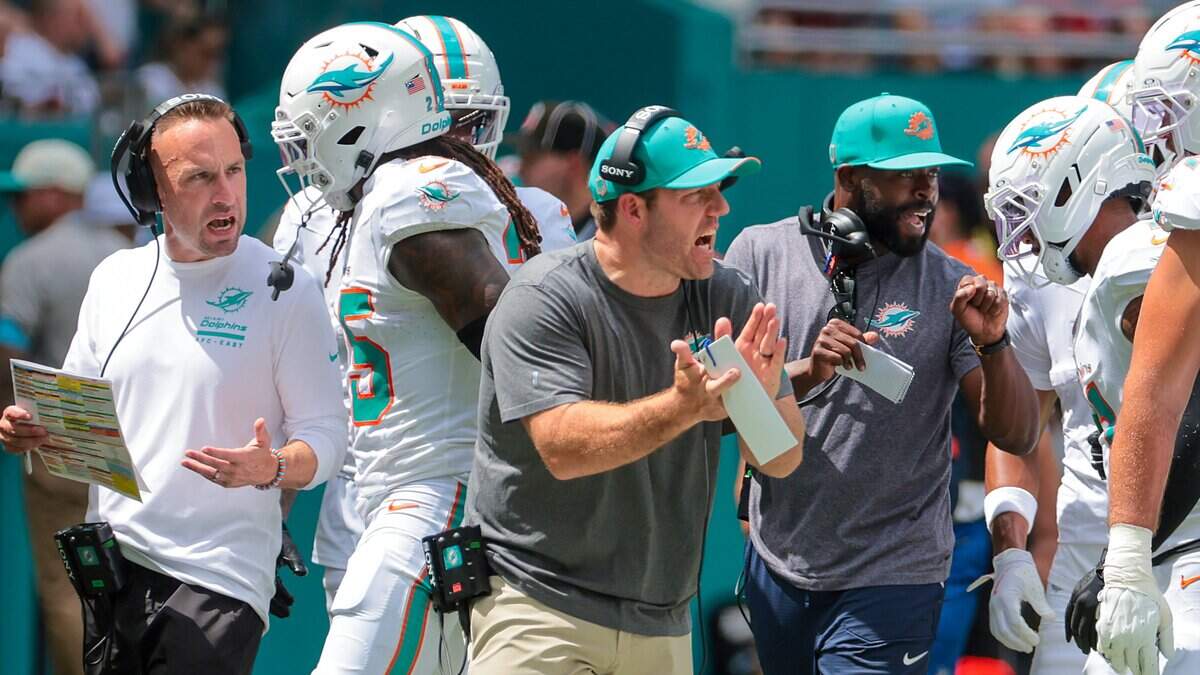
“Everything in the pass game has to be better,” coach Jeff Hafley said Monday, justifying why he will remain loyal to Willis. “It’s the receivers, it’s the tight ends, it’s the protection. It all has to tie in. And it all has to be better.
“That’s the quarterback, that’s the coaches, that’s the offensive line, that’s the running backs, that’s the tight ends. This is a team game that we all need to be more efficient, and we need to be better,” Hafley continued. “We will work through that and we will get better. It’s been five weeks.”
Sounds like Hafley’s recommending we judge this after another five, or 10 games.
We have waited 26 seasons for a franchise quarterback. What’s another 10 games?
I believe Willis has got far more talent than he has shown in Miami’s 0-5 start. But for some reason it’s not connecting.
Whether it’s because he’s missing some important weapons, playmakers such as tailback De’Von Achane [out for the season with a knee injury] and Caleb Douglas [missed three games due to an ankle injury], and the ones currently on the field aren’t always running the right routes, aware of their assignments.
Maybe it’s because Willis is still getting adjusted to Miami’s offense, and at times offensive coordinator Bobby Slowik’s playcalling and game planning has been lackluster.
Or maybe it is because the pass protection has been troublesome in critical moments, especially from the right side of the offensive line, and their struggles are beginning to make him skittish?
It’s too early to panic, but not too early to locate the panic button.
What does this mean for South Florida’s NFL franchise, and how do the Dolphins fix it?
It means we need to see significant improvement from Willis, who made his 11th start in Sunday’s 31-24 loss to the Cincinnati Bengals, within the next 12 games to justify the $21.5 million the 27-year-old is owed, and guaranteed next season.
It also means Miami’s decision-makers — general manager Jon-Eric Sullivan and head coach Hafley — need to do what they promised when they arrived, which is to keep adding quarterbacks, stocking the roster with the most valuable position in sports, to give this franchise something it hasn’t had in two-plus decades, which is options and competition at quarterback.
Nothing this regime does matters if the riddle that has perplexed this franchise for the past 26 years doesn’t get solved, and a franchise quarterback isn’t the centerpiece of what Green Bay South is building.
Read more What to know about the Six Flags Over Georgia coaster death and the 9 rides closed nationwide
Willis has the arm to make any throw needed in the NFL.
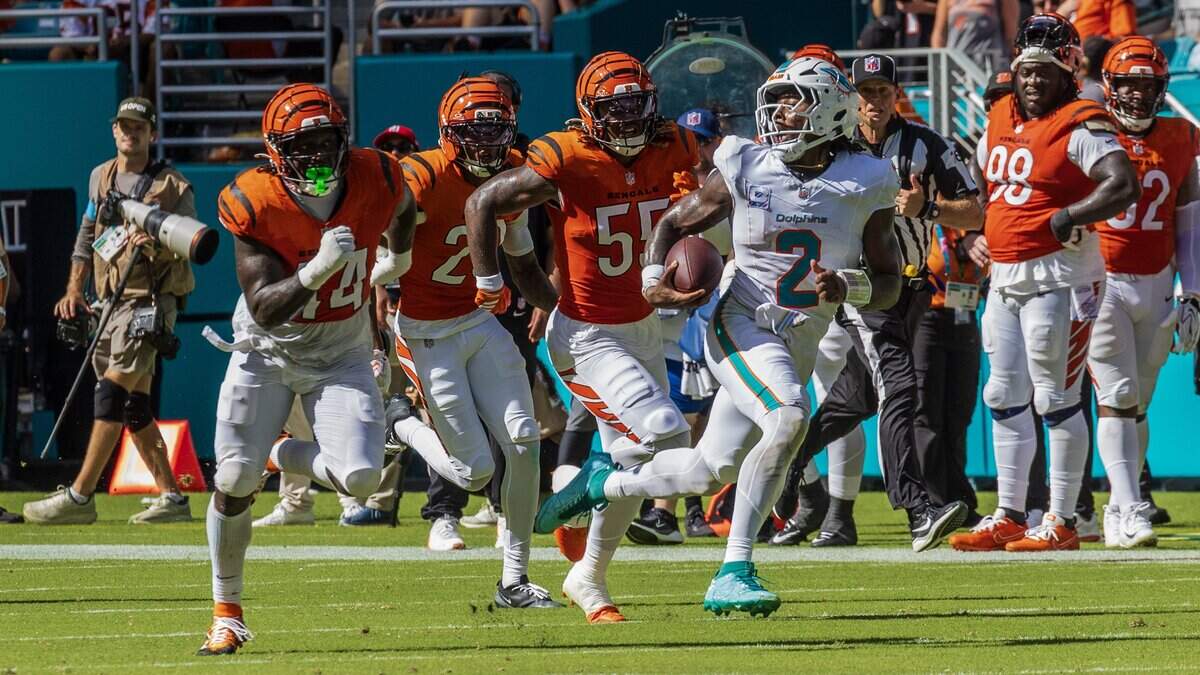
He has the mobility and speed to outrun most defenders on any given play, which was evident from the 39-yard run he had Sunday.
He has the humility, work ethic and composure needed to endure rough patches, difficult stretches of the season like this.
In fact, he has been through worse in his previous four seasons.
What Willis needs are complementary players, an offense that’s custom fitted to the skills he brings to the field. And most importantly, the clutch gene.
That gene would allow him to execute at a higher frequency than opposing defenses on third and fourth down, in the red zone, and when the score’s tied, or his team’s trailing, which coincidentally, the Dolphins have done every second of the 2026 season.
Right now, he’s falling short in the game’s most critical moments, lacking those big boy throws.
When the volume on the game’s intensity rises Willis and his unit typically shrink, and that’s a bad sign.
It’s a warning sign.
Is this problem something a talent such as Ohio State receiver Jeremiah Smith, who is viewed as the top prospect in the 2027 NFL draft, can fix?
Possibly, but more often than not, it’s the quarterback who makes the talent around them better, and not vice versa.
Ja’Marr Chase has looked ordinary with a quarterback other than Joe Burrow at the trigger.
Josh Allen kept winning in Buffalo without Stefon Diggs.
Matthew Stafford won a Super Bowl after Calvin Johnson retired, and remains one of the NFL’s upper-echelon passers, even after Johnson got his Hall of Fame gold jacket a few years ago.
And Patrick Mahomes remained elite, even after Tyreek Hill left the Kansas City Chiefs.
Tua Tagovailoa didn’t, and maybe that’s telling.
Talent helps quarterbacks shine, but being clutch is something that separates the elites from the average, and right now there’s no mistaking what we’re looking at.
We’re not looking at an elite quarterback.
Even though it’s early, let us not deceive ourselves and pretend that what we’re seeing could be enough.
Read more The evolution of Kimberly Guilfoyle: From California political ties to US ambassador
More is needed, and not just from Willis.







Post Comment