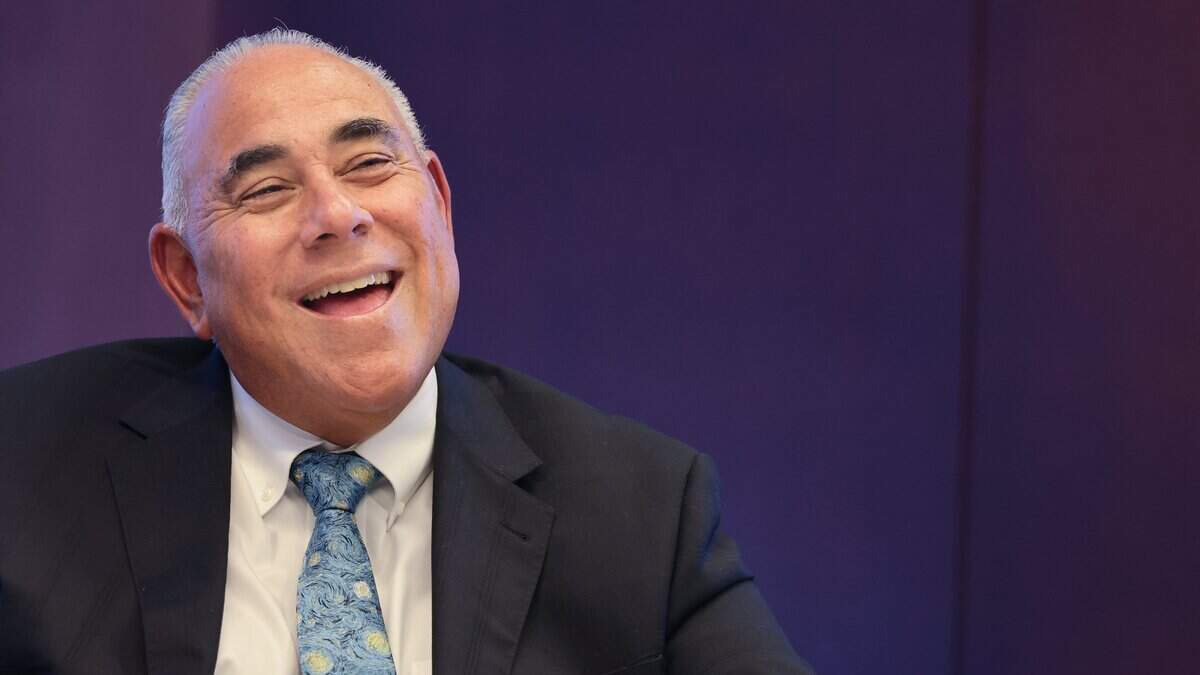
Jimmy Morales on PortMiami fuel, Miami-Dade’s garbage mess and life after County Hall
Three months ago, Jimmy Morales was one of the most powerful administrators in local government, serving as a top deputy to Miami-Dade Mayor Daniella Levine Cava. Then he tried to close a deal for PortMiami to buy a private fuel yard the port’s ships depend on, which had been scooped up by luxury condo developers.
Read more A body was found floating in the Miami River near a Greek restaurant, police say
The reported price of well over $400 million that Morales helped negotiate for the county to purchase it from the new buyers provoked intense criticism, and then unhappiness by Levine Cava, when it became public. In June, she asked for the resignations of both Morales, who served as her chief operating officer, and the PortMiami director who worked under Morales, Hydi Webb.
It was an abrupt and unexpected end for Morales’ second era at County Hall. Once a county commissioner himself, Morales was the first high-profile hire by Levine Cava, who named him chief operating officer shortly after winning the 2020 election. At the time, he was the city manager in Miami Beach.
Now he’s a few weeks into his new job: special counsel at Bilzin Sumberg, a Miami law firm with one of the top lobbying teams at County Hall and beyond. While county rules bar Morales from lobbying Miami-Dade officials for two years, he’s free to represent clients in other local governments, including his old employer, Miami Beach.
The 64-year-old Harvard Law School graduate sat down with the Miami Herald in a Bilzin conference room overlooking Biscayne Bay to discuss how Donald Trump messed up Miami-Dade’s incinerator plans, the risks of a court fight over Port Miami’s fuel, and the unmet challenges he said he reluctantly left behind at County Hall.
An edited excerpt of the interview is below.
Tell me about your new job.
I am special counsel for the firm to provide some unique insight to our clients. Not just as a lawyer, but as somebody who ran government. The response has been incredible — the number of people who called and congratulated me: “Jimmy, you stuck that landing, and you’re in a great place.” I’ve gotten direct calls from existing Bilzin clients who said: “I’d love to get your perspective on this.” Or, “I’ve got a project over here that maybe, because you worked on ‘blank,’ you know about it.” And so the initial responses are very positive.
What was the response like when news spread that you were leaving your county job so abruptly?
I was flooded with phone calls and text messages and emails. It was all supportive.
Were some people mad on your behalf?
I think it was surprising to a lot of people. You know, I had devoted so much of my life to the public sector, and I think there were people out there who were disappointed. And then there were other people who said: “All right, now go make some money.”
If a client asks you about big challenges facing Miami-Dade that might be flying under the radar, what would you tell them?
There are serious infrastructure issues that don’t get talked about. The obvious one that everyone talks about is transportation. But we’ve also got roads, bridges, sidewalks. I mean, into the billions dollars of, you know, resurfacing and all that kind of stuff. In the area of solid waste, there’s going to have to be some significant investment. Our landfills are coming to an end, and waste doesn’t just go away.
At Miami Beach, I was able to, with my team, really attack flooding in those areas that were lowest and used to flood badly. That’s a short-term solution. Because, unfortunately, sea levels keep rising. At some point, the community is going to have to make some really hard decisions. Do we raise everything? Do we abandon certain areas because we can’t protect them?
Where is the money to pay for infrastructure improvements?
What we probably need is, every 20 or 30 years, a community needs a general obligation bond. [A general obligation bond refers to a ballot referendum that, if passed by voters, authorizes a local government to borrow money from Wall Street to pay for major projects, with the loans covered by a special property tax dedicated to debt.]
When I served on the commission from 1996 to 2004, we did a parks bond, which was incredible. We did the 2004 GOB, and we did the half-penny [a half-percent sales tax to fund roads and transit projects]. When I was city manager in Miami Beach, we did a half a billion dollar bond for resiliency, underground projects and public safety buildings. People think no one’s ever going to support that kind of stuff. But the record shows the opposite.
[In late 2024, Levine Cava had a plan to rebuild the county’s garbage incinerator in Doral after it was destroyed in a fire but backed off that idea after private objections from Eric Trump, a son of the president, to her and to commissioners. The Trump family owns a golf resort in Doral. Now the county is using trucks and trains to ship garbage to landfills across Florida while considering whether to build a new waste-to-energy incinerator.]
Read more Airline routes, race-car homes and jobs. See top business changes in Miami
On the topic of Solid Waste: The county is going to have to build another incinerator at some point, correct?
You know, the mayor is a big proponent of reducing waste, and zero waste, from recycling. And I hope that can happen. I’m not optimistic. Just because in Miami, tourists generate a big chunk of our waste. But we have to come up with something. I know the people up in Central Florida are not excited about getting our waste.
I put a lot of time and energy into a proposal to really deal with waste-to-energy. I’m disappointed that didn’t happen because I think we had it set to go. And probably by getting it done sooner, it might not have been as expensive.
Did it occur to you while you were getting your ducks in a row that the 2024 presidential election could screw that up?
You know, I have to admit, I had not thought about it. I was caught off guard by that.
Did [the Trump family’s objections] have to screw it up? Could you have soldiered through with the original plan?
I don’t know. It wasn’t my call. I think the elected officials decided at that point, let’s do something else. But it’s a shame. I think, but for [the Trump pushback], we might have moved forward. We could have had an opportunity to educate the community that this is completely different technology. It’s cutting edge. Go to the Palm Beach plant. You can’t smell it when you’re outside at all.
It would have been a big upgrade for Doral to go from what was there before?
Oh yeah.
When you talk about county challenges, how do you rank PortMiami not owning the fuel depot on Fisher Island?
I think the county will get it one way or the other. It serves a very important public purpose. So I think the county will own that facility, whether it’s through eminent domain or whether it’s through an agreed-up purchase. What it will cost, I don’t know.
Why did you think it made more sense to do a deal instead of an eminent-domain legal proceeding?
I can’t talk about that deal. But there’s an old adage you often hear lawyers talk about: A bad settlement is better than a good lawsuit. A settlement, even if it’s bad, you control it. You know what the risks are. You manage them. But if you go to court, a jury of 12 people is going to get to decide what the value is of that property.
As a city manager and as COO, I always looked at litigation as fraught with risk.
You never know what a jury is going to come back with. Governments normally have deep pockets. You usually don’t want to be the one with deep pockets in front of a jury.
Read more Traffic alert: Crash shuts down stretch of I-95 near Broward and Miami-Dade line










Post Comment