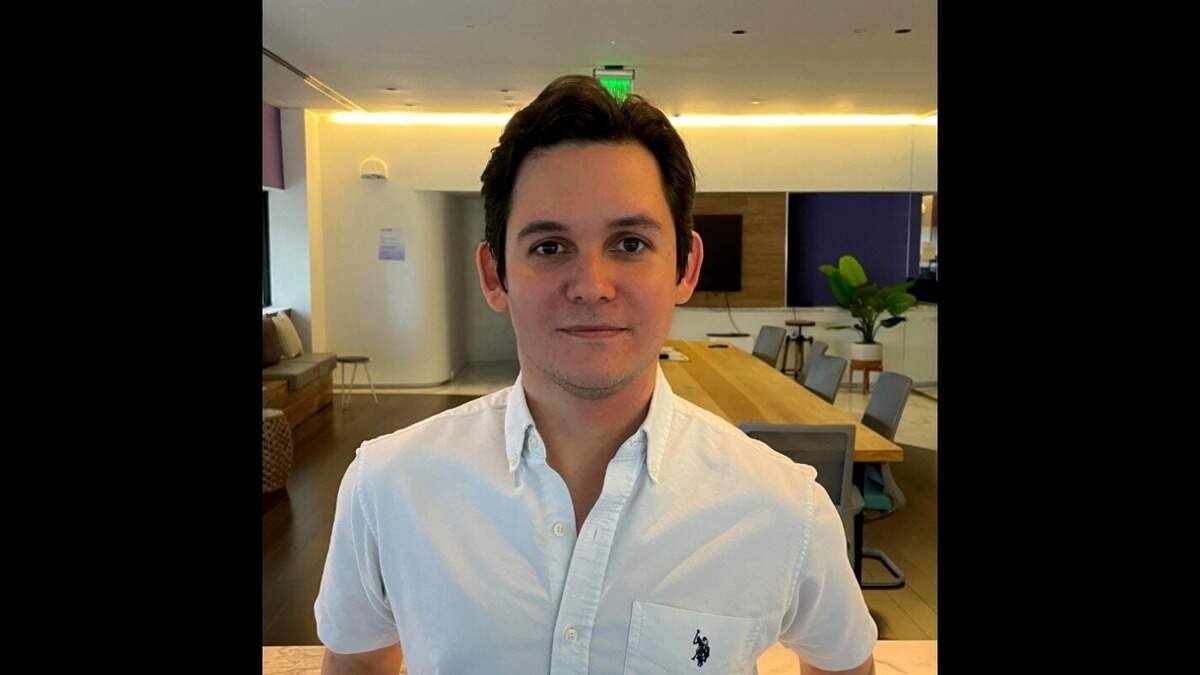
He waited 12 years for an asylum hearing. Then he left Miami for Venezuela
Last month, after 12 years waiting for an asylum hearing that never came, Diego Vetencourt decided to leave the United States before the government could make him.
Read more Baby left in car while man gambled at Seminole casino in Broward, police say
The Venezuelan national spent 12 years building a successful business in Miami-Dade on an asylum claim, never once being summoned to court. But recent changes for asylum seekers introduced under the Trump administration led the long-time Miami resident to abandon his life in the U.S. and return to Venezuela for good.
Nevertheless, Vetencourt describes himself as one of the lucky asylum seekers who have the resources and stability to live comfortably in Venezuela. Thousands of his compatriots now face a dilemma between leaving the U.S. voluntarily or risking deportation and a 10-year ban on re-entry known as the ‘kiss of death.’
Vetencourt self-deported on Oct. 27, flying from Miami International Airport to Caracas with his 4-month pregnant wife, on a Venezuelan travel document issued to him because he had no passport.
He had been living in Miami with a work permit and a Social Security Number, and says he was never in unlawful status and paid more than $2 million in taxes as a business owner selling artificial-intelligence training and digital-cloning services. “My asylum was pending for 12 years, nobody ever called me to court,” he said.
But a September immigration court ruling overhauled the asylum process for Vetencourt and thousands of other Venezuelan nationals: “Overnight my case was criminal.”
On Sept. 4, the Board of Immigration Appeals held that Nicolás Maduro’s removal by U.S. forces in January, and the transfer of authority that followed, amounted to a change in country conditions in Venezuela.
Until then, an applicant had to show a well-founded fear of persecution in Maduro’s Venezuela; now the question is whether that fear holds in the new Venezuela, where political repression and state violence has eased considerably. Board decisions bind immigration judges, so the ruling reaches every pending Venezuelan case.
It arrived atop other changes. Temporary Protected Status for more than 650,000 Venezuelans ended Nov. 7, and since Jan. 1 a has suspended Venezuelan entry as immigrants and on tourist, business, student and exchange visas. Removal flights carried 530 Venezuelans home in August, according to Human Rights First’s ICE Flight Monitor.
The decision was not impulsive, he said. If he went to court, he risked being detained, and with his wife pregnant, he would not take that risk. “The feeling of them putting me in jail and not being with her kills me,” he said. With his business allowing him to work anywhere, he began wondering why he was choosing to live in fear.
“It is not an emotional outburst … It is a conscious decision, with a great many factors behind it, and obviously it is a terrible decision to have to make, because they corner you,” Vetencourt said. “I don’t think any country or any politician needs to determine the trajectory of your life.”
Read more Man stabbed multiple times in Fort Lauderdale, police say
At the gate, minutes before the flight was due to leave, three ICE agents took him and his pregnant wife aside and began asking questions.
“They didn’t separate us, but they put us a few meters apart, and they asked each of us questions individually: who we are, why we are here, where we are going,” he recalled. The agents signed the travel document and photographed them, he said. “I don’t know if it was to count us as deported or not.”
Vetencourt has no regrets about his decision. “I feel an air of hope I had not felt in years,” he said, “and I actually feel that living in the United States was the hardest task I have had to do in my life.”
He is candid about why things have gone well. “Obviously I live in a bubble,” he said. “I’m dollarized, I have an American business, I live off social media. My resource problems are not the same as those of an ordinary Venezuelan.” His advice to Venezuelans still in South Florida carries that condition: decide, he said, based on whether “they have the right infrastructure to support their family from anywhere.” And, he added, “don’t come to Venezuela to work.”
Barry Lieber, a Miami immigration lawyer and one of 74 Florida lawyers board certified in the specialty, said that calculation is now common.
He estimates 95% of Venezuelan asylum cases are denied in court. Meanwhile, a removal order carries a 10-year bar on returning, “the kiss of death,” in his words. Leaving first does not.
Most of his Venezuelan clients are staying, he said, largely professionals whose employers are sponsoring them for permanent residency.
Vetencourt’s own work visa, which he had meant to pursue from Venezuela, has stalled — “put on pause for being Venezuelan,” he said. Now, Vetencourt insists he is “never going back to the United States.”
He gave up his Miami condominium on Oct. 27 and asked his mother and aunt to collect what he and his wife could not carry. But when they let themselves in, the apartment had already been emptied by burglars. “In the end they are material things,” he said, “but they are one more humiliation you have to live as a migrant.”
Vetencourt does not blame the country. “I love the United States, I love my experiences, I love everything I lived there,” he said. He would make the same decision again. “I would make it a thousand times over. I am just never again going to ask anyone’s permission to live, and to justify myself, after paying millions of dollars in taxes.”
Read more New townhomes are coming to Little Haiti — but owners won’t own the land







Post Comment