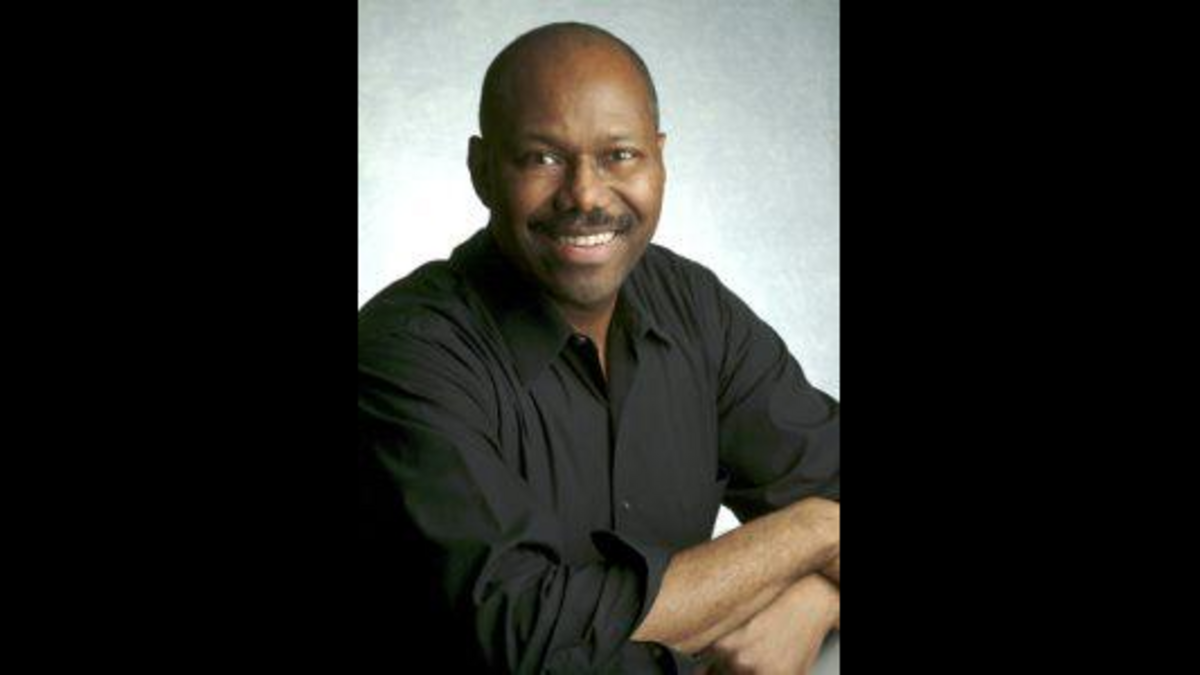
He made it to opera’s top tier as a Black conductor. His story needs to be told | Opinion
Born in 1951 in Dade County’s Goulds, where many Blacks earned their living picking vegetables, doing domestic work or working in the packing houses, Willie Anthony Waters had one dream: to become a renowned musician — a conductor of classical music.
Read more Gables couple killed in helicopter crash were targeted by identity theft ring, police say
His dreamed seemed farfetched to some, but to his parents and to his grandmother, who taught him to love music by teaching him to play the piano at an early age, the dream was doable. And in 1979, when Waters made his debut as a conductor with the Utah Symphony, it surprised no one who knew him. At the time, he was the first Black artistic director of a major U.S. opera company.
Waters died March 9 in a South Dade nursing home, where he had spent the last years of his life. He had suffered a stroke in 2019. He was 74 and the last of the six Waters siblings.
Waters’ parents were Lee A. Waters Sr., a packing house worker, and Valuda Hooks Waters, a hairdresser. “Our mothers were best friends. It was evident early on in his life, that he was destined to a success,” said childhood friend Sylvia George.
“We grew up attending Pine Villa Elementary and Mays High schools together. My father, Roby George, was the principal of Mays at the time. We went to school and church – New Bethel AME – together,” George said. (Years later, after Waters became a success, he would be one of the honorees at his home church during a Black History Month celebration.)
“Willie and I were the same age,” George said, “but he was so smart that when we went from kindergarten to the first grade, he was double promoted and went to the second grade. I always knew he would do something in music, but I had no idea that he would become a world-famous conductor.”
Like so many other Black musicians, Waters got his start in church. Taught at first by his grandmother, he started playing the piano when he was 3. By the time he was 7, he was playing for the church choirs, George said.
Years later, in a story by then-Miami Herald editorial board writer Dorothy Gaiter, a judge heard him play at a Miami Beach home where his aunt worked. He was so impressed with Waters’ talent that he paid for his music lessons until he graduated from high school.
Waters graduated from Mays High in 1968, where George said he was in the Upward Bound Program. Upward Bound gave him a scholarship to attend the University of Miami. In 1975, Waters earned a master’s degree in conducting from Memphis State University.
“The Waters siblings were extremely smart and musically talented,” George said. “And all of them went to college. All of them died before Willie. When his last sister died, I was the one who had to tell him the sad news,” she said.
I met Waters in 1986, right after he became the music director and principal conductor of the Florida Grand Opera, formerly the Greater Miami Opera. I was impressed by his friendliness, his wide smile and how he never forgot his Goulds roots.
Read more An Uber driver vanished with 400 cinnamon rolls. Border Patrol was involved
When he became musical director and principal conductor at the Greater Miami Opera, Waters was already a world-renowned maestro, and one of the few Blacks who earned worldwide success as a conductor. He led orchestras and opera companies in Berlin, Australia and Austria, as well as in New York, Houston, San Diego, Detroit and Fort Worth, to name a few.
One of his crowning moments was when he was invited to conduct the premiere of “Porgy and Bess” in Cape Town, South Africa. The event further solidified his international reputation and commitment to expanding the reach of opera.
Waters received an honorary doctorate from the University of Hartford. He conducted bass baritone Simon Estes when he recorded the classic “Ol’ Man River” with the Munich Radio Orchestra and a recital with mezzo-soprano Shirley Verrett. In 1991, he received the “Prix de Martell,” which recognizes champions of classical music. And in 2013, he received the National Opera Association’s “Lift Every Voice“ Legacy Award.
Even so, his musical career was not without hiccups.
In 1992, according to an article by the late Miami Herald classical music critic James Roos, Waters was fired by Robert Heuer, then general manager of the Greater Miami Opera. Water had been with the company 20 years. A short time later, Heuer rehired Waters and he served the opera company until 1995.
Wrote Roos in his 1992 column: “The fact is that Waters, who has done some good work here, is the only black director of a major U.S. opera company, and in brutally firing him Heuer seemed to be administering an operatic version of the Rodney King beating — coincidentally, on the same day as the outbreak of the Los Angeles riots.”
Waters went on to serve as opera conductor and artistic director of the Houston Ebony Opera Guild and the general and artistic director of the Connecticut Opera.
Waters was a homegrown boy who made it big in a world that was not easy for Blacks to enter — the world of opera. But George said at the time of his death, only The Miami Times, a local black weekly, ran a short notice. It was almost as though nobody remembered.
But his church – New Bethel AME – remembered. George said a warm homegoing celebration, organized by his nieces and nephews, was held there March 21. He had no siblings left. He never married and he had no children.
It saddens me to know that aside from his nieces and nephews and friends like George, her brother Roby and other longtime friends from the Goulds community, few remembered this Black giant in the world of classical music and opera.
Read more Miami Dade College regains control of Tower Theater years after city takeover
To me, and some others, Waters was a life well lived.
And worth remembering.










Post Comment