Florida wants to use cash meant for electric car chargers on flying cars instead
Florida had nearly $200 million to expand electric vehicle charging across the state. Instead, Florida wants to spend it on flying cars.
Read more Can you swim nude, smoke or drink at the beach? What the law says in Miami
While other states used their share of the federal EV charging money to install plugs along highways, at truck stops and strip malls, Florida sat on the funds for years. The reason? State officials said the private market has already done enough to serve “everyday vehicles.”
Instead, the state wants to put it toward an ascendant technology that isn’t yet available in the market, according to state documents obtained by the Miami Herald.
“Money is being hijacked from what would have benefited a large population to go to the oligarch, ultra-wealthy for these emergent technologies,” said Stephen Smith, with the Southern Alliance for Clean Energy, an advocacy group that supports electrifying all forms of transportation but opposes using public dollars to subsidize technology still in testing.
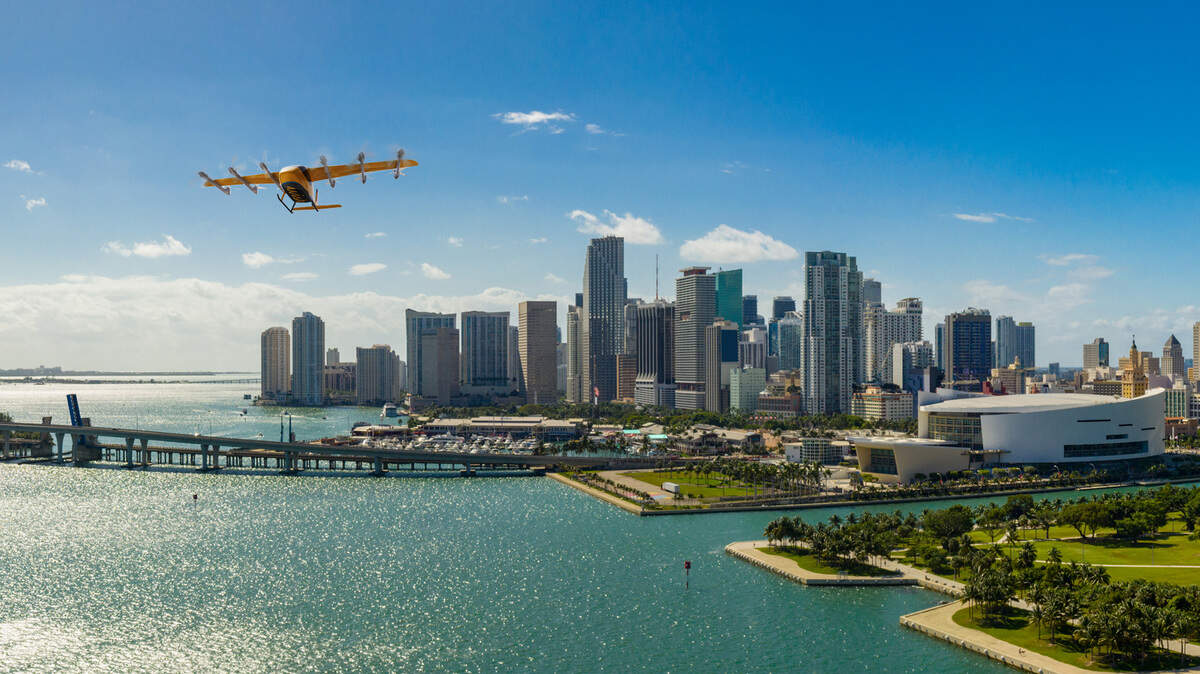
The Florida Department of Transportation (FDOT) plans to build what it calls an “Aerial Highway Network” that includes places the futuristic aircraft can charge, take-off and land.
The aircraft, sometimes called flying taxis or eVTOL, run on batteries, need no runway and resemble a cross between a small jet and a drone, with top-mounted rotors that allow for a soft vertical launch and landing.
“The Florida Department of Transportation will not waste taxpayer dollars and spend it on everyday passenger vehicles,” the FDOT document states. “Instead, FDOT’s proposal…takes an innovative and strategic approach to offer the greatest benefits to Floridians by supporting a new emerging mode of transportation.”
The state says the flying cars could also help ease highway traffic congestion. Smith pushed back at that notion, since each aircraft only can fit around two to four people.
Ryan McKinnon, a spokesperson for the Charge Ahead Partnership, a coalition that includes gas station giants Buc-ee’s and Wawa, said that funding was intended to help gas stations, small businesses and convenience stores.
“Instead, let’s support the entrepreneurs who are building businesses that serve all Floridians, not just those who can afford to ride in futuristic aircraft,” McKinnon said.
The state’s plan
The state estimates that each of the 32 charging, take-off and landing pads it will help fund with this money will cost $5.6 million. The documents do not explain where exactly these projects would be built, but FDOT has said it wants to see them at places like airports, luxury apartment buildings, golf courses and military bases.
In an even more unusual move (beyond flying cars), Florida appears to plan to pony up the matching half of the federal grant from its own coffers, rather than allowing private companies to pay, like other states have done for their EV chargers.
Federal National Electric Vehicle Infrastructure (NEVI) funds typically cover 80% of an eligible project’s cost, and the recipient – the gas station or, in this case, flying car companies – has to come up with the 20% to match. It seems that instead of leaving that match burden to the private sector, the state of Florida is potentially offering to cover that matching share itself for some projects. FDOT did not immediately respond to a request for clarification.
FDOT says it began planning for flying vehicles in 2021 and has spent more than three years on public engagement around the project.
As a new class of aircraft, flying taxis require their own testing and federal approval. In June, President Donald Trump signed an executive order directing the FAA to work with companies on a “pilot program” to test flying cars.
Read more Early voting begins Monday in South Florida. Here’s what to know
FDOT was one of eight state transportation agencies chosen to lead that testing. A U.S. Department of Transportation promotional video for the program featured clips of “The Jetsons,” with a title card reading, “Once a fantasy, now a reality.” Governor Ron DeSantis later announced the state will fund the project costs. A staff analysis didn’t put a budget amount on the bill.
READ MORE: DeSantis announces funding for flying taxi landing and take-off pads
Florida has already built the nation’s first aerial testing site at FDOT’s SunTrax facility in Central Florida, a 475-acre proving ground also used to test self-driving cars. Companies including Archer (backed by United Airlines and Miami billionaire Stephan Ross), BETA (backed by Amazon), Electra (backed by Honeywell) and Joby (backed by Toyota, Delta and Uber) have been selected to work with FDOT on the pilot program.
The $197 million in funding was distributed to the state over the years through the NEVI program that was approved by Congress under the Biden administration to fix the problem of long lines at chargers, stretches of interstate with little to no stations and “range anxiety” on long trips.
READ MORE: Florida falls short on EV chargers. So why is state sitting on millions to install them?
Some state leaders have cast EV charging infrastructure as “woke” spending in recent years (and launched a website to say it.) While other states pushed back against the Trump administration to keep using NEVI money for traditional chargers, Florida stayed quiet and stopped publicly posting its EV charger deployment plans. The state’s flying-car pivot only came to light after the Miami Herald filed a records request in January, which went unfulfilled until the newspaper’s lawyer got involved.
Is it true that there are enough EV chargers?
FDOT said its analysis found the number of public EV charging ports in Florida has more than doubled in the past four years. The agency identified 452 fast chargers and 1,708 slower Level 2 charging stations publicly available as of Jan. 2025.
Bill Ferro, chief technology officer of the EV charging data platform Paren, agreed the private market has made real progress without government help over the past four years
One thing that’s helped is that Tesla, which is known to have the most reliable charging network, has started selling their hardware to third parties who can wrap the stalls with their own logo, Ferro said.
Still, he said, there aren’t yet enough chargers to call the problem solved.
Floridians boasts the second-highest amount of electric vehicles in the country, but still falls behind the national average on chargers per vehicle, according to data collected by the Southern Alliance for Clean Energy.
According to the state’s EV Roadmap, the highway system has enough chargers throughout, a point electric car advocates generally agree with. But a gap remains for Floridians who live in apartments or condominiums without access to chargers.
Under NEVI’s updated rules, once a state declares its interstate charging network sufficiently built out, it can redirect funding toward other charging needs like for drivers without a home garage or driveway. North Carolina is using that flexibility to fund chargers for apartment complexes.
The Federal Highway Administration (FHWA) has completed the review of Florida’s charger corridor and agreed the highway fuel corridor was fully built out. FDOT continues to coordinate with the FHWA and it is expected it will greenlight the state’s request to spend the cash on flying car infrastructure instead of chargers.
Read the documents here:
Ashley Miznazi is a climate change reporter for the Miami Herald funded by the Lynn and Louis Wolfson II Family Foundation and MSC Cruises in partnership with Journalism Funding Partners.
Read more Florida wants to use cash meant for electric car chargers on flying cars instead
This story was originally published July 29, 2026 at 2:20 PM.









Post Comment