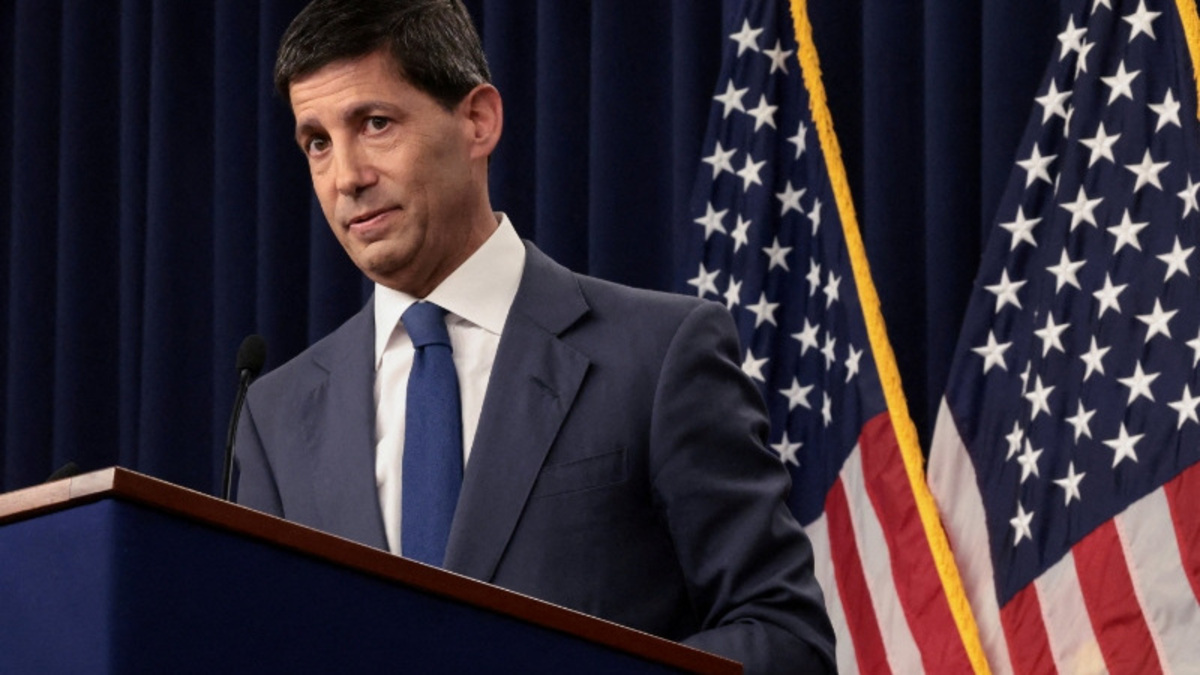
Fed’s table is set for a rate hike, a first under Warsh
Sept 14 (Reuters) – Federal Reserve Chairman Kevin Warsh dislikes giving any guidance about the likely path of U.S. interest rates, but elevated inflation, $100-a-barrel oil, and his own emphasis on the need to deliver price stability and to pay attention to signals from financial market pricing appear to leave little doubt about what’s next.
Read more Analysis-Biggest risk for sinking bond market is Fed standing pat
The U.S. central bank will announce its policy decision at 2 p.m. EDT (1800 GMT) on Wednesday following the end of a two-day meeting. Financial markets are betting heavily that Fed policymakers will lift their benchmark rate a quarter of a percentage point, to a 3.75%-4.00% range, and signal further tightening ahead.
Such a decision could land Warsh, who has run the Fed’s rate-setting committee since starting the job in May, in a tight place. President Donald Trump picked Warsh with the explicit expectation that he would cut interest rates, but so far has not blamed him for failing to deliver, saying it is the fault of his “political” fellow central bankers. It’s not clear how the president would react to a rate hike so soon before November elections in which Trump’s Republican party is defending slim majorities in Congress.
A decision to raise rates, especially if accompanied by policymaker projections for another increase this year as some analysts now expect, could also force Warsh into delivering at least a bit of a steer on the rate path and his own expectations for the economy — unless he is comfortable with leaving the door wide open to further increases.
“Warsh will also need to walk a fine line in his remarks if he still aims to provide no forward guidance,” TD Securities economist Oscar Munoz wrote. “If the Fed decides to tighten policy, he will certainly be asked about future rate hikes. It is fairly clear to us that more tightening would be in the pipeline if the Fed goes the hiking route in September. It will be interesting to see how the chairman goes through that balancing act.”
A week ago, there was far less certainty about this week’s outcome.
“Give disinflation a chance,” quipped Fed Governor Christopher Waller at a REUTERS NEXT event in early September, citing cooler inflation readings in June and July that appeared to carve a path toward the Fed’s 2% goal within a reasonable time frame. “I think that we have to wait and see,” New York Fed President John Williams said earlier this month.
But hotter-than-expected inflation readings last week may disappoint both Williams and Waller, and add to the dismay of the three regional Fed bank presidents — Cleveland Fed’s Beth Hammack, Dallas Fed’s Lorie Logan, and Minneapolis Fed’s Neel Kashkari — who already in July felt the Fed ought to be raising rates and dissented on the decision to hold steady instead. Several other Fed policymakers have said they need to see disinflation “soon” or they too would support a rate hike.
Read more India’s August retail inflation at 4.82% on-year
U.S. consumer price inflation excluding energy and food, a key measure of underlying inflation, rose 0.3% last month from the previous month, the Bureau of Labor Statistics reported, far more than is consistent with inflation at the Fed’s 2% goal. Coupled with oil prices that have soared above $100 a barrel amid renewed hostilities in the Middle East, the latest data won’t add to confidence that underlying inflation is moving toward 2% “clearly and at sufficient speed,” as Warsh told global central bankers in Jackson Hole, Wyoming last month that he wanted to see.
“At the end of the day the chair’s repeated stern warnings on inflation intolerance risk institutional credibility absent some action to back it up,” said JPMorgan economist Michael Feroli, who projects the Fed will raise rates on Wednesday although he thinks it’s a “closer call” than the 85% chance or so priced in by futures markets.
Scotiabank economist Derek Holt believes hiking rates now is the wrong move but thinks it will happen regardless, given what Warsh said. “Chair Warsh has probably boxed himself in with his high deference to markets,” Holt said. “If you don’t hike when it’s priced, then when?”
Economists say that with most Fed policymakers likely to defer to the preferences of the still-new Fed chair, Warsh could bring along a majority to a hold.
But given Warsh’s own repeated declarations that inflation is the Fed’s responsibility, the disappointingly hot inflation reading in August, and Trump’s recent signal that the war in Iran — and therefore high oil prices — may continue for another couple months, he may not want to.
“We think Waller and Williams will argue in favor of a rate hike on the basis that the ‘speed’ of the disinflationary process is not satisfactory,” EY-Parthenon economist Gregory Daco wrote. “With only one or two dissents favoring a hold, Chairman Warsh will likely use the cover of the majority to lead from behind and also vote for a hike.”
Read more Elmet Group wins $2 billion US tungsten stockpile contract
(Reporting by Ann Saphir and Michael S. Derby; Editing by Andrea Ricci )
Copyright Reuters or USA Today via Reuters Connect
This story was originally published September 14, 2026 at 6:03 AM.





Post Comment