Eddie Brown: College sports’ labor fight echoes the Gilded Age as Congress weighs new rules
SAN DIEGO – Imagine an industry generating billions of dollars, powered by a specialized workforce whose employment status remains fiercely contested.
Under mounting legal pressure, its powerful institutions begin making concessions.
Workers receive a share of the revenue, and management establishes multimillion-dollar retention funds to discourage them from leaving.
Then the institutions turn to Washington, seeking legislation to cap compensation, restrict worker mobility and protect their rulemaking authority from certain lawsuits.
Nearly everything is negotiable, it seems, except one thing: A collective bargaining agreement giving workers a formal say in the rules governing their livelihoods.
Sound familiar?
The story is playing out across college athletics, but its roots stretch back to the Gilded Age.
Industrialist George Pullman built a model town for workers in the 1880s, providing housing, churches and recreation while controlling their living conditions.
When wages fell, rents did not and workers went on strike in 1894. Railroad executives mobilized, courts issued injunctions and federal troops intervened.
The dispute exposed the limits of an employer’s generosity when workers had little control over the terms.
College athletes are not 19th-century industrial laborers. Their protections reflect generations of organizing and labor legislation. But the Protect College Sports Act revives a familiar question: Who should write the rules governing the people whose work generates the wealth?
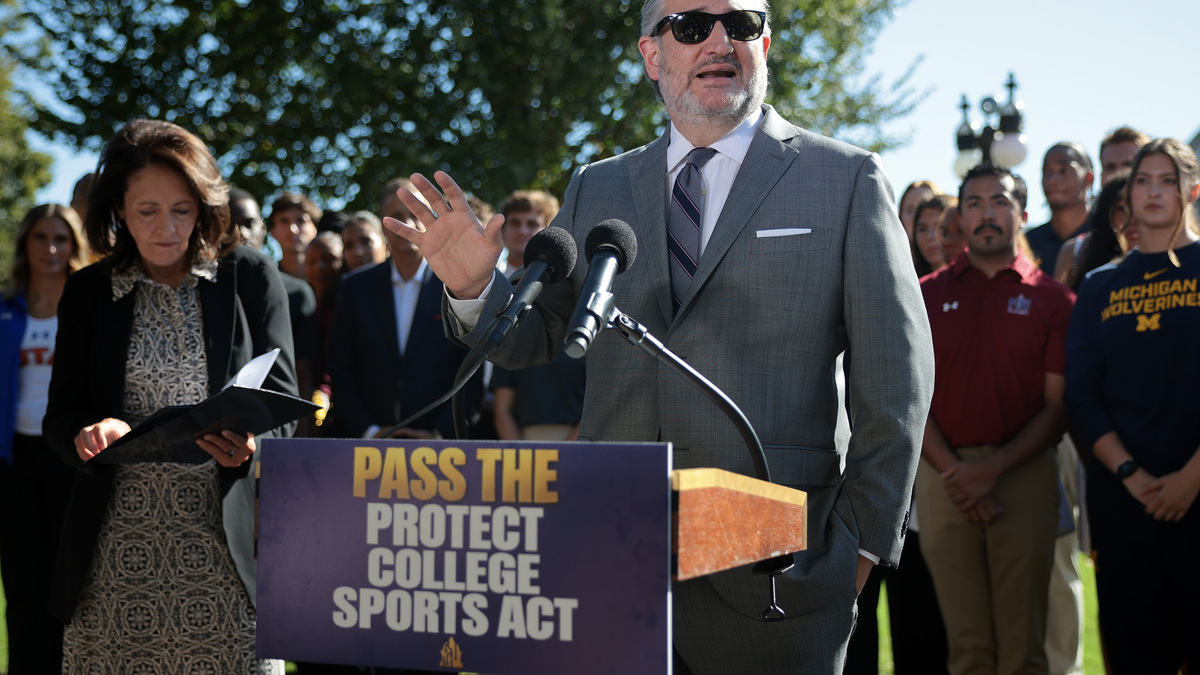
The Senate voted 77-22 Thursday to begin consideration of the bipartisan bill, with further debate and possible final passage next week.
Its sponsors, Republican Sen. Ted Cruz of Texas and Democratic Sen. Maria Cantwell of Washington, argue that federal intervention is necessary to stabilize college sports amid escalating spending, constant litigation and unrestricted player movement. The bill would regulate compensation, transfers and eligibility; grant limited antitrust protections to the NCAA; and establish NIL, scholarship and health care protections.
The AFL-CIO counters that institutions would gain legal protection for compensation restrictions without having to bargain over them with athletes. The organization argues that the arrangement preserves institutional control at the expense of athlete representation.
That is the divide. Under one model, schools set the rules and Congress decides which restrictions can withstand antitrust challenges. Under another, athletes negotiate compensation and working conditions through collective representatives.
Professional sports has long relied on the second approach.
In 1996, the Supreme Court recognized in Brown v. Pro Football that lawful collective bargaining can provide a limited exemption from antitrust law. It can’t prevent every lawsuit. It can, however, shelter certain negotiated restrictions that otherwise could invite antitrust challenges.
The Protect College Sports Act could reduce one category of lawsuits while expressly leaving athlete employment status unresolved.
College sports has lived with that unresolved question for decades.
In the 1950s, NCAA executive director Walter Byers popularized “student-athlete,” partly to resist workers’ compensation claims. Amateurism emphasized education while insulating limits on athlete pay as television revenue and coaching salaries grew.
Eventually, the courts intervened. The Supreme Court unanimously rejected NCAA limits on education-related benefits in 2021. The subsequent House settlement authorized direct revenue sharing and approximately $2.8 billion in damages. Neither settled every compensation or employment question.
Nor would a targeted antitrust exemption settle disputes involving contracts, injuries or civil rights.
Read more Ed Graney: Golden Knights shouldn’t forget losing in Cup Final
Consider Title IX. The landmark law bars sex discrimination in federally funded education.
The bill explicitly preserves it and includes protections for women’s sports. But the new compensation model creates difficult questions: If schools direct most revenue-sharing money to football and men’s basketball, is that athletic financial assistance subject to proportionality rules, payment for commercial value or something else?
The U.S. Department of Education issued guidance in January 2025 treating certain NIL payments as financial assistance under Title IX. The Trump administration rescinded that guidance a month later. The statute itself didn’t change.
UConn women’s basketball coach Geno Auriemma raised concerns in March that the new compensation system was undermining the equity Title IX was intended to establish.
Labor organizations have also argued that the bill’s protections don’t adequately address gender discrimination. Its sponsors contend that the legislation preserves Title IX and establishes additional safeguards for women’s sports.
The longer-term concern extends beyond this bill. Universities facing repeated compensation challenges and gender-equity disputes might eventually seek legislation changing how Title IX applies.
There is no established evidence that the bill’s sponsors intend to repeal it. Its preservation in this bill, however, cannot dictate how a future Congress or court will treat the issue.
The commercial interests surrounding the debate warrant scrutiny, too.
Disney, ESPN’s parent company, disclosed lobbying on the legislation. ESPN then gave Cruz roughly nine minutes on “College GameDay,” after Nick Saban and Pat McAfee had expressed support. Following criticism, the network interviewed NAACP President Derrick Johnson, a critic of the bill, on Tuesday’s “SportsCenter.”
The network reportedly moved the interview forward from a potential Saturday “College GameDay” appearance to ensure Johnson’s perspective aired before Senate consideration.
The appearances nevertheless occurred on programs with substantially different audiences. Disney’s disclosure doesn’t prove executives directed ESPN’s coverage, but it establishes a commercial interest relevant to evaluating that coverage.
Supporters say nationwide guardrails and spending limits can preserve smaller programs, women’s and Olympic sports, scholarships and medical coverage. Opponents say those protections leave the fundamental imbalance intact: Institutions get to establish compensation restrictions without guaranteed athlete representation.
The NCAA has confronted that conflict through amateurism, NIL, revenue sharing and courtroom defeats.
Athletes can now be paid and institutions can regulate those payments. Congress is considering stronger legal protection for some of those rules.
The unresolved question is whether college sports can establish a durable system without negotiating its economic restrictions with the athletes whose labor sustains it.
That has always been the question at the heart of the Protect College Sports Act.
Americans have spent more than a century confronting it. Collective bargaining offers an established legal framework for negotiating those restrictions and gives workers a seat at the table.
It’s not just about doing what’s right. It’s about building a system that can last.
Copyright 2026 Tribune Content Agency. All Rights Reserved.







Post Comment