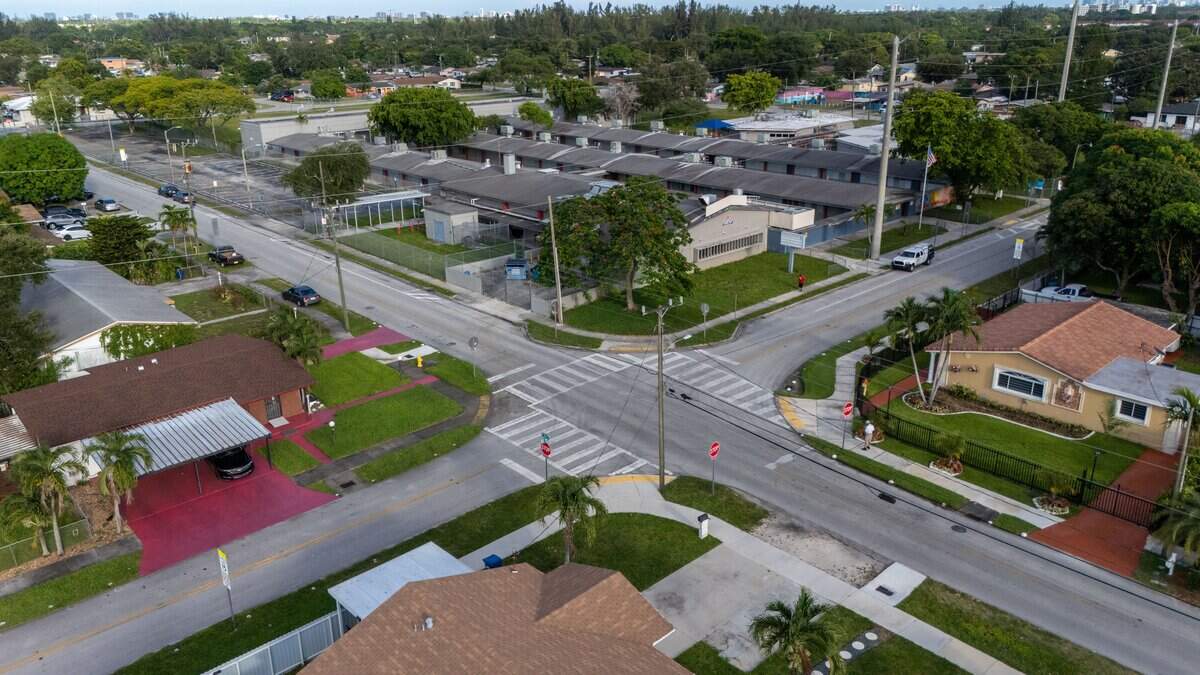
Developers see opportunity as South FL’s largest landowners — schools — shrink
Jim Rigg, the superintendent of education for the Archdiocese of Miami, has a school in South Dade that he says could be filled “two or three times over.” Leadership is doing what it can to meet the surging demand.
Read more I was alone, but not lonely. Why staying connected is vital as we age | Opinion
But there might be an easy answer just one block away.
“They’re looking to raise money to add a wing onto the school to increase capacity. A block away is a public school that’s on the closure list for Miami-Dade. Why should we not be in conversation with Miami-Dade? Why are we raising money to build a wing with an underutilized building a block away? It just makes sense,” Rigg said.
He is not alone in thinking about the future of land occupied by South Florida public schools.
His remarks came Tuesday at a panel of educators and professionals as part of the “South Florida K-12 Real Estate Summit,” hosted by Bisnow, a commercial real estate media company. More than 100 developers, attorneys and professionals crowded into a conference room in downtown Miami to hear from Rigg, top public school officials at Broward and Palm Beach counties and other private school and real estate professionals.
They didn’t touch on classroom instruction, but the theme was, essentially, math.
Public schools are losing students, using less land and need more money. Private schools and businesses have money and badly need scarce South Florida acreage.
It’s a big change in Miami and Broward County, where the school district is the largest landowner and for years rushed to build enough schools to keep pace with thousands flooding into South Florida from the north and abroad.
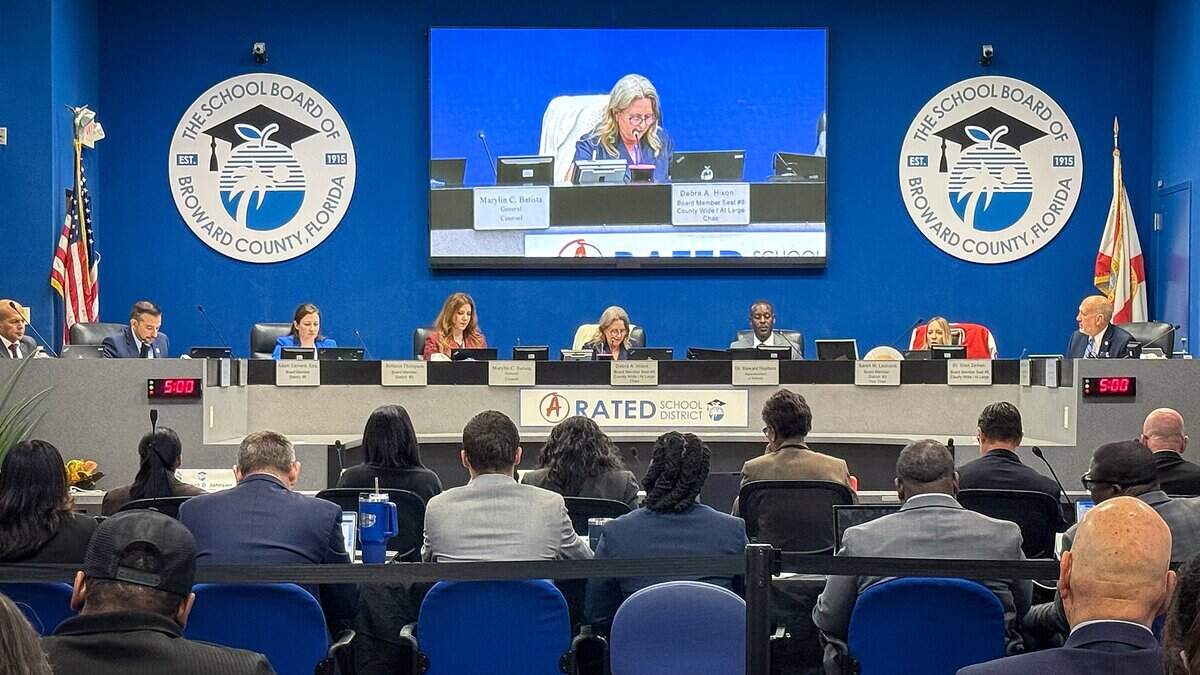
Now, they’re closing schools at a fast clip – nine in Miami and six in Broward last year, with both districts weighing more closures. It’s not an easy decision.
“Parents don’t want to close schools, kids don’t want to close schools, people don’t want to close schools,” Broward County Superintendent Howard Hepburn said. “But once the vote is actually made by the board, the noise actually just simply stops. Everybody goes into implementation mode.”
Hepburn told attendees that the main factors influencing the trend were a declining birth rate, increased immigration enforcement, affordability concerns and the introduction of the universal preK-12 private school voucher, which averages more than $8,000 in taxpayer dollars to fund a child’s private education.
Private school administrators and developers were up front about the fact the universal voucher is a huge help to their bottom line.
Rigg said the archdiocese brings in more than $177 million from families using the voucher.
John-Anthony Boggess, who runs the fast-growing Jupiter Christian School in Palm Beach County, framed students receiving the voucher as “leverage” to finance improvements at a school like his.
“Here in Florida, we don’t fund school districts – we fund children wherever that child goes. Those dollars go with them. So, that then becomes a leverage opportunity for capital,” Boggess said.
Read more Davie Town Council candidate accused of drunk-driving crash, police say
He stressed that the voucher funding stream was the effort of a years-long political push, remarking there’s no “putting this genie back in the bottle.”
“That’s $8,300 per child that you say, ‘Hey, I can bring that to the bond market.’ And now all of a sudden, it is very palatable to take on an entity like mine that might not have $25 or $50 million dollars of an endowment, but we have a growth and an escalation plan, and we have a vision for what this could really look like,” Boggess said.
Meanwhile, Palm Beach County School District is starting to lose students like its neighbors to the south. According to the South Florida Sun Sentinel, the number of students enrolled there has fallen by more than 7,000 from last year to this year.
“The folks who can afford to move to Palm Beach County are folks who can afford to send their kids to private school, especially with the help of the vouchers,” Joseph Sanches, Chief Operating Office of Palm Beach County School District, said.
Still, Sanches said there are no plans for the county to close schools.
But ideas abound for old public school buildings and the land they sit on once they’re closed.
In Goulds, the Miami-Dade school board just approved a 10-acre, 364-unit, income-restricted multifamily housing development on a school site that will be built next to an existing school. A private school specializing in autism care is in talks with the district to open up at the old Rainbow Park Elementary building in Opa-Locka. Developers in Fort Lauderdale are proposing a project with affordable housing, a teacher resource center and a hotel on the site of the recently-shuttered North Fork Elementary.
At the summit, advice was shared to audience members on both sides of the ledger: private sector leaders looking for land and school officials discerning the best deal for them.
For developers, panelists advised them to get a contractor involved as early as possible, be realistic about expected enrollment, make the project useful to the surrounding community and don’t shy away from sending a school district an unsolicited proposal.
Andrew Frey, managing director at the real estate firm JLL and former top real estate official at the City of Miami, had some straightforward advice for school districts: use the bidding process to lay out clear monetary and strategic objectives and opt to lease your land rather than sell it.
“My default advice would don’t sell,” Frey said. “It might be desirable in some cases, or necessary, to look at that, but I think that should be the last resort. Then it’s ‘Okay, we’re going to hold on to our real estate assets. What are creative deals that we can do here that could be win-wins?’”
He cited the Goulds project as one such win-win.
But this whole discussion puts school administrators and elected officials in settings that don’t come natural to them. There’s a learning curve, Hepburn said.
“We’re great at educating kids. We’re great at creating great learning experiences and exposure for kids to maximize their potential,” Hepburn said. “We’re not real estate agents.”
Read more How Miami leaders celebrated a ‘transformational’ campus and a $3 billion gift










Post Comment