Despite pressure, most South Florida cities skip ICE program to train local cops
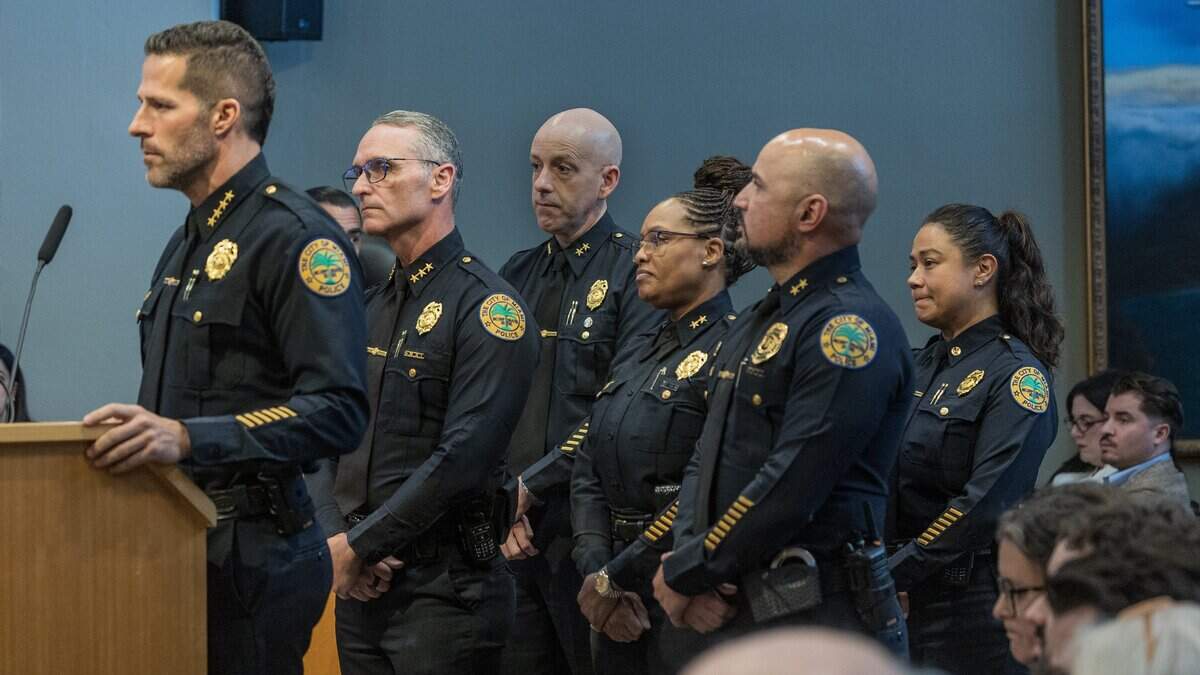
Despite enduring a public pressure campaign from the state and Gov. Ron DeSantis, most South Florida cities with their own police departments have not partnered with Immigration and Customs Enforcement’s in a program to train officers to take part in the detention of migrants.
Read more 17 data center projects proposed on Western public land. New pitch is in Idaho
After President Donald Trump was elected to a second term, Florida officials eagerly embraced his mass deportation agenda. State Attorney General James Uthmeier went as far as threatening to remove from office elected officials who opposed ICE’s 287(g) program, which grants local cops some of the powers of federal immigration agents.
Federal data shows that Florida has the second-largest number of 287(g) agreements after Texas, a significantly larger state. But a Miami Herald analysis found that most South Florida cities have stayed on the sidelines. More than 30 municipalities — including Fort Lauderdale, Miramar, Homestead and Miami Beach — have not entered the federal partnership.
In all, about one-third of all Miami-Dade and Broward County municipalities with independent police departments have joined the ICE program, including Coral Gables, Hialeah, Davie, Hollywood and Sweetwater, according to a review of public contracts.
South Florida local governments’ disparate approaches reflect the muddy legal landscape local municipalities have faced amid the state pressure to join 287(g).
Of the 16 Miami-Dade and Broward cities with 287(g) agreements, eight responded to Herald request for data. Collectively, those eight cities said they’d trained 22 officers to date, a relatively low number relative to their forces and populations. That includes the billionaire enclave of Indian Creek, with six trained officers; Pembroke Pines with six; Miami Springs with four; Davie with three; Miami with two and Pembroke Park with one. The City of Doral and North Bay Village said they had not trained any officers yet despit having signed agreements.
The streets of South Florida are frequent sites for see ICE-trained law enforcement. State agencies like the Florida Highway Patrol have aggressively pursued ICE directives. Federal agencies, including ICE and Customs and Border Protection, have also been carrying out enforcement actions and arresting immigrants.
Unlike municipalities, Florida sheriffs offices and county jails were mandated to sign 287(g) agreements. Florida International University and Florida Atlantic University have also partnered with ICE, drawing sharp backlash from students.
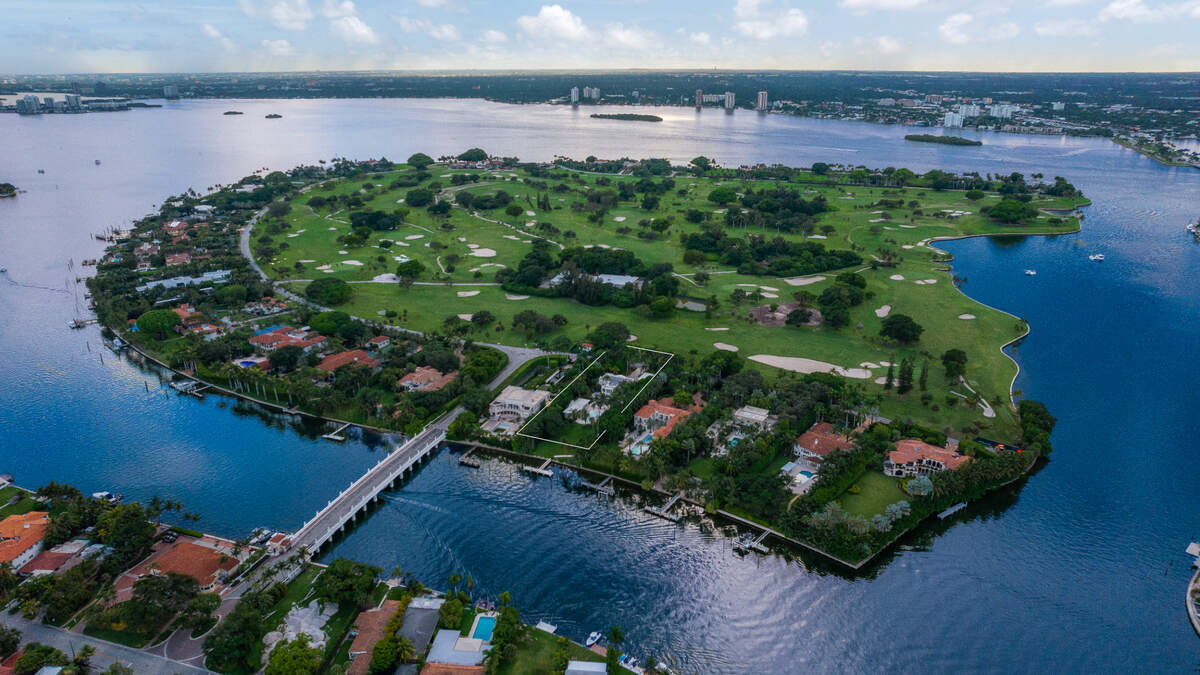
Among the small minority of South Florida cities that have signed 287(g) agreements, Indian Creek — a tiny Miami-Dade village dubbed a “billionaire bunker” that’s home to tech tycoon Jeff Bezos and Trump’s daughter Ivanka — has an unusual number of officers trained in the program, with six, for a population of fewer than 90. In contrast, Miami, with a population nearly 6,000 times larger, has only two trained officers.
READ MORE: Miami island where Bezos, Ivanka and Jared live is all in on immigration enforcement
State and federal agencies have dangled generous financial incentives to join Trump’s effort to detain and deport immigrants, which can be particularly appealing for small departments. ICE has offered departments $100,000 up front, and reimbursement for officers’ salaries, according to public ICE advertisements.
But it’s unclear whether any money has been requested or disbursed so far. Both Doral and Indian Creek said they had received no money from federal authorities for participating.
Muddy legal waters
County detention facilities and sheriffs offices are explicitly mandated to join under a state law Gov. Ron DeSantis signed in 2022. But for local governments, the answer hasn’t always been clear-cut.
The law does not explicitly require local municipalities to join. But Uthmeier argued that officials in smaller municipalities who rejected proposed agreements violated the state’s laws against so-called sanctuary cities. Those statutes prohibit local governments from limiting federal immigration enforcement. In public letters, Uthmeier threatened to remove elected leaders in Fort Myers, Key West and Orlando.
Read more When does the time change in South Florida? Check date, sunrise, sunset
Some cities reversed course and signed agreements with ICE after Uthmeier’s threats. To date, no officials to date have been removed as a result.
In an August 2025 hearing in state court, attorneys representing the state said that Florida did not interpret state law to “require every municipality to enter into a 287(g) agreement.” Cities could passively avoid signing those agreements but couldn’t actively oppose them, because that “can demonstrate a sanctuary policy,” they argued.
Of the 11 municipalities without 287(g) agreements that responded to the Miami Herald’s questions, all said they had “not received any pressure or threats to enter into the agreement,” from state leaders, as Broward County’s Margate Police Department put it. Unlike municipalities Uthmeier threatened after rejecting the agreements, these local governments have not formally accepted or rejected a 287(g) collaboration.
Public pressure dwindles
South Miami Mayor Javier Fernandez, whose town filed the March 2025 lawsuit that led to the clarification from the state, said the DeSantis administration isn’t exerting nearly the same pressure now as it did last year, when a wave of local governments joined amid Uthmeier’s threats and the launch of Trump’s mass deportation agenda.
“Not nearly with the same intensity or effort,” Fernandez said. He pointed to nationwide polling ahead of the midterm elections that shows voters think federal mmigration enforcement efforts have been excessive.
In Florida, recent polling from N+ Univision/YouGov shows that most Hispanics think immigration enforcement has gone too far. “That’s why the state has cooled its jets with pushing the enforcement. It’s just not popular,” Fernandez said.
But Uthmeier’s office pushed back against the interpretation.
“The idea that the Attorney General has moved away from this position is inference on your part, not reality,” press secretary Jae Williams said. He pointed to the five times Uthmeier publicly admonished cities between March and July 2025, and once in February of this year.
But South Florida cities that signed agreements last year have faced strong pushback from local residents and activists, including Miami and Doral. Critics say the program makes communities less safe because it creates distrust in police and keeps victims afraid of being turned in to immigration agents from reporting crimes.
READ MORE: Doral residents, advocates double down on demands to end city partnership with ICE
Residents, advocates, and community leaders have been showing up at Doral City Hall to demand that Mayor Christi Fraga and the city council exit the 287(g) agreement. They say the partnership has stoked fear as residents report an immigration enforcement ramp-up from federal authorities.
Doral City Attorney Lorenzo Cobiella noted that the city’s police officers “have not completed 287(g) training, performed any immigration-enforcement duties, conducted any immigration-related arrests, or participated in any ICE operations under the 287(g) agreement.”
He also said the City of Doral is waiting for Uthmeier’s office to “its obligations related to the the 287(g) agreement” under Florida’s laws.
Read more Gas prices are lower in South Florida. Check your area for the latest









Post Comment