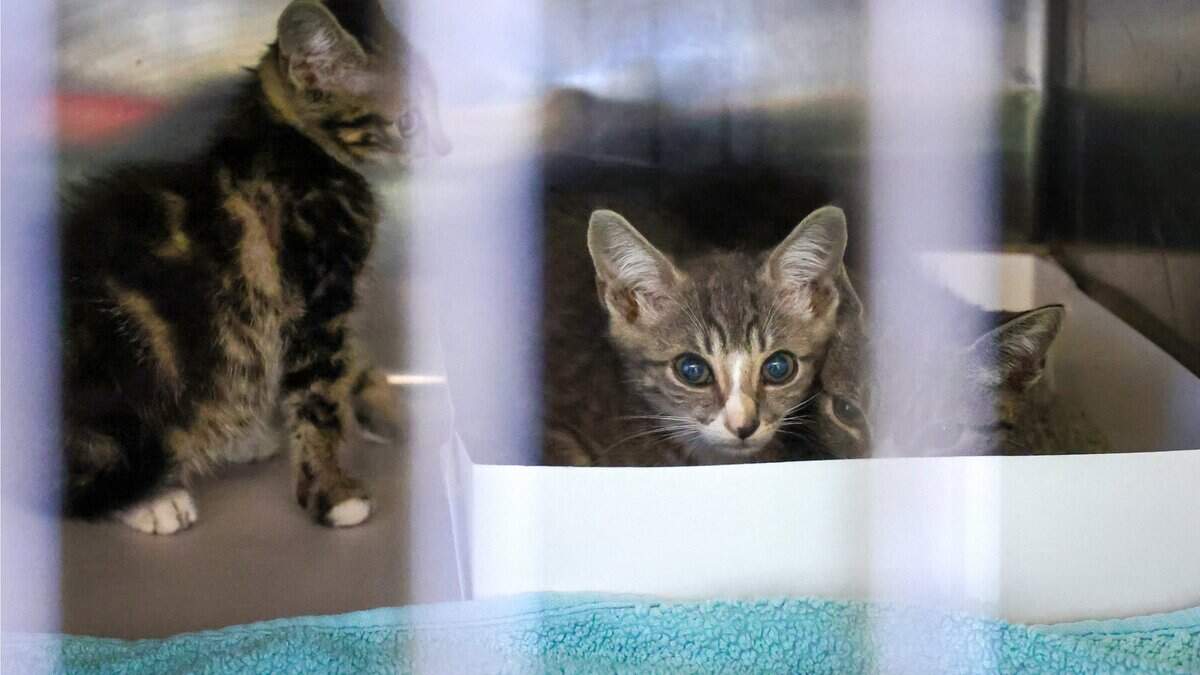
Deadly virus spreading among cats in South Florida. What are the warning signs?
Late summer brings an increase in a deadly disease spreading in cats across South Florida, causing intense illness and even sudden death.
Read more Miami’s affordability crisis goes beyond housing. These costs are rising, too
More cats are getting sick this time of year because of the region’s high population of strays, lower vaccination rates, seasonal increases in births and the virus’ traditional late summer peak, said Dr. Yamilka Lago-Alvarez, the medical director at VCA Knowles Central Animal Hospital in Miami-Dade County.
The virus, known as feline panleukopenia, is “highly resistant in the environment and can at least survive up to one year,” and vaccinations are very important to keeping your pet safe, Lago-Alvarez said.
The virus can be spread from cat to cat and from humans to cats, but humans cannot get the virus themselves.
“We typically see this disease in younger cats, but older cats can be affected as well,” said Dr. Andrew Hicks, a veterinarian with Miami-Dade Animal Services, the county’s agency for animal control and pet adoptions.
Miami-Dade Animal Services say 215 cats in their care tested positive for the virus this year. Broward County has recorded 95 confirmed cases.
“We’re currently not having what we would call an outbreak, but what you need to understand is that the population we see is different from the population that’s seen at a private veterinary clinic.” Hicks said.
Lago-Alvarez said that she has seen an uptick in cases, especially at the emergency-based Snapper Creek location, where she is the intermedical director.
“The reason why we’re seeing this re-emerging of cases that have started to develop recently is mainly just that we’re not vaccinating enough,” she said.
How does the virus affect cats?
The panleukopenia virus hits in two ways.
In acute cases, vets can see side effects. Symptoms include fever, depression, anorexia, vomiting, diarrhea and dehydration.
Peracute cases are more severe and less symptomatic, and can rapidly lead to death.
According to the Merck Veterinary Manual, a reference guide used by veterinarians to get information on diagnosis, treatment and disease prevention, “Peracute cases are common in kittens found outside or living in shelters and catteries, where sudden death may be the first clinical sign noted.”
It’s possible for an acute case to progress to peracute case if the cat doesn’t get immediate medical care.
“Kittens can go from happy and healthy to ill very quickly with this disease,” said Dr. David Shapiro, lead veterinarian with Broward County Animal Care, Broward’s animal care agency.
Lago-Alvarez pointed to one study that evaluated hospitalized cats with the virus. She said that of the cats included in the study, almost 80% didn’t survive to be discharged, and the median survival time after hospital admission was three days.
Read more South Florida’s Tyler Cameron headed to ‘DWTS.’ So, can he dance?
Given the severe, life-threatening nature of the disease, vaccinating your cats is crucial, she said.
“The biggest message that we want to try and provide the public with is vaccinating, making sure we’re following proper vaccination protocol,” Lago-Alvarez said
Some pet owners forget or fall behind on vaccinations, leading to a larger risk of their cats and dogs getting sick.
“Vaccination is paramount, and early intervention too,” Hicks said. “If your cat becomes sick, take them to the vet right away.”
How the disease spreads
Panleukopenia spreads mostly through body fluids, but can also be spread by humans to cats through bedding, litter boxes, cages, food and water bowls, toys, hands or clothing of people who have handled infected cats, according to the American Veterinary Medical Association.
“Let’s say that I am someone that takes care of my neighborhood cats, and I go, and I provide them with food,” Lago-Alvarez said. “They go around on my clothes or whatnot, or I carry them.”
“We go home and we pet our own cats, and that’s how we’re spreading that disease in that sense,” Lago-Alvarez said.
And as careful as you may be about bringing the virus home to your indoor cats, Lago-Alvarez said that we never know if a visitor in our home is carrying the virus.
“In these cases where you have someone coming into your home, they may be bringing it,” Lago-Alvarez said. “That’s why it’s so important to vaccinate.”
The feline panleukopenia vaccination also protects cats against two other common viruses — feline herpesvirus and feline calicivirus. Cat owners should begin vaccinating their pets at six to eight weeks, and continue every three weeks until they reach 16 weeks old.
Pet owners should continue vaccinations yearly, “boosting their immunity,” Lago-Alvarez said.
The vaccine is considered a “core” vaccine and is recommended for all cats — including cats that don’t normally go outdoors or interact with other cats,” according to the American Veterinary Medical Association.
The Miami-Dade Animal Services website advertises a combo vaccination that includes the panleukopenia virus vaccine and protects against rabies as well for $40.
“Vaccination is paramount, and early intervention too,” Hicks, the Miami-Dade County vet, said. “If your cat becomes sick, take them to the vet right away.”
Read more A Grand Theft Auto marketing deal with Miami-Dade has a real-life foe: the sheriff
This story was originally published September 3, 2026 at 1:42 PM.












Post Comment