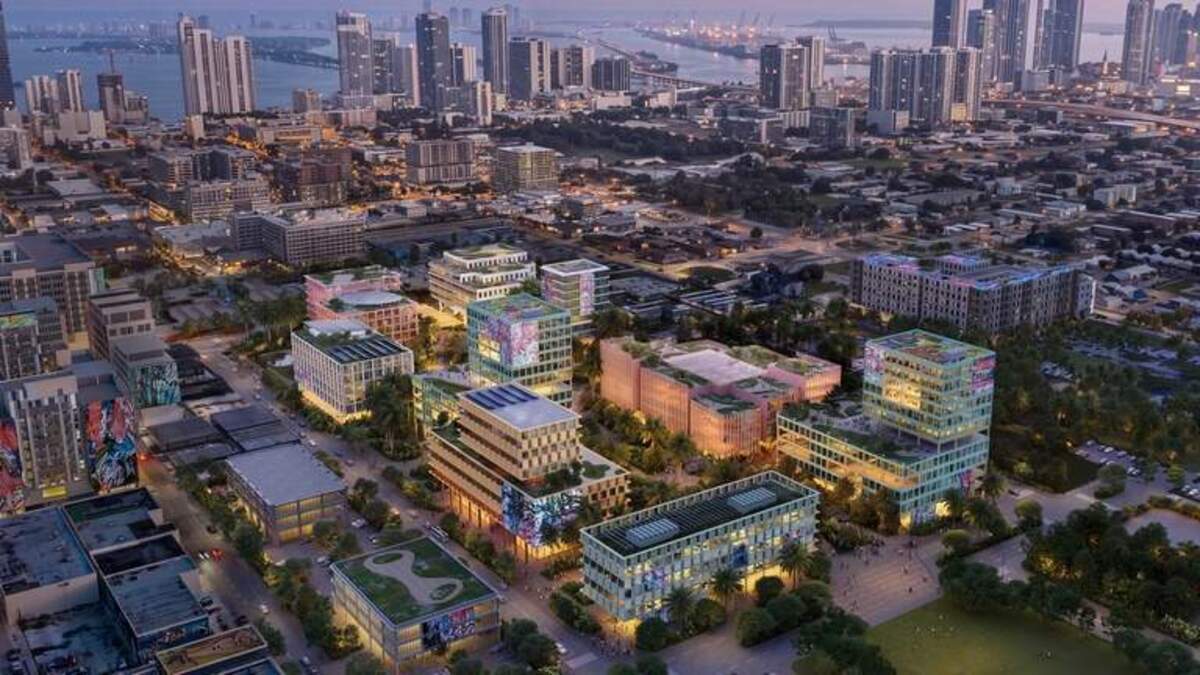
Carnegie Mellon is coming to Miami — and these people have a problem with that
While politicians, business leaders and developers have welcomed Carnegie Mellon University’s planned arrival in Wynwood, reactions on social media and comments on articles show that not everyone in Miami is celebrating.
Read more A Chipotle among South Florida restaurants closed after failing inspection
The university’s new announced Miami campus, backed by a $2 billion commitment from Miami billionaire Ken Griffin, has prompted questions about what the project will mean for Wynwood, its residents and the rest of Miami.
Commenters on the Miami Herald’s Instagram account and on published articles raise concerns about gentrification, the influence of wealthy newcomers, the future of local institutions and whether Miami’s existing universities deserve more investment.
Here’s what readers are saying:
Gentrification
For some commenters, Carnegie Mellon represents another chapter in Wynwood’s transformation — and another sign that the neighborhood is increasingly shaped by wealthy newcomers.
• “Billionaires just ruining whole cities on a whim,” wrote @kiwisonfutons.
• @9juanone: That’s genuinely the last straw on Wynwood as an arts district.
• @victorialeehale40 was more sarcastic: “Hooray for GENTRIFICATION!” The comment included a string of angry and disgusted emojis.
Others questioned whether Miami is losing control over its own identity as outside money flows into the city.
• “When will Miami stop selling itself to the highest bidder and actually have some boundaries of protecting the city and what makes it special?” asked @carolinaagrace. The commenter questioned whether the new campus would primarily serve students from outside Florida and argued that local institutions and businesses were being pushed aside to make room for an outside university.
• @astre_74 offered a blunt assessment of the broader changes: “City is finished. More expensive, less local anything, more out-of-towners, more traffic, more generic restaurants from other cities, more fake ‘Miami culture’ being dictated by people not from Miami.”
Those comments reflect a larger question surrounding Wynwood’s evolution: Can the neighborhood attract new investment and institutions without losing the character that helped make it a destination in the first place?
• User 6b45e35 Artists are gentrification’s favorite tools to initiate a removal of existing residents to make way for the wealthy. Artists unwittingly contribute to the nation’s unaffordability crisis. If you see artists and galleries moving into your neighborhood be aware your neighborhood is about to change for the worse.
What about local universities?
Some commenters questioned why a wealthy donor would bring a prominent university from Pittsburgh to Miami rather than direct more money toward institutions already serving local students.
• “There are already multiple universities in Miami. Why not invest in them instead of creating another university?” asked @ayesha
• @twheelzzzzzzzzzz raised a similar point, asking why Griffin would not invest in existing colleges and universities in the city.
• @kebmcp: “It would have been nicer if he’d help the universities that are already in Miami. All great schools, especially University of Miami and particularly their medical school.”
• @carolinaagrace argued that local schools should receive more support, saying Miami’s existing institutions have helped produce the people who built the city.
The criticism was not always directed at Carnegie Mellon’s academic reputation. Some commenters acknowledged the university’s standing but questioned whether its arrival was the right response to Miami’s needs.
Read more Experts say Alligator Alcatraz ‘sun cages’ likely violated Constitution, Int’l law
• “Although Carnegie Mellon is a great institution,” wrote @planetjanette, “I feel that it is a bit insulting to not help the universities that actually graduated many of the people that have helped Miami become the city it is.” The commenter also wondered whether wealthy newcomers would eventually bring in other institutions from elsewhere rather than strengthen the ones already rooted in South Florida.
Traffic and infrastructure
The campus also prompted questions about whether Miami’s infrastructure can accommodate the growth its supporters hope to attract.
• “Great idea! Thank you Mr. Griffin. What new roads and railroads will Miami build to support it?” asked @ausablefunds. The comment raised a practical question that extends beyond the campus itself: If the project attracts students, faculty, researchers and businesses to Wynwood, what transportation improvements will be needed to support them?
• @perdido_en_the305 was less optimistic, writing: “Great. More traffic and more snotty people from the north.”
Parking, housing and the cost of living
The Instagram discussion also raised questions about the costs associated with creating a new university in an already changing neighborhood.
• One commenter, @miamiaudio, pointed to tuition, writing: “$70,000 a year tuition!”
Other questions surrounding the project include where students and employees will live, how they will get to campus and whether added demand could put further pressure on Wynwood’s housing market.
Who gets to shape Miami’s future?
For some commenters, the central issue was not the university itself but the influence that comes with extraordinary wealth and large-scale property ownership.
• “Are we supposed to say thank you?” asked @coinsedi.
• @jonlouisgonzalez: This man is practically rebuilding Miami.
• @jmdeezic put it more directly: “Billionaires just ruining whole cities on a whim.”
• @cleanupmiami: Philanthropy is just some rich guy saying look what I’m doing for you peasants
• User 07dc941: If they’re planning this billionaire utopia here, does that mean the salaries of those that live and work here will increase? Because all this sounds great but I could see the unaffordability getting worse.
Not everyone commenting opposed the project. Some celebrated the university’s arrival, while others defended Carnegie Mellon’s academic reputation:
• @ivlovesfiu, for example, wrote: “Wow! This makes me so happy!”
The mix of responses shows that the debate is about more than whether Carnegie Mellon is a prestigious university. It is also about who benefits from its arrival, what Miami must provide to support it and how much influence wealthy investors should have over the city’s future.
• BrickellPOV: Extremely generous of Mr. Griffin and let’s hope this vision for the college and the community succeeds. It can only benefit our talented students to have more serious local choices for pursuing higher education. The benefit to the larger community will be the chance to retain our talent locally vs the well-worn paths to other parts of the country.
• @jespmusic: Whoooaaa! This is huge for Miami. I’m so for this. Carnegie Mellon is badass.
Read more Record rain swamped Key West streets, and Miami got soaked. What’s next?









Post Comment