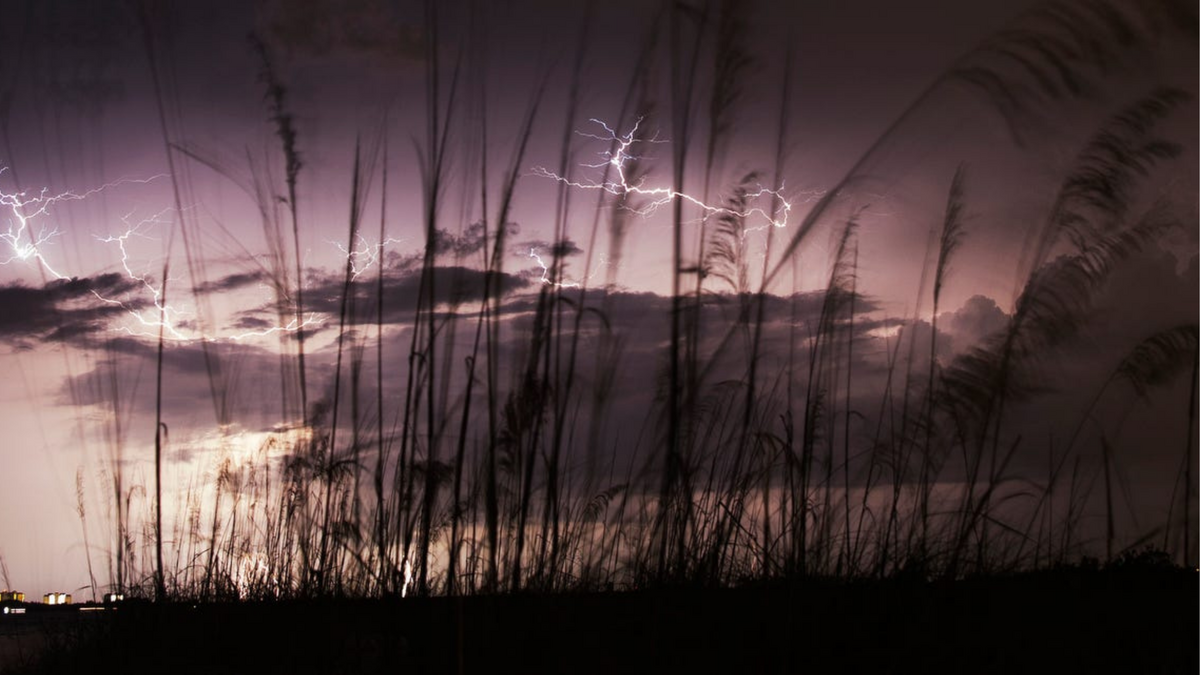
Are thunderstorms and lightning getting worse this year in South Florida?
Most people in Florida are used to the thunder and lightning that come with the usual summer storms. The Sunshine State is the lightning capital of the U.S., after all, and from May through October, you can expect flashes and rumbles.
Read more How Miami-Dade houses of worship are boosting voter registration
But after a Margate mom and her 2-year-old daughter were struck and killed by lightning on Aug. 23, just a few days after a Florida Keys charter fishing captain was injured when his boat was struck, some South Floridians found themselves asking: Is the weather more wicked than usual?
So far this year, six people have died by lightning strikes in the state, and Florida is leading the nation in lightning-related deaths.
And more rough weather is on the way. Forecasters say there’s a high chance of rain and thunderstorms through Tuesday, Sept. 22.
According to Nico Porcelli, a forecaster with the National Weather Service in Miami, lightning has been “nothing out of the ordinary. It’s just that lightning, unfortunately, can strike at any time.”
Chris Vagasky, a lightning data specialist with the National Lightning Safety Council, an independent organization of lightning experts aimed at providing information on lightning statistics and safety, says that this year is above average for lightning in Florida when compared to 2016 through 2025.
“Comparing this year to that 10-year average, things are above average right now, and significantly above average,” Vagasky said. “It’s not anybody’s imagination. There is a lot more lightning going on than there has been in recent years.”
MORE: How you can avoid lightning strikes in South Florida
The lightning storms and the deadly strikes seem to be putting more of a fear in us as well.
A 911 call from a woman on a trail in Winter Garden said she reported that a couple was walking with an umbrella, and lightning struck them. The man was bleeding from his face, and the caller had to perform CPR on the woman.
Roberto Serrano, who frequently runs on the trail, told an Orlando TV station that it is “definitely kind of scary, especially thinking like I was going to be on here last night and chose not to. If people don’t take lightning seriously around the area, they might want to now.”
While more city parks have lightning alarms that warn visitors, and college football games halt play when lightning is in the area, many people have generally ignored rumbles as they dash from SUVs and into dry homes. Now, there’s some more a hesitance to be outside during thunder. Dog walkers are staying inside, and even a Miami TV reporter known to brave the outside elements ran into the car and did a report from inside the vehicle.
Porcelli and Vagasky both say that for the first couple of months of the rainy season, the lightning was milder than usual.
“It was actually kind of below average for lightning in Florida. For the Miami area specifically, May and June were 40% to 60% below average for the amount of lightning,” Vagasky said. “Then something turned a corner. July, August and then the first half of September have been significantly above average.”
According to Vagasky, the latter months have had three to five times as much lightning as is average for the Miami area.
He says that within about 15 miles of Miami, there was a 288% increase in the amount of lightning in July compared to the 2016 through 2025 average for the month. In August, the increase was 193%, and for the first half of September, there was a 525% increase.
Read more Haitian pastor faces deportation even though he was on path to legalize status in U.S.
Why we are seeing so much more lightning these past couple of months than in previous years is not certain yet, but Vagasky said it could have something to do with “atmospheric instability.”
“Warmer conditions lead to higher instability, which allows for a lot more collisions of the particles in a thunder cloud that would cause increased electrification of that cloud,” Vagasky said. “But there could be a number of factors at play to really pin down exactly why we’ve got so much more lightning.
“The really important thing to know is just that there’s been so much lightning in these last few months — every thunderstorm you should be taking seriously just because of how much lightning it’s producing,” Vagasky said. “Every cloud-to-ground lightning flash is a potential killer.”
If you aren’t able to make it inside a building, Vagasky and Porcelli say taking cover in a vehicle is the next best option.
“The car may be affected by lightning — there could be a surge in electricity — but for the most part, people should be pretty safe inside a car,” Porcelli said.
But even that raised some fears two weeks ago, when a Miami-Dade sheriff’s, Sgt. Paul Villaverde was injured after his car was struck by lightning. He was taken to the hospital, and although the sheriff’s office did not disclose the extent of his injuries, they did say he is now back to work.
Porcelli said that throughout the rest of the wet season, everyone should “continue practicing lightning safety.”
According to Vagasky, even when you are inside a vehicle or building, there are extra precautions you should take.
“You just don’t want to be in contact with anything connected to the outside. So you don’t want to be on a corded phone or on your cellphone that’s plugged into the wall, or on a computer that’s plugged in,” Vagasky said. “You want to have the windows rolled up on a car and not touching anything that’s connected to the ignition, or have anything plugged into a power outlet on the vehicle.”
And even after the rainy season ends in November, the strong El Niño this year may cause more thunderstorms.
“The thing that’s interesting about this year is, since it is El Niño this year, we usually get an increase in activity during the winter months due to some winter storms and winter systems further north,” Porcelli said. “So, it may be more active.”
El Niño is a natural climate pattern during which the central and eastern Pacific Ocean warms significantly, causing changes in weather.
“We should see a decrease in the overall amount of lightning, but there could still be thunderstorms this fall and winter,” Vagasky said. “So it will be something to pay attention to.”
Read more Haitian pastor faces deportation even though he was on path to legalize status in U.S.









Post Comment