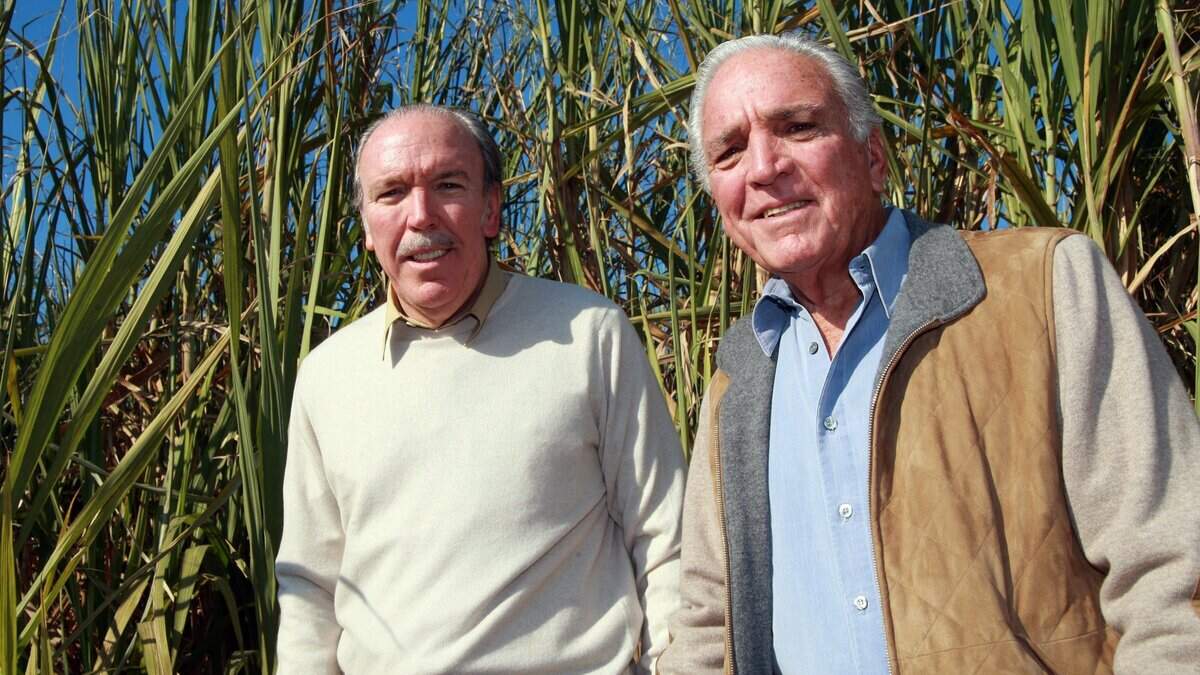
Alfonso Fanjul, who built a sugar and real estate empire in Florida, dies at 89
Alfonso “Alfy” Fanjul Jr., the Cuban-born billionaire who fled Fidel Castro’s revolution, rebuilt his family’s sugar fortune in Florida and helped transform Florida Crystals into one of the nation’s most powerful agribusiness empires, died Monday in Palm Beach. He was 89.
Read more What Nikki Spoelstra says about her new project in Miami: ‘A dream’
A Florida Crystals spokeswoman confirmed Fanjul’s death to the Miami Herald. The cause of death was not immediately released.
As co-chairman and chief executive of Florida Crystals, Fanjul and his three brothers transformed a family business rebuilt in Palm Beach County after the Cuban revolution into one of the nation’s largest privately held sugar and real estate empires.
Along with brothers José “Pepe,” Alexander and Andrés, he amassed a fortune estimated in the billions through sugar production, refining, real estate, renewable energy and international investments.
The family’s wealth, political influence and dominance of the sugar industry also made the Fanjuls one of Florida’s most powerful — and controversial — family business dynasties. As top employers in Palm Beach, they helped reshape the county’s economy.
For decades, environmental groups accused the family’s sugar operations south of Lake Okeechobee of contributing phosphorus pollution that damaged the Florida Everglades.
Critics also attacked the family’s successful efforts to preserve federal sugar protections and subsidies and raised concerns about labor conditions on sugar plantations in the Dominican Republic linked to the family’s business interests.
Florida Crystals consistently rejected those criticisms, saying the company complied with environmental regulations, invested heavily in conservation and upheld labor standards.
Fanjul’s life embodied one of South Florida’s defining immigrant success stories. Before Fidel Castro’s revolution, the Fanjuls owned one of Cuba’s largest privately held sugar enterprises, with sprawling plantations, mills and related businesses.
After Castro nationalized the family’s holdings without compensation, the family fled into exile, arriving in the United States with little more than its experience in the sugar business.
By the 1970s, the brothers had rebuilt an even larger fortune in Florida, becoming one of the wealthiest and most politically influential families in Palm Beach.
Affectionately known as “Alfy,” the erudite and distinguished Fanjul and his brother José “Pepe” became the public faces of the family’s business empire and prominent members of Palm Beach society and philanthropic world.
Read more Boater who went missing in the Florida Keys located, U.S. Coast Guard says
Born in Havana on Sept. 8, 1936, Fanjul’s father, Alfonso Fanjul Sr., had built one of the island’s largest sugar businesses before the communist government seized the family’s mills, plantations and related assets following the 1959 revolution.
In 1960, the family established Florida Crystals in western Palm Beach County. Over the following decades, the company expanded into a sprawling agricultural and industrial enterprise that included sugar mills, a refinery, a rice mill, packaging facilities and one of North America’s largest biomass renewable power plants. Through ASR Group, the family also came to control iconic brands including Domino Sugar, C&H, Redpath and Tate & Lyle, making it the world’s largest cane sugar refining company.
Although the Fanjuls were among the nation’s most prominent Cuban exile families, they largely stayed away from the highly visible politics of Miami’s exile community. Privately and financially, they backed efforts to overthrown Castro for decades, but largely avoided Little Havana.
Their influence was exercised primarily through campaign contributions, philanthropy and close relationships with elected officials from both political parties.
The Fanjuls became one of the country’s most politically connected business families, cultivating relationships with presidents of both parties while defending the federal sugar program that underpins much of the domestic sugar industry.
In a 2025 cover story, Forbes described the family as having spent decades cultivating political relationships that helped protect its business interests. His brother, Jose, was a long-time friend of President Donald Trump. The family’s companies were well positioned to benefit from policies adopted during Trump’s second administration, including higher tariffs on imported sugar and the president’s push for Coca-Cola to produce a U.S.-made cane sugar version of its flagship soft drink.
Despite his immense wealth, Fanjul gave millions away to philanthropic causes and often described himself first as a farmer.
Accepting the Chamber of Commerce of the Palm Beaches’ Leader of the Year Award in 2018, Fanjul said he accepted the honor “on behalf of my entire family” and emphasized his roots in Palm Beach County.
“As a lifetime farmer, I can tell you that farming is only as good as the land and resources you have. Air, land and water. Any farmer would tell you that. our commitment to our land and environment could not be stronger.”
Beyond business, the Fanjul family became major philanthropists in Palm Beach County, supporting hospitals, schools, cultural institutions and civic organizations. Their name appears throughout South Florida on charitable projects and nonprofit boards, reflecting decades of giving that accompanied the family’s growing prominence.
Read more South Florida man pleads guilty to smuggling 140 firearms through Miami to Haiti
Funeral arrangements have not been announced.
This obituary will be updated.





Post Comment