Empty pews, growing needs: Haitian pastors in Miami face fallout after end of TPS
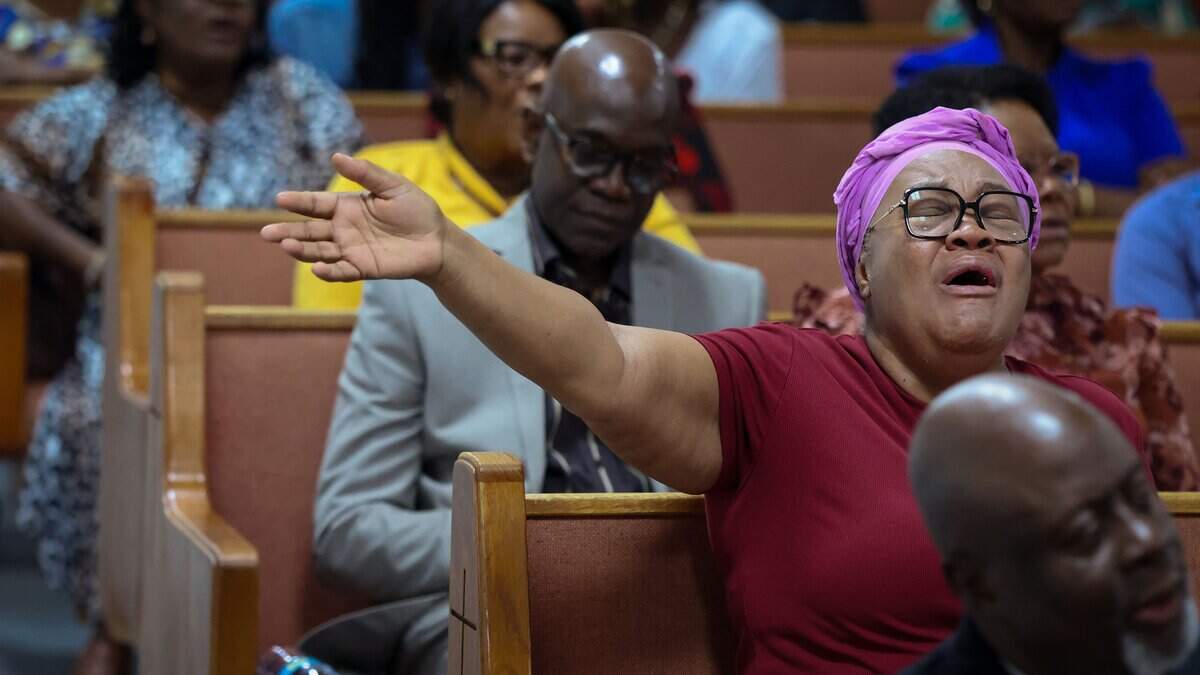
It’s Sunday morning at Bethel Evangelical Baptist Church in Miami Gardens and the congregation is hanging on to every word as Pastor Keny Felix fiercely preaches during the 11 a.m. service.
Read more No. 21 Oregon opens with 8 straight TDs in 84-0 rout of Portland State
Today’s lesson: How to show love in a hostile world.
The sermon appears to strike a chord with the mostly Haitian congregation — many in the crowd are nodding in agreement, calling out “Amen.” Some are crying. The pastor is preaching about how to navigate through a “difficult season” in Haitian-Creole and in English. The congregants know he is referring to the fear of deportation and displacement amid the end of Temporary Protected Status for Haitian immigrants, a loss of immigration protection that has devastated that community.
Felix tells his people — many of whom are facing immigration uncertainty — to respond to the hate, with love.
“It’s not easy,” Felix says from the pulpit. “It’s hard when you feel that you’ve been oppressed, when you feel that you’ve been treated unjustly, when you feel that people are targeting you, it’s hard to say ‘Father, forgive them.’”
But, that’s exactly what God expects of his people, Felix says. “You need to love even more.”
Since the Supreme Court cleared the way for the Trump administration to end Haiti’s TPS for more than 300,000 Haitians, tens of thousands of Haitians in South Florida have lost protections to legally live and work in the United States. Many are left in immigration limbo, facing an impossible decision: self-deport to an unstable country plagued with gang violence and lacking humanitarian assistance or stay in hiding and face the risk of detainment and deportation. Because of this, many Haitians are concerned for their safety and have decided to stay home on Sundays, according to multiple who spoke with the Miami Herald.
Churches like Bethel, with predominately Haitian worshipers, are feeling the effects. Attendance is down, demands for help with food, rent and legal services are up, and the growing fear among congregants has even led some church leaders to create plans should immigration authorities show up. Plus, the recent detention of several Haitian pastors by immigration authorities is fueling even more anxiety among congregants.
“They can be consumed. They can be inundated by a lot of these things. Part of our response is to try to maintain a level of normalcy in midst the chaos,” said Felix.
Churches are supposed to be off-limits for Immigration and Customs Enforcement, but that has meant little to a community that often turns to God and worship in times of despair. Felix, like several religious leaders who spoke to the Miami Herald in the South Florida area, noticed fewer congregants attending his North Miami church, which just celebrated 50 years. Felix estimates attendance at his church has dipped about 20%. On a recent Sunday in early September, there were noticeable empty pews in the sanctuary which holds 1,000 around people at capacity.
“From our records we can see that our attendance has been affected by the immigration issue,” said Pastor Alain Boucard, associate pastor of Christian education and outreach at Bethel. “You can see the diminishing attendance because people are not taking chances out there with the way things are.”
For the faithful, the decision to forego church does not come lightly. Bethel Evangelical Baptist Church has long been a safe place for the Haitian-American community to worship and find community — especially during times of crisis, like after the 2010 earthquake that devastated Haiti and brought tens of thousands of Haitians over to the United States. The disaster, which killed over 300,000 people, according to the Haitian government and left 1.5 million homeless — nearly the same amount left internally displaced by armed gangs — led to the Obama administration designating Haiti for TPS. Now, Felix says, those same immigrants are being sent back to an even more unstable situation.
“We’re throwing them back to the lions den and closing our eyes, and presenting it under the label of law and order. This is not law and order. This is evil,” Felix said.
Members need help
Today, many Haitian churches in South Florida are on the front lines of the TPS crisis — acting as places of refuge, a space where the community can go to feel understood and for some, the sermons provide a much-needed therapeutic release for the anxiety and stress that has plagued the community in recent months.
At Tabernacle of Glory, a nondenominational Christian megachurch in Miami Gardens, pastors are being inundated with requests from members who need help with food, rent and legal services. As many Haitians lose their work permits, they are struggling to pay rent and in some cases mortgages. The church cannot afford to cover every member’s financial issues, Pastor Jimmy Loiseau said, forcing the church pastors to say no to certain requests.
Loiseau said having that conversation is “one of the toughest things” he has had to deal with.
“It is a hard conversation to have. It is heartbreaking,” said Loiseau, who is also the church’s community relations specialist. “Megachurches don’t have infinite funds coming from billionaires. We don’t. We don’t. I wish we did because we would help as best as we can.”
On top of being stretched for financial assistance, churches are also seeing that the collection plate is dwindling.
“People are out of work. They can’t work, and those who used to give are not able to give at all,” Loiseau said.
At Tabernacle, the church has formed a partnership with the Haitian Lawyers Association to help provide legal advice before an arrest, and help should detention happen.
Read more Mensah completes record 24 consecutive passes, No. 5 Hurricanes hold on in Wake Forest win
“There are people suffering, and we have to do what we can to help them,” said Loiseau. “At the same time understanding that we’re not trying to or circumvent the law. It’s a delicate balance that we’re trying to do.”
At Bethel, pastors said they are also “doing their best” with the resources they have. They are reaching out to their most needy members to help with food and transportation to church, for those who no longer have their driver’s license.
Protecting congregants
Since the termination of TPS, the Department of Homeland Security has increased its deportation flights to Haiti from once a month to once a week.
Amid the deportation efforts, churches are facing another dilemma: the possibility of ICE activity at houses of worship. The growing fear in the community and rumors of undercover ICE agents in churches and church parking lots in other areas of the country has lead pastors to make major changes to their programming.
Some pastors are relying heavily on virtual service to reach members at home. In-person community events, such as picnics, have been canceled.
Some church leaders have begun implementing a new “protocol” to prepare for any unexpected activity from immigration enforcement. Loiseau said his church has already established a plan, just as the church has protocol for mass shootings or kidnappings.
“Those protocols help protect the people inside, our workers, our volunteers,” Loiseau said. “We need to have a protocol if law enforcement comes in. What should we do?”
Loiseau wouldn’t share details, but insisted that it was not designed to circumvent the law, but to ensure the church members’ rights are not violated.
“If police comes… do your job, but you’re not going to abuse your power by coming into a building and scaring people or intimidating. We’re not having that,” said Loiseau.
Loiseau said he is praying that immigration authorities never enter the sanctuary, as he believes it would cause a great deal of trauma, particularly for younger church members.
“When ICE comes, they don’t come plain clothes. They come with tactical gear. Do you know the trauma that those people, those children, those teenagers [would experience]?”
‘Sense of despair’
The detentions by immigration authorities of several Haitian pastors, most recently a pastor in Springfield, Ohio, who was on the path towards a legal status, is also creating more fear in Florida’s Haitian community, Felix said.
“These are individuals who were serving the community as faith leaders as they also worked to meet the needs of their own family,” he said. “They are not criminals but hardworking individuals seeking to fulfill what we all aim for.”
As people make the decision to forego church service for safety reasons, pastors say they are concerned about the impact the isolation will take on their parishioners’ mental health.
“That sense of despair, that sense of discouragement, and being in a holding pattern … many of these folks were professionals and were business owners, as well as those who worked in the hospitality and service industries, and so to have your whole life put on hold, that’s quite a challenge,” Felix said.
Felix points to a recent, fatal, example: Last month, a 20-year-old Pierre Damas Bel, a Haitian student in Springfield, Ohio, died by suicide after stepping in front of a semi truck on the highway. The Wright State University student, who was studying neuroscience, struggled with the shame and bullying that came with wearing an ankle monitor, according to his family. Haitians in Springfield were among the first to receive ICE check-in letters after TPS ended and many were fitted with ankle monitors, the Miami Herald reported.
“The stigma, the shame, the trauma that comes with having to wear an ankle monitor … it’s very it’s very demonizing,” Felix said. “For Haitians particularly it adds to this historical trauma, you know, of being enslaved and being in shackles, you know, that’s what those ankle monitors represent.”
Miami Herald staff reporter Jacqueline Charles contributed to this report.
This story was produced with financial support from Trish and Dan Bell and donors in South Florida’s Jewish and Muslim communities, including Khalid and Diana Mirza and the Mohsin and Fauzia Jaffer Foundation, in partnership with Journalism Funding Partners. The Miami Herald maintains full editorial control of this work.
Read more Hurricanes’ Lyle goes through warmups at Wake Forest but doesn’t play







Post Comment