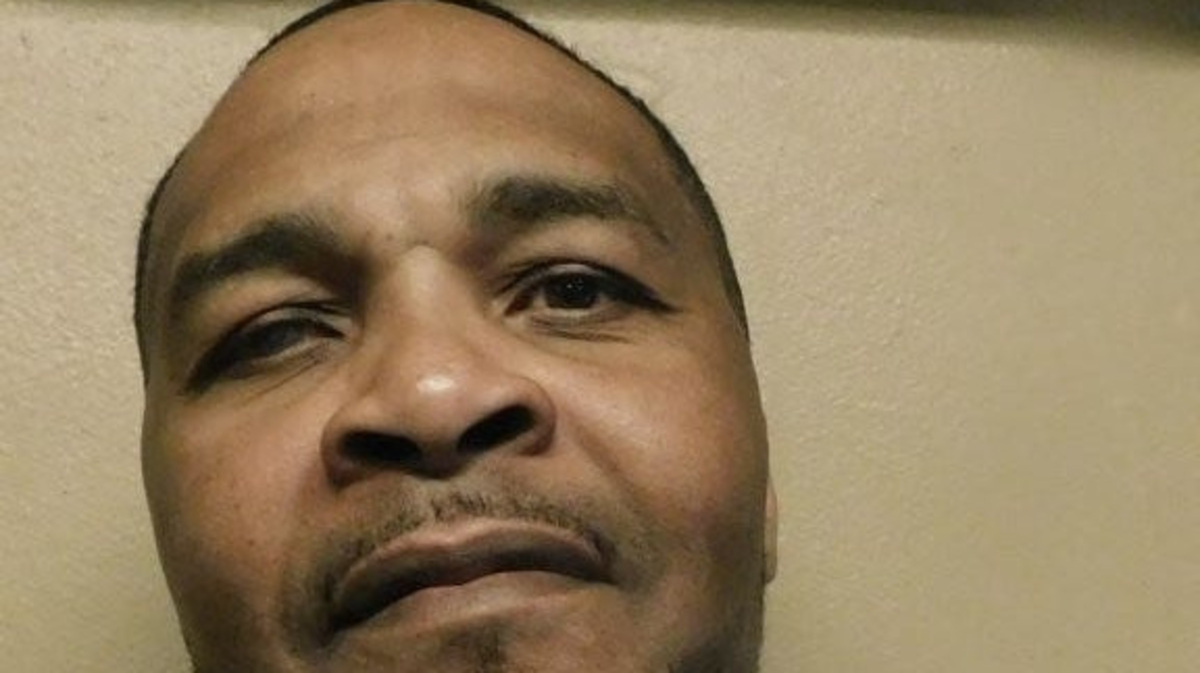
A lethal injection execution is set for Thursday in AL. What we know
Alabama plans to carry out its second execution of 2026 on Thursday evening, putting Jeffery Lee to death by lethal injection for a double homicide committed during a pawn shop robbery almost three decades ago.
Read more Her daughter was born via surrogacy. For 2 years, the state didn’t recognize her as a mom
Lee was originally intended to be put to death in June via the nitrogen gas hypoxia execution method, which has been controversial since its first use by the state over two years ago. However, litigation that went all the way to the nation’s Supreme Court determined that the state was not allowed to put Lee to death by gas due to constitutionality concerns, though they were allowed to use other approved methods at a later date.
The execution is planned for a 30-hour window between midnight Sept. 17 and 6 a.m. Sept. 18. Ivey said she does not currently plan to grant clemency in Lee’s case.
The 1998 crime
Lee, who is currently 50, was convicted of capital murder for the 1998 deaths of Jimmy Ellis and Elaine Thompson and the attempted murder of Helen King, who all worked at Jimmy’s Pawn Shop in Orrville, Alabama.
On Dec. 12, 1998, Lee entered the shop asking to see wedding rings, court documents show. Lee told a store employee, King, that he didn’t have any money, but he would come back later after he got money from his grandmother.
King testified that when he returned to the store a short time later, he came back with a sawed-off shotgun. Court documents show that Lee shot Ellis, the owner of the shop, in the chest, and Thompson, another employee, in the face.
King also was shot, but not fatally. She pretended to be dead until Lee left the store. After he left, she called 911 and locked the store doors.
Lee was convicted in April 2000. By a 7-5 vote, the jury recommended that Lee be sentenced to life in prison without the possibility of parole, but the court declined to take the recommendation and sentenced Lee to death instead. This practice – called judicial override – was abolished in Alabama in 2017.
Court rulings against nitrogen win Lee an extra three months
Lee has filed two previous Rule 32 Petitions, which “allow a convicted person to challenge their conviction or sentence after the direct appeal process has concluded.” One was in 2005, the other in 2016; both were denied. The most recent legal move he’s taken to challenge his sentence was a lawsuit against the Alabama Department of Corrections regarding the constitutionality of a method of execution – the first successful suit of its kind as far as the nitrogen hypoxia method is concerned.
Two previous inmates executed via nitrogen hypoxia have tried similar legal maneuvers: Demetrius Frazier, executed in February 2025, and Anthony Boyd, executed in October 2025. Both found their lawsuits shot down, with U.S. District Court Judge Emily Marks writing in both of their cases that the Eighth Amendment “does not guarantee… a painless death,” and that neither inmate had met the legal burden necessary to win a stay on their respective executions.
Read more What’s next for NWF Beaches Airport? Multiple big projects underway
Lee’s attorneys argued that the “air hunger” inmates face during nitrogen gas executions creates psychological distress that is beyond what’s necessary to end a life.
Initially, Marks ruled in the state’s favor, writing that though Lee showed that nitrogen gas executions “involve some suffering,” he had not done enough to prove that the process causes more than the “necessary suffering involved in any method employed to extinguish life humanely.”
“Because the Constitution does not guarantee inmates a painless death, Lee must do more than show a risk of pain,” Marks’ 58-page opinion states. “He must show that the Protocol causes severe pain, pain that is ‘well beyond what’s needed to effectuate a death sentence.'”
The 11th Circuit Court of Appeals later disagreed with this, calling the method constitutionally “intolerable.” Though they did not stay the execution itself, they asked Marks to reconsider the case. The district court then barred the state from executing Lee via nitrogen gas, though other approved methods were still fair game. The Supreme Court upheld the lower courts’ rulings three hours past what would’ve been Lee’s eleventh hour on June 11, resulting in the execution’s postponement until September altogether.
The state has not made any mention of the future of nitrogen gas hypoxia executions since.
The state of executions so far this year
It’s been an unusual year for executions in the Yellowhammer state.
Before Lee’s execution was pushed back due to a game of litigious volleyball, another execution was canceled earlier in the year. Charles “Sonny” Burton was supposed to be 2026’s first back in March, but in a rare move, Ivey granted him clemency just days before he was to be executed.
Alabama’s first execution of 2026 took place last month on Aug. 13. Jeremy Williams, who was 41 at the time of death, was executed by lethal injection for the rape and murder of a 5-year-old girl named Kamarie Holland in 2021. It was an unusually quick turnaround between sentencing and death for Williams, as the inmate had waived all appeals on his sentencing and requested an expedited execution in 2025, putting him at the top of the state’s list.
Sarah Clifton covers business for the Montgomery Advertiser. You can reach her at [email protected] or follow her on X @sarahgclifton and TikTok @sarahgclifton. To support her work, please subscribe to the Montgomery Advertiser.
This article originally appeared on Montgomery Advertiser: A lethal injection execution is set for Thursday in AL. What we know
Read more ‘New era’ begins for Tuscaloosa business hub
Reporting by Sarah Clifton, Montgomery Advertiser / Montgomery Advertiser
USA TODAY Network via Reuters Connect
Copyright Reuters or USA Today via Reuters Connect
This story was originally published September 14, 2026 at 5:06 AM.








Post Comment