We Compared the 2026 Subaru Forester vs. Mazda CX-5: Which Gets Better Gas Mileage?
Both of these fit all-wheel drive to every trim, which is rare in this class and makes the fuel comparison unusually honest. There is no front-drive version of either to inflate a headline figure, so every number below is like for like. On their gasoline engines the two are separated by a single mile per gallon. The gap becomes 7 the moment Subaru’s hybrid enters, and Mazda has nothing to answer it with, because the CX-5 is offered with no electrified powertrain for 2026 while its CX-50 sibling is.
Read more Chargepoint stock is making aggressive moves after earnings
What’s New for 2026
Mazda fully redesigned the CX-5 for 2026, extending the wheelbase by 4.5 inches for more rear legroom, widening the doors for easier access, and fitting a larger touchscreen with a new interior that addressed the outgoing car’s most cited weakness. Official EPA figures were slow to publish, and current estimates put the redesigned car near 28 mpg combined, close to the 26 city and 30 highway the outgoing model returned. All-wheel drive remains standard on every trim, and no hybrid is offered.
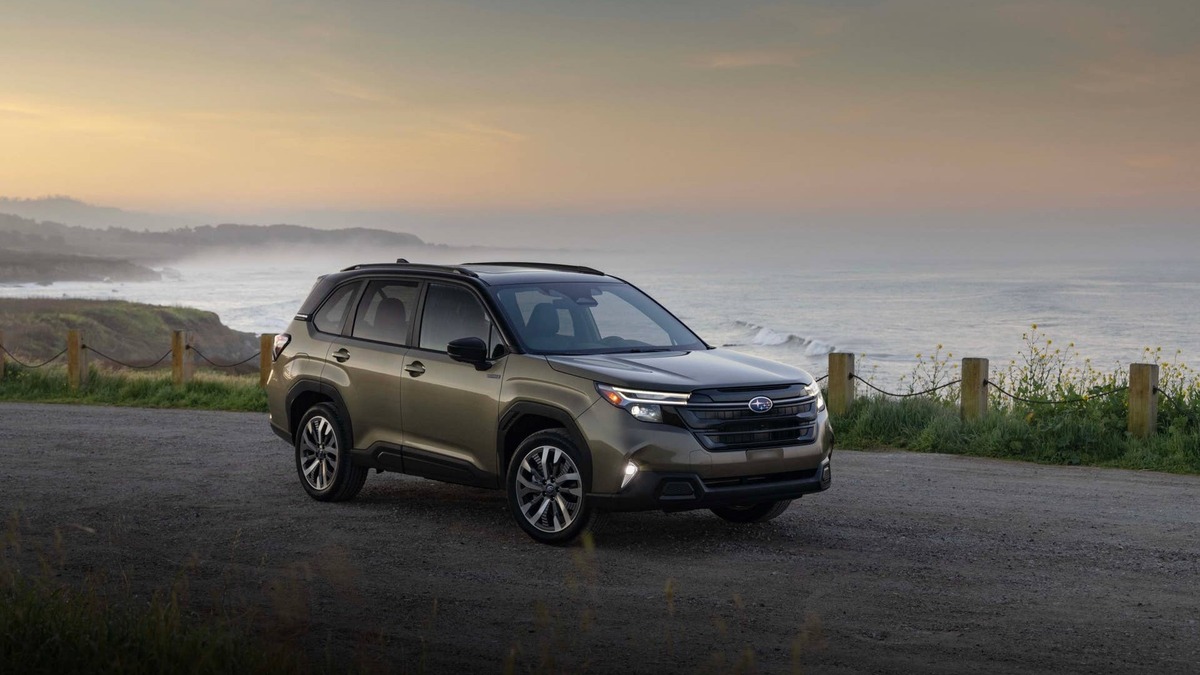
Subaru’s Forester rides on a reworked sixth-generation platform with a stiffer body and updated EyeSight cameras. The 2.5-liter Boxer produces 180 horsepower and the hybrid above it produces 194, returning 35 mpg city and 34 mpg highway with 581 miles of range from a tank. Symmetrical all-wheel drive is standard on every trim as always, ground clearance runs 8.7 inches with 9.3 on the Wilderness, and pricing starts at $31,445.
Specs and Pricing
Subaru Forester
- Price: From $31,445
- Gas engine: 2.5-liter Boxer four, 180 hp
- Hybrid system: 2.5-liter with electric assistance, 194 hp
- EPA city / highway, gas: 26 / 33 mpg
- EPA combined, gas: Up to 29 mpg
- EPA city / highway, hybrid: 35 / 34 mpg
- EPA city / highway, Wilderness: 24 / 28 mpg
- Combined range, hybrid: 581 miles
- Drivetrain: Symmetrical all-wheel drive standard on every trim
- Cargo behind rear seats: 29.6 cu ft
- Maximum cargo: 74.4 cu ft
- Ground clearance: 8.7 in, 9.3 in on the Wilderness
Mazda CX-5
- Engine: Skyactiv four-cylinder
- EPA combined: Near 28 mpg on current estimates
- EPA city / highway, outgoing model: 26 / 30 mpg
- Hybrid: None offered for 2026
- Drivetrain: All-wheel drive standard on every trim
- Cargo behind rear seats: 33.7 cu ft
- Maximum cargo: 66.5 cu ft
- Wheelbase: Extended 4.5 inches for 2026
Both fit all-wheel drive to every trim, so neither can inflate a fuel figure with a front-drive version, and pricing sits close enough that neither buys an advantage. The Forester range offers gas and hybrid powertrains across a broad trim ladder including the Wilderness, and the CX-5 lineup is gasoline-only.
Mazda does build a hybrid in this class, and the CX-50 Hybrid reaches near 38 mpg while making more power than the Forester Hybrid.
Powertrains and Driving
Subaru’s Boxer four produces 180 horsepower and Mazda’s Skyactiv four produces comparable output, so neither wins the gasoline comparison on paper by a margin worth acting on.
The Forester Hybrid changes that. At 194 horsepower it produces more than either gasoline engine while returning better economy, and Subaru credits the battery’s instant torque with a 10% improvement in acceleration. That is the unusual combination in this comparison, since more power and better fuel economy normally pull against each other.
Layout separates the two more than output does. Subaru’s horizontally opposed engine sits lower in the chassis than Mazda’s inline four, which lowers the center of gravity, and its symmetrical all-wheel drive is a permanent mechanical system driving all four wheels continuously. Mazda uses an electronic all-wheel-drive arrangement that engages the rear axle on demand.
Driving character runs Mazda’s way and it is the CX-5’s clearest strength. Reviewers consistently describe it as the sportier and more rewarding of the two, and the 2026 redesign kept that while fixing the dated cabin technology that was its only real weakness.
Real-World Fuel Economy
The gasoline comparison is nearly a tie and the hybrid comparison is not close. Among gasoline models the Forester returns 26 mpg city and 33 mpg highway for up to 29 mpg combined, and the CX-5 sits near 28 mpg combined on current estimates. That is a 1 mpg gap, and both figures come from all-wheel-drive vehicles since neither manufacturer offers a front-drive version.
Among all available powertrains the gap is 7 mpg. The Forester Hybrid returns 35 mpg city and 34 mpg highway for 35 mpg combined, and the CX-5 has no hybrid at any trim or price.
That absence is the more consequential fact, because Mazda does build a hybrid in this segment. The CX-50 Hybrid reaches near 38 mpg combined, which beats the Forester Hybrid, and Mazda has not put that system in the CX-5. A buyer who wants a Mazda hybrid compact SUV is shopping the CX-50 instead.
Both run on regular unleaded, so neither carries a fuel-grade penalty, and Subaru’s hybrid uses a cycle that trades torque for efficiency with the motor covering the difference. One caveat on the Mazda figure. Official EPA numbers for the redesigned 2026 CX-5 were slow to publish, and the 28 mpg estimate should be treated as provisional until the window sticker confirms it.
Where the Gasoline Gap Comes From
One mile per gallon between two all-wheel-drive compact SUVs is close to measurement noise, and the reasons behind it are more interesting than the number.
The highway cycle is where the difference sits. The Forester returns 33 mpg highway against the outgoing CX-5’s 30, a 3 mpg margin that reflects gearing and aerodynamics rather than engine efficiency. The city figures are closer at 26 apiece.
Drivetrain philosophy contributes and it works against Subaru rather than for it. Symmetrical all-wheel drive drives all four wheels continuously, which carries a constant friction penalty that Mazda’s on-demand system avoids at cruise. That the Forester still wins the combined figure means its engine and gearing are making up ground the drivetrain gives away.
The Forester Hybrid is not offered in Wilderness form, so a buyer cannot combine 9.3 inches of ground clearance with 35 mpg. Capability and efficiency are different vehicles in the Subaru range.
Mazda’s spread is narrower because the CX-5 offers one powertrain and no off-road trim, so configuration moves the figure less. Larger wheels on upper trims carry the usual small penalty. The guidance for either lineup is that the standard configuration is the efficient one, and every step toward capability or appearance costs fuel.
Read more Toyota RAV4 Vs. Hyundai Tucson: One Clear Winner
What the Difference Actually Costs Over Five Years
Both comparisons deserve pricing because they give very different answers.
Assumes 12,000 miles a year over five years, 60,000 miles total, and regular fuel at $4.00 a gallon, which every powertrain here uses. All-wheel drive applies to both since neither offers anything else.
Gasoline models
- Subaru Forester at 29 mpg: 2,069 gallons, $8,276
- Mazda CX-5 at 28 mpg: 2,143 gallons, $8,571
- Forester saves: 74 gallons, $295
Best available powertrains
- Subaru Forester Hybrid at 35 mpg: 1,714 gallons, $6,857
- Mazda CX-5 at 28 mpg: 2,143 gallons, $8,571
- Forester saves: 429 gallons, $1,714
The Forester saves $295 among gasoline models and $1,714 once the hybrid enters. The first figure is $59 a year and should not influence a purchase. The second is nearly six times larger and it exists only because Subaru offers a powertrain Mazda withholds from this model.
Range compounds it. The Forester Hybrid covers 581 miles on a tank, which is a genuinely long reach for a compact SUV and means fewer stops rather than only a lower cost per mile.
Which Version to Buy
Efficiency points to one specific configuration and it is not the most capable one. On the Subaru side, the hybrid is the version worth buying if fuel matters, returning 35 mpg combined against 29 for the gasoline car while producing 14 more horsepower. It covers 581 miles between fills. The Wilderness at 24 mpg city and 28 highway is the least efficient Forester and the most capable, and since it is not offered as a hybrid a buyer chooses between 9.3 inches of ground clearance and 35 mpg rather than combining them.
On the Mazda side, the redesigned CX-5 offers one powertrain, so the trim decision comes down to equipment and wheel size rather than efficiency. Buyers who want a Mazda hybrid in this class should price the CX-50 Hybrid instead, which reaches near 38 mpg combined and beats every figure in this comparison.
Anyone choosing on fuel economy alone should note that no CX-5 configuration approaches the Forester Hybrid, and that the Mazda that does approach it is a different model.
Scorecard
- Gasoline city economy: Draw. Both return 26 mpg, matched on all-wheel drive
- Gasoline highway economy: Forester. 33 mpg against 30 on the outgoing figures
- Gasoline combined economy: Forester. Up to 29 mpg against near 28, a 1 mpg margin
- Drivetrain comparison: Draw. Both fit all-wheel drive to every trim, so no front-drive figure flatters either
- Best available economy: Forester. 35 mpg combined from the hybrid against 28, with no CX-5 hybrid offered
- Range: Forester. 581 miles on a tank from the hybrid
- Five-year fuel cost: Forester. $1,714 less on best powertrains, $295 less on gasoline
Forester 5, CX-5 0, two draws.
So Which Gets Better Gas Mileage?
The Forester, and the margin depends entirely on whether you compare what both offer or what only one does.
Among gasoline models it wins by 1 mpg, at up to 29 combined against near 28, and both figures come from all-wheel-drive vehicles since neither manufacturer sells a front-drive version. Across five years that is $295, or $59 a year, which is not a number that should decide a $31,000 purchase.
Among all available powertrains it wins by 7 mpg. The Forester Hybrid returns 35 mpg combined with 581 miles of range, and the CX-5 offers no hybrid at any trim. Over five years that is $1,714, and it comes with 14 more horsepower than the gasoline Forester rather than at the cost of power.
The Mazda point worth understanding is that this is a product decision rather than an engineering limit. Mazda builds a hybrid compact SUV, the CX-50 Hybrid, and it reaches near 38 mpg combined, which beats the Forester Hybrid outright. That system simply is not offered in the CX-5, so a buyer comparing these two nameplates is comparing a hybrid against a gasoline-only model by Mazda’s choice.
Two conditions matter for anyone weighing the Mazda anyway. The redesigned CX-5’s official EPA figures were slow to publish and the 28 mpg estimate is provisional, so check the window sticker. And the CX-5 holds 33.7 cubic feet behind its rear seats against the Forester’s 29.6, which is 4.1 cubic feet more where most families load, even though the Forester wins maximum volume at 74.4 against 66.5.
Take the Subaru Forester Hybrid for fuel economy and range. Take the Mazda CX-5 for the drive, the redesigned cabin and more space behind the rear seats, knowing the fuel difference costs $59 a year on gasoline and $343 a year against the hybrid.
Alternatives to Consider
The Mazda CX-50 Hybrid reaches near 38 mpg combined with all-wheel drive standard, which beats both vehicles here. The Toyota RAV4 is hybrid-only for 2026 at up to 43 mpg with the strongest resale in the class. The Honda CR-V Hybrid returns 40 mpg with front-wheel drive and the largest cargo hold in the segment. And the Kia Sportage Hybrid reaches 42 mpg with a ten-year powertrain warranty.
Frequently Asked Questions
Which gets better gas mileage?
The Forester, by 1 mpg on gasoline at up to 29 combined against near 28. Its hybrid reaches 35 mpg combined and the CX-5 offers no hybrid.
Does the CX-5 have a hybrid?
No. Mazda offers no electrified CX-5 for 2026, though the CX-50 Hybrid reaches near 38 mpg combined and beats every figure in this comparison.
How much does the difference cost?
$295 across five years on gasoline, which is $59 a year, and $1,714 against the Forester Hybrid at 12,000 miles annually.
Which has more cargo space?
Both, depending where. The CX-5 holds 33.7 cubic feet behind its rear seats against 29.6, while the Forester reaches 74.4 cubic feet maximum against 66.5.
Read more Scott Galloway issues grim SpaceX stock price forecast
Copyright 2026 The Arena Group, Inc. All Rights Reserved
This story was originally published September 6, 2026 at 10:00 AM.










Post Comment