The Cuban sculptor behind a new monument in Miami Springs of city’s founder
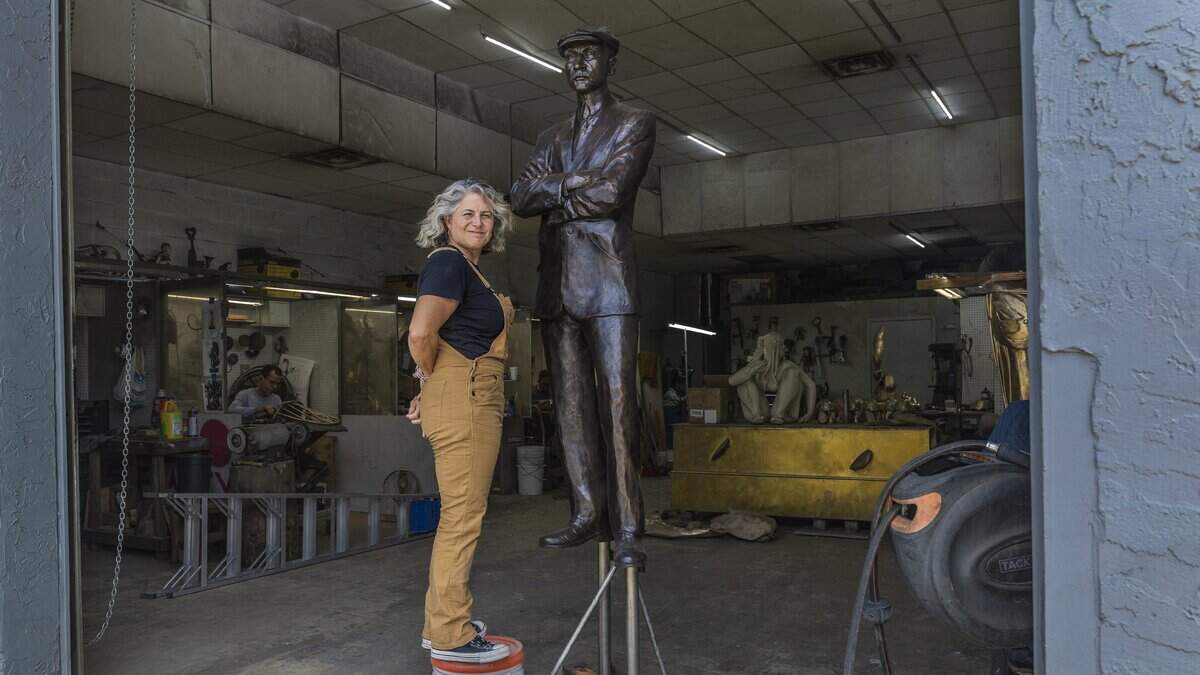
Before the bronze sculpture of aviation pioneer Glenn Curtiss was placed at the entrance to Curtiss Parkway, the main street of Miami Springs, the clay mold of “the fastest man in the world” sat in the studio of Cuban-American artist Natalie Plasencia, just a few blocks away.
Read more Are you paying more for gas in South Florida? Check the prices in your area
Molding and observing, Plasencia sought to enter the world of the inventor, the daring aviator who, on July 4, 1908, climbed onto a kind of bicycle with wings and flew 1.6 kilometers at four miles per hour in Hammondsport, New York, the town where he had been born 30 years earlier.
The little plane is the June Bug, in which Curtiss made the first public flight in the United States. A highly stylized version of this biplane is part of the Glenn Curtiss & June Bug Legacy Memorial, which was unveiled last August 22, exactly one hundred years after Curtiss founded the city of Miami Springs.
He had co-founded Opa-locka in May of that same year, and Hialeah in 1925.
Wearing a Gatsby-style cap, a suit that looks tailor-made, and his arms crossed gently, Curtiss — or his sculpture — is the picture of cool.
One Tuesday at dusk, children played around the monument while adults read the plaques on the June Bug’s wings that reflect the major milestones of a life of entrepreneurship and daring.
The goal of Plasencia, the donors, and the public officials who supported the project was being met: community was forming. People pass through exercising, out for a run after work, in sportswear, while Curtiss looks toward the clock across the way, at the entrance to Westward Drive, as if to indicate that his legacy defies time.
A daughter of Hialeah sculpts the city’s founder
Five years after founding Hialeah, Curtiss died on July 23, 1930, in Buffalo, New York, from complications following an appendectomy. He was 52 and left behind three cities, 400 patents, and dozens of inventions related to speed.
Walking among the pieces of the monument, even though the August heat leaves little room for a breeze, you feel what Plasencia noticed when she considered what she had in common with Curtiss. She was born in Hialeah, one of the cities he founded, and she is passionate about windfoiling, a sport in which she chases speed on the waters of Virginia Key, where the bay breeze moves unobstructed.
“Every sculpture I make transforms me,” Plasencia said. “Every project he did, Curtiss enjoyed so much that it became successful.”
As a Cuban American, Plasencia emphasizes that Curtiss — the boy who lost his father at age four and had to leave school in eighth grade to become a man — represents “the American Dream, which can be achieved if you have determination and a clear vision of what you want.”
“He wasn’t a showman, but a person of quiet sincerity, and that’s something I want in my own trunk,” Plasencia said of what Curtiss’s figure leaves her.
“The most beautiful thing I’ve learned from this project is involving the community, to build an identity of who we are as a city in Miami Springs. Everyone — council members, donors — wanted to believe and be part of a story like Curtiss’s,” the artist said.
The most typical public piece is a bust, but Plasencia proposed the idea of a monument, and it was accepted.
“We have to think big. It’s an opportunity for people to gather, reflect, converse, and that repetition is what makes a community work,” she noted.
She was looking for depth
Plasencia says it took her 41 years to consider herself an artist.
She didn’t take a traditional academic path into art; she arrived by true vocation. As a child she had learning difficulties and was only interested in sports and the arts.
Read more When are lanes closing on the Dolphin Expressway? Check driver detours
“I used to watch my father draw, and I told myself: maybe art is for me,” she recalls of her father, who was an architect.
She was especially interested in dance, which required a physical presence and awareness of space, and that led her to sculpture.
“I wanted to load the piece, give it warmth, and metal was the most durable way to have that dialogue. Paint would fade; it didn’t have the depth I was looking for,” she remembered.
But before dedicating herself full-time to art, she worked as a social worker and helped foster families and victims of domestic violence.
“With my third child, my first bronze piece arrived,” she said, noting that works of this scale are made by commission.
When she describes her passion for art, she speaks of responsibility to the times she lives in and her desire to establish a connection with the religious or historical figures she sculpts.
Her first work was a cross for the church Blessed Trinity Cross in Miami Springs. She also sculpted “The Fisherman” (2021) for the exterior of Saint Peter the Fisherman Catholic Church in Big Pine Key, and “Stella Maris” (2024), a bronze representation of Saint Mary Star of the Sea, for the basilica of the same name in Key West.
“Art for me has developed as a form of prayer,” she said.
Art and activism in Cuba
In 2013, the artist began following the activism of the Ladies in White, the mothers and wives of political prisoners in Cuba, who have become a symbol of peaceful resistance to the dictatorship by processing to Sunday mass.
At the same time, Plasencia joined several activist groups in Miami advocating for democracy in Cuba. She began volunteering with Cuba Decide, founded by Rosa María Payá, daughter of dissident Oswaldo Payá Sardiñas, who was killed by the dictatorship.
In 2024, she made a bronze relief of the dissident for a monument in his memory located in Patria y Vida square at Walker Park in Hialeah.
“As I gazed into his eyes while creating this relief, I felt a profound sense of solidarity with his cause and an overwhelming admiration for his courage and conviction. May this artwork serve as a tribute to his enduring legacy and a reminder of the ongoing struggle for human rights and justice around the world.,” Plasencia wrote on her website about the process for the activist’s relief.
Plasencia values the bonds she forges with the relatives of the people she represents or with the figures who inspire her.
“I want to connect with people who have gone through difficult things, and learn from them so that when I face hardships I can return to those conversations and be clear that the motivation is always to speak the truth,” she concluded.
Read more Broward Public Schools assistant principal accused of robbery, domestic violence
This story was originally published August 30, 2026 at 4:12 PM.





Post Comment