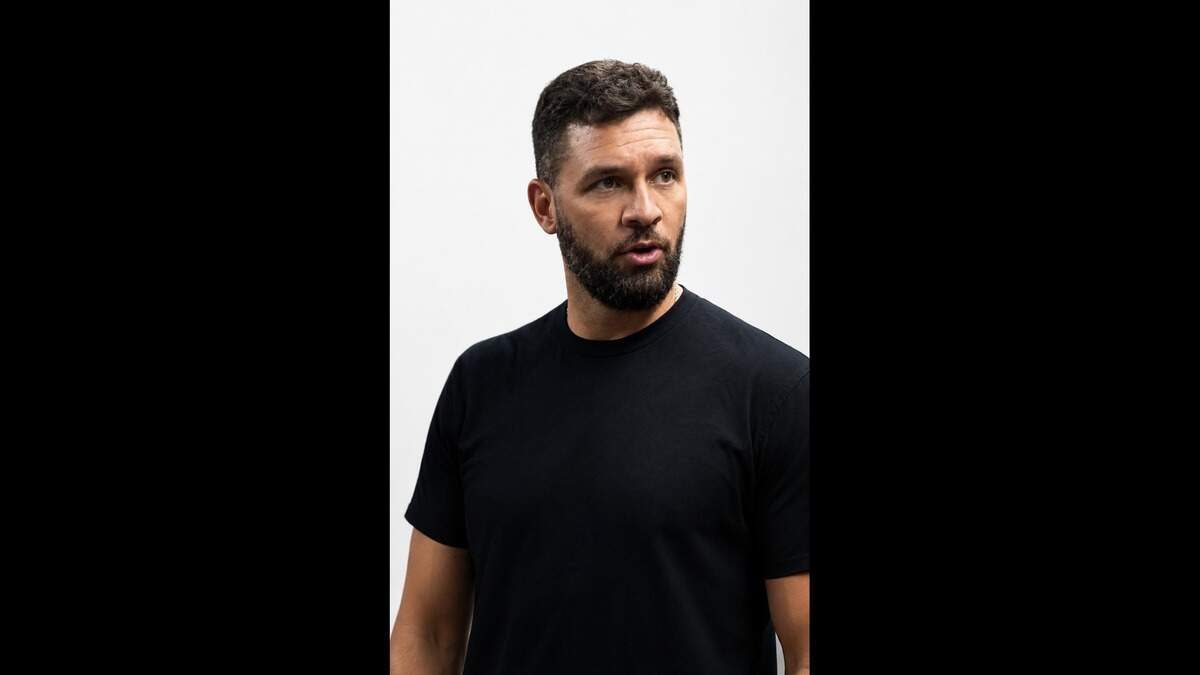
Haiti businessman Dimitri Vorbe, Trump administration strike deal to end his detention
An influential Haitian businessman, who spent 332 days in immigration detention in South Florida after Secretary of State Marco Rubio determined that his presence could have serious adverse consequences on U.S. foreign policy, has reached an agreement with the Trump administration that ended his detention.
Read more Miami Dade College regains control of Tower Theater years after city takeover
Dimitri Vorbe, whose high-profile immigration case became a test of the U.S. government’s authority to detain immigrants under a little-used foreign policy provision of immigration law, was released from the Krome Detention Center on Tuesday.
But his freedom comes with a condition: He has agreed to leave the United States, ending further litigation over his detention.
Under an agreement field in federal court in Miami, Vorbe waived a decision on a bond hearing that a federal judge had ordered in his case challenging his detention, and instead agreed to an order of removal. He must leave the U.S. by Sept. 1 for an unspecified third country that has agreed to admit him. Both parties agreed to keep the country out of the public record following a previous deal that was nixed after it was leaked.
The agreement marks an end to a prolong legal battle in which the Department of Homeland Security sought to keep the married father of three in mandatory detention without a bond hearing, arguing his case was not reviewable because of Rubio’s foreign policy determination.
It also comes after the Trump administration failed to present evidence at Vorbe’s bond hearing substantiating its most serious claim following his Sept. 23, 2025, arrest outside his Miami home by Immigration and Customs Enforcement: that “he engaged in a campaign of violence and gang- upport that contributed to Haiti’s destabilization.”
During the bond hearing before an immigration Judge Romy Lerner, Justice Department attorney Vincent Calarco presented no evidence establishing those allegations as he argued Vorbe represented a potential foreign policy danger as stated in a letter from Rubio.
Instead, the government’s filing included a Haitian Times story of Vorbe’s arrest, blog and social media posts, a picture of his home on Zillow, old traffic offenses and a vague article by another unknown online publication insinuating allegations about him. They also included information about the earnings of a company, Société Générale Group, a European banking group with no apparent connection to Vorbe or his family.
The government also included a post about Vorbe’s winnings at a 2021 poker tournament at Seminole Hard Rock.
Counter arguments
“National security considerations should be part of a reasonable basis to deny release on bond,” Calarco argued to the judge stressing Rubio’s letter and arguing that Vorbe lied about his criminal history when he applied for Temporary Protected Status.
“If this court was to issue a bond, the concern is that the respondent would be a flight risk,” Calarco added. “He has the resources to not come back to the next court hearing.”
Vorbe’s lawyers countered with documents intended to show that he was neither a danger nor a flight risk. They included evidence that he had received visas from several countries, letters from U.S. citizens attesting to his character and an order from the Court of First Instance in Port-au-Prince withdrawing an indictment against him declaring any related warrant null and void.
“He’s long come and gone from the United States without incident, attending school here as a child, later graduating from FIU with a degree in accounting,” Patrick Taurel, one of Vorbe’s attorneys said during the bond hearing.
He noted that Vorbe, 53, had legally entered the U.S. on Jan. 4, 2020, on a visa, and prior to its expiration had filed to extend his stay and had also applied for adjustment of status and TPS.
Taurel said a letter the Haitian government sent to ICE, asserting Vorbe had been criminally charged in Haiti and requesting his return, was “a sham.”
He noted that the Haitian government did not seek Vorbe’s extradition through the Justice Department.
Read more Teen sentenced to life for Miami high schooler’s murder now has a release date
“Why do this? Probably because the criminal charges referenced in that letter were an absolute sham, filed pursuant to a complaint that was brought by lawyers who were not even authorized to represent the Haitian government as prosecutors,” Taurel said.
Political feud
The case dated back to the administration of Haiti President Jovenel Moïse, when Vorbe and the late president were engaged in a bitter political and economic feud. Moïse publicly accused Vorbe and members of the country’s economic elite of being responsible for Haiti’s problems. Moïse moved against Vorbe’s electricity-generating company and its assets.
“The record before the immigration court in Mr. Vorbe’s case revealed that the U.S. government had nothing to justify locking him up for 11 months,” Taurel told the Miami Herald.
Taurel said the case demonstrates what he described as the sweeping nature of the foreign policy provision used against his client, as well as others by the Trump administration.
“When the government seeks to remove you from the United States under the so-called foreign policy ground of deportability, you do not get anything resembling due process,” he said. “What you get is an affront to even the most basic notions of fairness.”
Taurel accused Rubio and the administration of relying on “threadbare allegations” as evidence to detain and deport law-abiding permanent residents and visa holders, no matter how false or unsubstantiated those allegations may be.
“Congress must rein in this power, which was declared unconstitutional on three independent grounds by the only court to have reached the merits of its legality, and which this administration has weaponized to go after political dissidents to appease foreign governments and suppress protected speech,” he said.
Rubio has applied the same “foreign policy ground” letter to a number of other individuals, including one-time Haitian presidential hopeful Pierre Réginald Boulos, who also departed the U.S. earlier this year in a deal with the administration.
Vorbe’s release came after a significant victory in his federal court challenge to his prolonged detention. The deal between him and the government means he will give up his right to a ruling on his request to be released on bond. Under the deal, Vorbe has already provided the Department of Homeland Security with his itinerary to leave the U.S.
Massive backlog
U.S. District Judge Darrin Gayles ruled on Vorbe’s case after a Miami Herald article detailing how the judge, 53 days after hearing Vorbe’s habeas petition, still had not issued a ruling and how his case was part of a record number of immigration-related habeas corpus cases in South Florida courts, creating a massive backlog. Habeas corpus cases are challenges in federal court of detention or imprisonment.
In his ruling Gayles rejected the government’s argument that Vorbe could be held in mandatory detention without a bond hearing simply because of Rubio’s determination in a letter. Though he stopped short of ordering Vorbe’s immediate release or overturning Rubio’s decision, Gayles ordered immigration authorities to provide Vorbe with a bond hearing by Aug. 24, or release him under reasonable conditions of supervision.
Vorbe’s lawyers had asked Gayles to hold the bond hearing himself. He declined, and instead the hearing took place before an immigration judge at Krome. Under the agreement DHS is barred from seeking another country other than the one both sides agreed to.
Ira Kurzban, one of the country’s preeminent immigration attorneys, said the settlement came at a cost to American taxpayers and sharply criticized the Trump administration’s handling of the case.
“The losers in this agreement are the people of the United States,” he said.
Kurzban, whose Miami firm is among a group of firms suing the Trump administration over the termination of legal protections for more than 300,000 Haitians, criticized the administration over its treatment of people “who have no criminal record, who had lawful status in the U.S.” and had been contributors until their status was taken away. DHS had cited Vorbe’s detention as evidence on why TPS should end, an argument a district judge in Washington rejected when she issued a hold on the termination before being overturned by the Supreme Court.
“The cost to keep Mr. Vorbe in detention for a year for no reason has cost American taxpayers hundreds of thousands of dollars,” Kurzban said. “The legal work defending such unlawful actions, including Rubio’s phony claims that it is in the ‘national interest’ to do so, without providing evidence or a meaningful trial, is a blight on the Constitution and a national disgrace.”
Read more ‘Clean’ plates with rodent poop? See the issues at 22 South Florida restaurants










Post Comment