Four new apartment towers, no transit plan: A Kendall neighborhood fights back
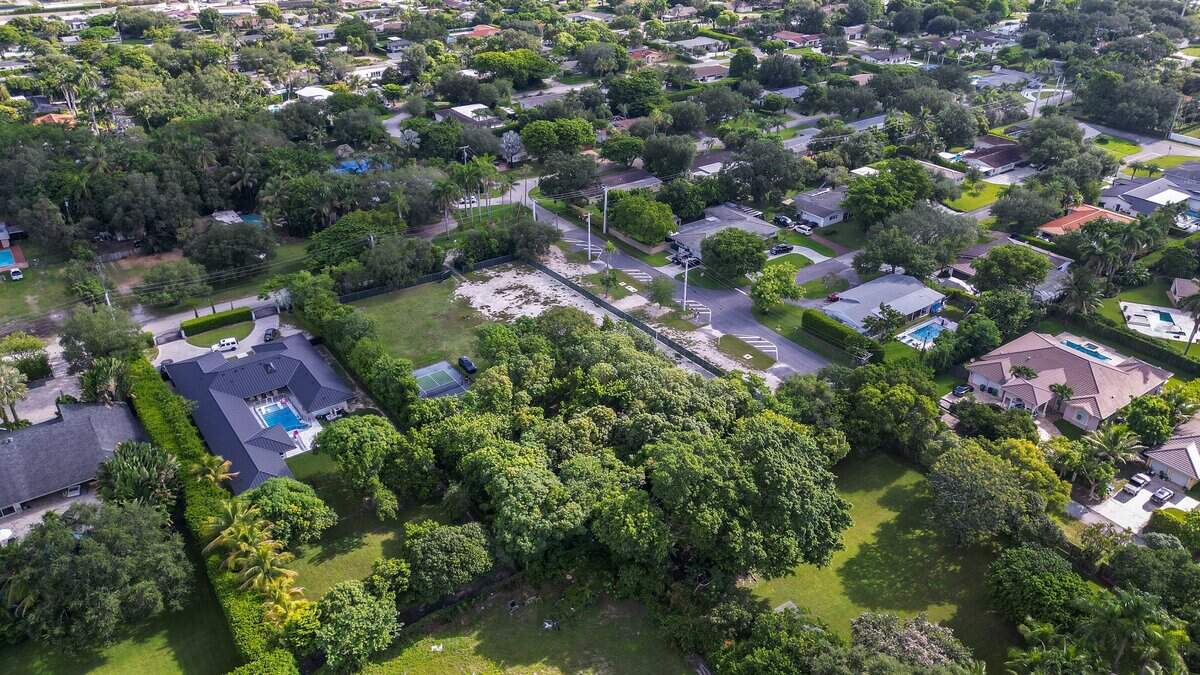
Residents of a quiet East Kendall enclave of estate homes started getting a series of disconcerting surprises in the mail over the past several months: notices from Miami-Dade County that developers had filed plans to build apartment buildings in the middle of their single-family neighborhood.
Read more Miami-Dade detectives make arrest in five-year-old cold case murder
The developers, they discovered, are seeking to take advantage of little-known zoning measures that encourage high-density development up to a half-mile from designated rapid-transit corridors, including Kendall Drive.
Those measures, approved with little fuss seven years ago by the County Commission, are meant to build up housing density along the corridors in preparation for the installation of rapid transit — such as rail or the less-costly alternative known as bus rapid transit, or BRT.
But, as residents of the compact Continental Park section see it, there’s one big problem with the applications. There is no rapid transit on Kendall Drive, and no plan or funding for any to be built.
Instead, they fear they will be left to deal with the consequences of developers’ plans that call for a total of 261 apartments in four buildings clustered on roughly three adjoining blocks of what are now single-story homes or vacant lots. For them, they say, that would mean much more traffic, noise and the prospect of drastic change in the shape of buildings up to five stories tall looming over their houses.
“I think the whole idea behind it, it makes no sense,” said Deshratn Asthana, president of the Continental Park Homeowners Association and a 30-year neighborhood resident. “If there is no transit, and you don’t have funds for it, why are we letting developers submit applications?”
Asthana said he and other residents of Continental Park, which he said numbers about 150 homes, had no clue about the transit zoning measures until notices for the first application began landing in mailboxes late last year. Since then, the county has received three more applications.
The developers’ applications for rezoning of several single-family lots for multifamily residential buildings are still under review by the county and must still undergo the normal public vetting process of hearings and board votes. No hearings have yet been scheduled.
Meanwhile, the Continental Park residents, aided by the larger and politically influential Kendall Federation of Homeowner Associations, are gearing up to fight the applications. They have set up a sophisticated website that automatically tracks and updates the applications as they’re reviewed and provides information on upcoming hearings, as well as on the applications.
Asthana said his members hope that the prospect of concerted opposition from thousands of voters along the affected stretch of Kendall Drive — from U.S. 1 in Dadeland to just east of Krome Avenue — will give county commissioners pause.
If not, the critics say, the nearly 10 miles of Kendall Drive covered by the transit-zoning measures could be radically transformed by new, high-density development long before any mass transit arrives to provide relief.
“If we let it go, it will be a disaster,” Asthana said.
What the county says
The looming battles over the Kendall transit zoning come as the county, hemmed in by water, farmland and the Everglades, tries to accommodate growth and prepare the ground for rail or BRT expansion by encouraging infill development and reshaping broad swaths of suburbia along a more-urban template.
They also coincide with expansive efforts by the Florida Legislature to override local zoning restrictions to encourage dense new housing construction amid an affordability crisis, such as the controversial Live Local Act, which encourages developers to offer some apartments at below-market rents in exchange for the ability to supersize projects in commercial districts.
County officials say the Kendall Drive upzonings are critical if rapid transit is to someday come to the corridor.
The county’s SMART transit blueprint, approved in 2016, calls for an ambitious expansion of rapid transit along major corridors, including Northwest 27th Avenue and State Road 836, that would build on the single Metrorail line erected in the early 1980s.
But the county can’t qualify for the federal funds essential to building out the proposed transit lines unless it can show the high residential density needed to make it viable, officials say. So commissioners approved the transit zoning measures to boost apartment development in historically low-density areas such as the Kendall corridor, even if the hoped-for transit line won’t happen for years to come.
Those policies, the county’s Department of Regulatory and Environmental Resources said in a statement to the Miami Herald, “lay the groundwork so that when transit projects occur, we have created the conditions that make these projects viable and effective.”
The county points to the newly completed South Dade TransitWay, which upgraded the old busway from Dadeland to Florida City into a speedier, more efficient bus rapid transit system with stations. That was predated by a couple of decades by county plans and zoning measures designed to foster apartment construction along the route that are now producing significant new housing development.
Read more After recent visit to Haiti, congressman wants TPS for Haitians restored
The county statement points to other benefits of the SMART plan zoning measures, including not just offering relief for the housing crisis but also reducing pressure to push out the Urban Development Boundary, the line that protects natural areas and farmland at the western and southern edges of the county from development. The best way to do that, they argue, is to open up low-density areas like Kendall to infill redevelopment that can use land more efficiently.
“It’s also important to note that County policies address long-term goals beyond transit development,” the county statement says. “Housing affordability is a significant area of concern in this community, and policies that promote density help create much-needed housing at more affordable prices.
“The policies also support infill development, providing for infrastructure investment and economic growth within existing communities. Our policies also provide for a host of environmental protections, including Everglades protection, water and aquifer protection, regional flood protection, and the protection of our agricultural lands.”
The rapid-transit zoning allows developers in close proximity to designated corridors to increase density in two tiers. Higher densities are allowed within a quarter-mile of the corridor, stepping down in density for properties within a half-mile. The county measure also speeds up approvals because rezoning applications don’t require an amendment to the underlying comprehensive development plan required by state law, typically a prolonged process.
A companion measure provides for additional development capacity on top of that if apartment rents are priced below market rates.
County planning and zoning officials say the development incentives are available even in the absence of plans for rapid transit on Kendall Drive. Though the SMART plan designated the corridor for future rapid transit development, the county concedes there has been little progress on a plan for Kendall because the Florida Department of Transportation, which must approve transit plans and funding, is analyzing other corridors first.
“Delays in implementation of the plans for Kendall Drive does not negate these policies or development that may arise because of them,” the county said. “Transit projects are dependent on long-term transit planning and various funding sources that may not be available on the same timelines as redevelopment projects. The policies are not dependent on transit projects occurring first.“
Moreover, in a recent memo, Miami-Dade Mayor Daniella Levine Cava said the long-promised transit expansion is billions of dollars short in projected funding over the next 20 years and not viable without higher taxes.
The county has also run into neighborhood opposition in another little-noticed zoning initiative designed to ease the housing crunch and encourage redevelopment that fills in open spaces. At about the same time as the rapid-transit strategy was taking shape, the county also approved a measure allowing owners of single-family lots in unincorporated areas to redevelop them for duplexes. If the proposed duplexes meet certain affordability criteria, they are approved without public hearings.
The strategy is similar to that of the Rapid Transit Zones the county has established around Metrorail and major bus stations that allow developers to supersize closely linked residential and commercial development within a defined radius. That strategy, designed to feed riders to trains and buses while lessening dependency on cars, led to the creation of Downtown Dadeland and clusters of towers and shops now rising around transit stations.
In the case of the Continental Park applications, county officials note, approval is not automatic or mandatory, as it is with qualifying Live Local applications. Those applications must meet criteria that require the projects to be compatible with their surroundings — for instance, by not overwhelming existing homes or creating too much traffic for the street network to handle.
In addition, they say, new development along the corridor is likely to come gradually, and not in a rush that would overwhelm neighborhoods. Downtown Dadeland, for instance, has taken three decades to approach full build-out.
What neighbors say
The sites for the four Continental applications abut higher-density development on Galloway Road, which is lined with both commercial and residential buildings, and sit just east of the Baptist Health campus on Kendall Drive.
But Mike Rosenberg, longtime president of the Kendall Federation, a group organized in part to fight new development approvals in the vast suburban area, says if approved, the Continental Park applications could open the door to a transformation of already congested Kendall.
He complains the county has long stinted on services and infrastructure for Kendall and West Kendall, which together have an estimated population of 450,000, and says a big increase in allowed development without transit or other improvements would only strain the area even more.
In a series of email exchanges starting at the end of July with Levine Cava and Lourdes Gomez, director of the county’s Department of Regulatory and Economic Resources, Rosenberg pointedly asked whether the county approach is the right one. They responded that it would take action by the full commission to alter the zoning incentives already in place.
“If it’s wrong, they need to lead the charge, or it leaves us, the constituents, lost at sea,” Rosenberg said of Levine Cava and Gomez. “I want to see if they’re going to help. They’ve destroyed Kendall since I’ve lived here. I’ve asked for one more chance. Can they fix this?”
Read more Four new apartment towers, no transit plan: A Kendall neighborhood fights back
This story was originally published August 20, 2026 at 5:00 AM.










Post Comment