Man’s death on Brightline tracks in Orlando is a first
Along an isolated stretch of train track not far from the airport in Orlando, a man curled into the fetal position and waited.
Read more With a $93M bid, group wins auction for former Spirit headquarters in Broward
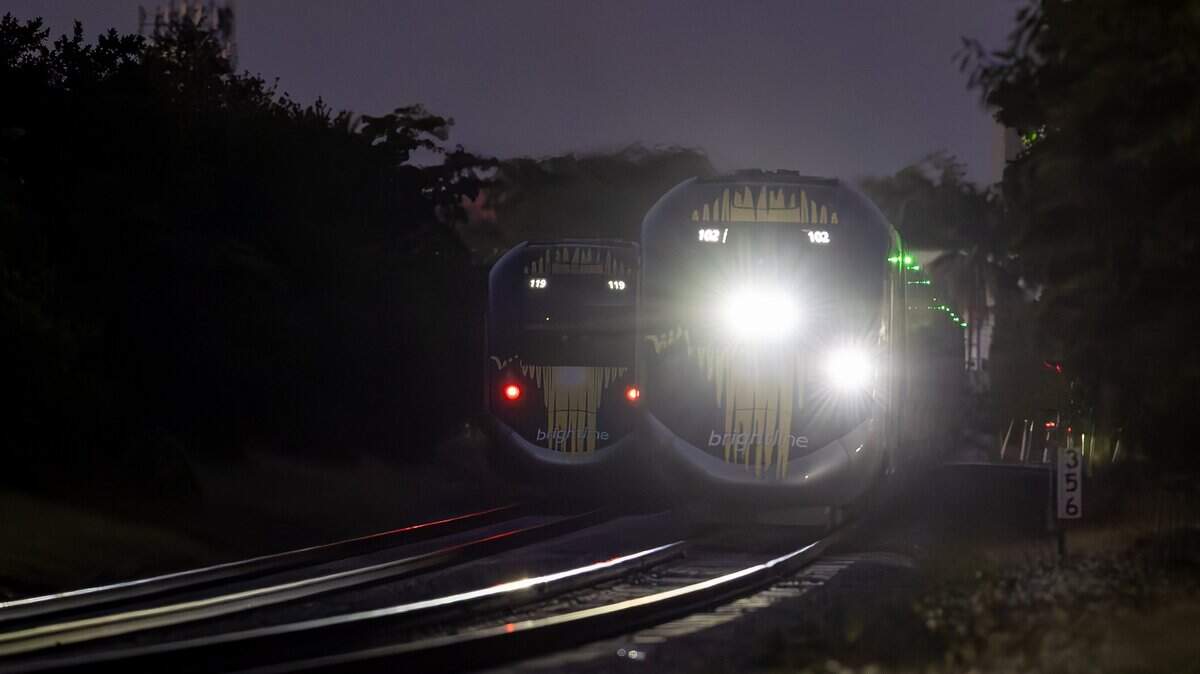
When a Brightline train rounded a bend at 90 miles an hour, just after 9 p.m. on a Tuesday, the man looked right at the train crew.
The death on July 28 of Francisco Valenzuela Fernandez was the first fatality in Orange County by a Brightline train, according to federal data and a Miami Herald/WLRN investigation of Brightline deaths. Service launched in South Florida in 2018, and extended to Orlando in September 2023.
The privately owned rail system carries the dark distinction of being the nation’s most dangerous major passenger train, killing at least 220 people so far, the Herald/WLRN found.
The trains run fastest in the stretch of track from Cocoa in Brevard County to Orlando International Airport— up to 125 miles an hour. But the layout of the tracks renders fatalities in that span of track unlikely: The tracks are fenced off and isolated from homes and pedestrians, running alongside the Beachline Expressway / State Road 528.
A passenger aboard the train alerted the Miami Herald to the fatal strike, near the interchange of State Road 528 and the Central Florida Greeneway, saying the train came to an abrupt stop about 15 minutes after departing the airport. Then, the train, which was on its way to West Palm Beach, sat for more than two hours. Passengers were asked to pull their shades down so they could not look out the windows, but information was sparse.
It’s unknown how or why Fernandez walked onto the Brightline tracks that night. Brightline spokeswoman Ashley Blasewitz said in an email that she had “nothing to add.”
Read more Miami woman faces denaturalization after jury says she lied about her criminal past
The medical examiner’s office said Fernandez’s death was ruled a suicide. The autopsy report is exempt from public record under a relatively new Florida state law, so additional details were unavailable.
An incident report from the Orange County Sheriff’s Office, released Wednesday, said emergency responders found the dismembered body. The train’s conductor and engineer both told responders that the train rounded a turn, and saw an object on the tracks. As they got closer, they realized it was a “skinny built” man in fetal position. He “peaked (sic) his head up and looked at them” before impact.
The report did not indicate how Fernandez got onto the tracks amid the fencing. A 46-year-old man with that name lives about 7 miles from where the fatality occurred. But efforts to reach family were unsuccessful.
In southeastern Florida, from West Palm Beach to Miami, Brightline trains reach a maximum 79 miles an hour. Much of the track is exposed, with no fencing, and is at street level with hundreds of local crossings. Most of those who died were on foot.
Brightline was not found liable for any of the deaths and has attributed each fatality to someone breaking the law by walking or driving onto the tracks and disregarding gates and warning signs.
Work is under way now in South Florida to add fencing, safety striping, better signage and other safety upgrades, largely funded with grants released after the Herald/WLRN Killer Train series was published last year.
Read more Man’s death on Brightline tracks in Orlando is a first











Post Comment