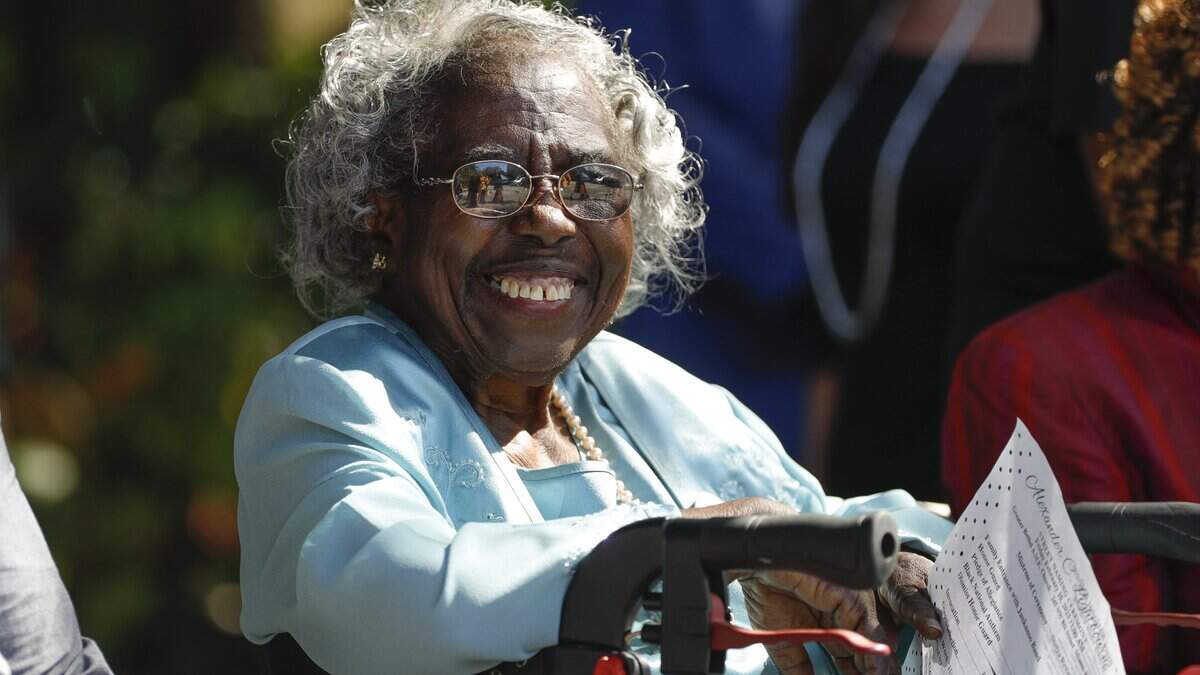
Black Miami preservationist fought gentrification. Her home is now being flipped
The Brownsville home of late Miami civil rights activist Enid Pinkney, the historian and preservationist who was a fierce advocate for empowering and preserving Black communities, is being flipped.
Read more Who is Rafael Villalobos? Meet Miami-Dade public schools’ next superintendent
Pinkney quit-claimed the home, which she purchased in 1998, to her nephew Gary Allen in 2023, according to property records. The home was then sold in April for $460,000 to NSGC Investing Services, Inc., a Hollywood-based real estate investment firm.
The home is now listed with a $700,000 price tag after undergoing upgrades, including a completely updated interior.
RELATED: Hialeah won’t annex part of this historic Black neighborhood. Will it look for other areas?
Pinkney, who died in 2024 at 92, was instrumental in saving landmarks, most notably the Historic Hampton House, a Green Book motel where many Black luminaries including the Rev. Martin Luther King Jr. stayed when in Miami, the Miami Circle at Brickell Point and the Lemon City Cemetery.
Allen said he could not keep up with the expenses, which is why he decided to sell the house. “In a practical way, it made sense,” he said. “It would cost close to $200,000 to really get that house up to par.”
Allen said the house needed to be gutted, the inside was deteriorating and termites were eating at the doors. The upgrades would’ve been costly. Plans were in place to sell the home to someone who would appreciate the history of the home, who also happened to be Black, but Allen said those plans fell through.
“A couple of other people were saying I should have approached them about getting the house,” he said. “But the process of taking care of my aunt and caregiving for all of those years…that was kind of really weighty.”
Kenneth Kilpatrick, president of the Brownsville Civic Neighborhood Association, said the high price tag puts other homes at risk of being sold at an inflated price, eventually pricing out residents in the historically Black neighborhood that has already been under the threat of gentrification. Brownsville residents already staved off efforts by Hialeah to annex part of the neighborhood into the city back in 2023 – an effort Pinkney fought furiously against. The city ultimately decided not to pursue annexation. But that incursion by another municipality made area homeowners even more wary of gentrification.
Brownsville and other nearby unincorporated communities in Miami-Dade County are now exploring becoming a city – something Kilpatrick said is necessary now more than ever as neighborhoods are under the threat of gentrification.
Read more Immigration activists raise alarm about activity at ICE facility in Broward
RELATED: Will becoming a city help Brownsville and its neighbors thrive? Residents are split
The average home value in the neighborhood is $430,998, according to Zillow. The median home price is $474,616 and recently sold homes have gone for the $500,000s, according to Redfin.
“This is what investors have done in our community forever,” Kilpatrick said. “It’s a real sore and blow to our neighborhood to see it happening to the Pinkney house in particular.”
RELATED: ‘Her heritage was important to her.’ Miami preservationist, historian Enid Pinkney dead at 92
Kilpatrick said Pinkney’s home isn’t the first of a historic figure to be lost to investors, pointing to late Florida Representative Joe Lang Kershaw and late Miami-Dade County Commissioner Neal F. Adams Sr. whose homes have been swooped up by investors.
While Kilpatrick said he’s disappointed the home was sold and preferred the family reach out to the association for help, he understands “it’s a private home and no one is obligated to do that.”
But he hopes that people balk at the high price tag and decide not to buy it. If it is purchased, he hopes its by someone who understands the history of the house and of the neighborhood.
“The house has no significance unless the people who own it understand and honor the history of it,” he said.
Allen, who now lives in Nassau, Bahamas, where he is originally from, would’ve liked for the home to be a museum but said the home isn’t what defines his aunt’s legacy, which he says is being kept alive by institutions such as the organization Profiles in Black: “The house is not her. That’s a material thing.”
Read more Will there be a new ICE detention center in Miami area? Homeland Security is looking









Post Comment