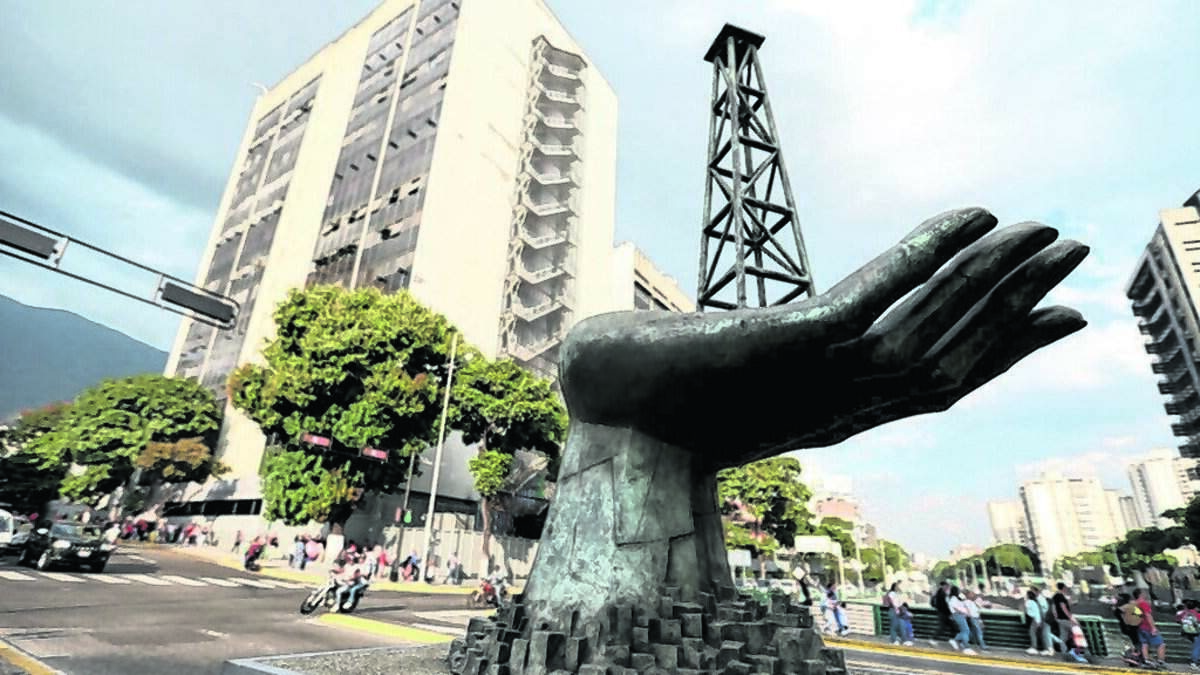
Informant: I endured threats to expose Venezuelan fraud, but U.S. betrayed me
A decade ago, Pedro Binaggia was enjoying an affluent lifestyle as a Venezuelan lawyer catering to high-end banking clients in South America.
Read more Key West man cost state more than $370,000 in derelict-boat removals, FWC says
But his comfort zone was turned upside down when a tight circle of Venezuelan businessmen asked him to invest tens of millions of dollars in foreign-currency exchange deals but then told him to put the request on hold and instead send the money to other parties.
Binaggia suspected he was in the middle of a money-laundering scheme, but he had no idea that the group had obtained the tainted millions by making bogus loans to Venezuela’s state-owned oil company while paying bribes to senior government officials.
Binaggia, facing escalating threats from a ringleader who carried a handgun and owned a German shepherd with a shock collar, began secretly recording his meetings in late 2015.
A few months later, he took a leap of faith: After strategizing with a major Miami law firm, Binaggia walked into the South Florida office of Homeland Security Investigations, blew the whistle on the group of businessmen and officials who had approached him in Venezuela and signed up as a confidential informant for the federal government. The Venezuelan-born attorney, however, said he did not obtain an immunity deal or any guarantees, such as permanent U.S. immigration benefits or financial compensation, because he trusted his handlers to deliver on their promise to “take care” of him and his family.
In a recent interview with the Miami Herald, Binaggia said federal agents soon discovered he fit the role of an informant in the murky world of undercover operations, wiring him up for about 100 recorded meetings with suspected con artists in high finance in Latin America and other parts of the globe. The recordings, along with financial documents and other evidence he turned over, would lead to money-laundering conspiracy charges against a dozen Venezuelans and others in a $1.2 billion foreign corruption case that exposed the massive looting of the state-owned oil company Petróleos de Venezuela, S.A. and its dire impact on the economically struggling South American country.
Since the “Operation Money Flight” case was filed in 2018, six of the defendants have pleaded guilty and turned over about $90 million in embezzled PDVSA funds to the U.S. government. Six others are still at large and considered fugitives, including a Caracas TV network mogul who was close to the late Venezuelan President Hugo Chávez and his successor, Nicolás Maduro, who is being held in a New York jail on federal drug charges. Binaggia, who was not charged, handed over about $45.6 million of tainted proceeds from the group’s money-laundering scheme in Venezuela — funds that were in his trust accounts at banks in Switzerland and the Bahamas and that he had refused to transfer to the Venezuelans.
Binaggia and his lawyers said agents with Homeland Security Investigations and prosecutors at the U.S. Attorney’s Office repeatedly assured them that he had done exceptional work over an eight-year span both here and overseas and would be compensated with some of the money recovered from the defendants in the money-laundering case as well as green cards granting permanent U.S. residency for him and his family members.
But the agents and prosecutors never fulfilled their promise, Binaggia, 56, told the Herald. Now, he and his lawyers are “considering all legal options” — including a possible lawsuit seeking financial compensation and visas for him and his family — but they “remain hopeful” the Justice Department “will do what is right and honor its promises.”
‘Take care of you’
Binaggia said that when he became an informant, it was like a full-time job for the first three years. The Miami prosecutors filed the initial indictment in August 2018.
“At some point, they met my family,” Binaggia told the Herald during a videoconference call at his Miami lawyers’ firm, Baker McKenzie, in June. He was living with his wife and three children in Weston before they were forced to leave the United States for Europe in 2024 when their visas expired.
“They told my wife and oldest daughter, ‘Pedro is a huge, very important asset for the United States and you can be sure that we are going to take care of you, because you are for us more important than the case,’ ” he recalled.
It didn’t happen.
Binaggia, now living in Europe, said he’s more disappointed than angry with his federal handlers for leaving him in the lurch after sacrificing so much of his life for them between 2016 and 2023. He said he can no longer make a living as a lawyer in Venezuela or anywhere else because his reputation has been smeared after he was outed as a confidential source for the feds by news media, blog writers and social-media posts in Caracas after the “Operation Money Flight” case was filed in 2018.
Binaggia, who has been living off the savings from his prior career as a lawyer in the banking industry, said he’s constantly worried about his and his family’s safety because of potential retaliation.
“The problem is that my life has been destroyed by Google,” he said, referring to the global reach of the tech giant’s internet-search engine. “This is something that is going to haunt me the rest of my life. It is still very hard for me today to go forward with my life because of this.”
His legal team put his predicament this way: “His story is not simply one of extraordinary public service,” attorneys William Roppolo, Edward J. O’Donnell IV and Robert O’Neill said in a statement provided to the Herald. “It is also one of extraordinary betrayal — a whistleblower who risked everything for the United States, only to become the victim of the very government he trusted.”
Homeland Security Investigations declined to comment on Binaggia’s undercover work for the agency or confirm his existence as a confidential informant. Prosecutors with the U.S. Attorney’s Office in Miami also declined to comment, citing the ongoing case.
Blowing the whistle
Both federal agencies and prosecutors — especially in drug-trafficking and financial-fraud cases — regularly rely on credible insiders like Binaggia to give them access to elusive targets of criminal investigations. Often, they pay informants a fee on a contractual basis, or, if charged, give them a substantial reduction in their prison sentences. In meeting their end of the bargains, agents and prosecutors can typically leverage confidential informants or cooperating witnesses to help them make cases that would otherwise prove impossible to bring.
Case in point: Former UBS private wealth management banker Bradley Birkenfeld filed a whistleblower complaint and received an unprecedented $104 million reward from the Internal Revenue Service after the agency reached a $780 million settlement with the prominent Swiss bank in 2009. Birkenfeld, who was sentenced to 3 1/2 years in prison after pleading guilty to a fraud-conspiracy charge in a criminal case in South Florida, disclosed how UBS helped thousands of wealthy American clients avoid paying income taxes by hiding their assets in secret offshore accounts.
His whistleblower attorney, Stephen Kohn, said the Justice Department runs a serious risk of losing critical assets like Binaggia for complex financial-corruption investigations if they don’t compensate informants fairly.
“The government has admitted in numerous cases that without insiders like Pedro, they cannot successfully prosecute money laundering, tax, sanctions, and bribery-related cases,” Kohn, based in Washington, D.C., told the Herald via email. “It is well established that paying large awards to whistleblowers is the most important single factor in motivating other potential whistleblowers to take the significant risk of reporting crimes to the government.”
But Kohn also cautioned: “Pedro clearly has a legitimate claim for compensation. However, the government does not readily pay awards unless a whistleblower follows the technical requirements for compensation.”
That could include filing a civil claim with the Justice Department under the Whistleblower Protection Act or using other federal statutes to pursue compensation in a lawsuit against the government.
Venezuelan money-laundering case
According to an indictment and other court records filed in Miami, the Venezuelan money-laundering conspiracy began in late 2014 when a group of Venezuelan businessmen set up a shell company to make a sham loan to Venezuela’s national oil company, PDVSA. The $42 million loan was repaid through a lucrative government currency-exchange scheme resulting in a windfall of $600 million. The dozen defendants were accused of stealing the $600 million from the state-owned oil company’s coffers, according to the indictment. By 2015, the embezzlement from PDVSA had doubled to $1.2 billion.
The accused ringleader of the scheme was Venezuelan Francisco Convit Guruceaga. According to the indictment, Convit plotted with influential business people with access to the highest levels of government, including top PDVSA lawyers and executives accused of accepting bribes.
In late 2024, a politically connected Venezuelan, Raúl Gorrín, owner of the Globovisión network in Caracas, was also charged with conspiring with Convit and others to launder the $1.2 billion that they were accused of stealing from Venezuela’s government to invest in Europe and the United States, including buying luxury real estate in South Florida.
More than a decade ago, Gorrín held key meetings at his office in Caracas and at his Miami Beach condo on exclusive Fisher Island overlooking Biscayne Bay. There, the tycoon discussed with his banker and other associates the transfer of the $600 million in ill-gotten oil funds to a European bank and eventually to the United States, according to his indictment. Some of that money was intended for then-President Maduro’s three stepsons, according to sources familiar with the investigation.
Both Convit and Gorrín, who was also charged in a separate money-laundering case, are at large and considered fugitives.
Read more Flight carrying first batch of $100 million in U.S. aid to Cuba departs from Miami
According to a key Homeland Security Investigations affidavit, here is how the stolen Venezuelan government funds were distributed by the defendants between 2014 and 2017:
▪ $272.5 million went to Gorrín. In turn, he kept about $72.5 million for himself — wiring some money to pay for aviation, yacht and brokerage services in Miami — and gave the balance, $200 million, to a Malta bank, Portmann Capital Management, for the benefit of Maduro’s three grown stepsons from his marriage to Cilia Flores.
▪ $272.5 million also went to Convit and a Venezuelan business partner who has not been charged. Of that total, $94 million was distributed to Binaggia, the lawyer-turned-confidential informant who was tasked by HSI agents in 2016-17 to launder millions of dollars from Venezuela to Europe and the United States. HSI’s purpose in casting Binaggia in the undercover, or “sting,” operation, was to test whether Convit and the others would be willing to commit a crime: the laundering of PDVSA’s embezzled money into the U.S. and European banking systems. (This is considered lawful as long as the feds don’t induce people to commit a crime that they are not disposed to do.)
▪ At the direction of HSI agents, Binaggia redistributed about $20 million of the tainted funds to: Carmelo Urdaneta Aqui, former legal counsel for the Venezuelan Ministry of Oil and Mining; Abraham Edgardo Ortega, a former director of finance at PDVSA; Jose Vicente Amparan Croquer, described as a professional money launderer; and three other unnamed Venezuelan conspirators with ties to the state-owned oil company.
In 2018, Ortega pleaded guilty to a money-laundering conspiracy charge, including accepting millions of dollars in bribes that were secretly wired to U.S. and other financial institutions with the assistance of a Miami investment manager and others. In 2021, Urdaneta pleaded guilty to the same charge, as U.S. authorities seized a $5.3 million condo in the Porsche Design Tower in Sunny Isles Beach, along with two apartments in Miami Beach and all of his assets in a Swiss bank account.
In total, authorities confiscated $49 million from Urdaneta, who held various positions in the Venezuelan Ministry of Oil and Mining from 1997 to 2015.
In the factual statement filed with his plea agreement in 2021, Urdaneta also admitted that he participated in a previous PDVSA loan and currency-exchange scheme that dated back to 2012. Urdaneta said it involved Convit, Ortega and several other Venezuelan officials — along with “an individual who later became a cooperating source” for the federal government. The Herald has learned that source is Binaggia. As a result, the allegation in Urdaneta’s statement has hung over Binaggia since 2021, possibly affecting his eligibility for financial compensation as HSI’s confidential informant.
Prosecutors view CI as ‘witness’
For his part, Binaggia wasn’t charged in the sprawling Venezuelan money-laundering case. The lead prosecutors who initially handled the case, which came to light in July 2018 with the arrest of one of the Venezuelan suspects at Miami International Airport, always considered Binaggia a “witness.”
“As you know, Mr. Binaggia voluntarily approached the United States in the spring of 2016 wishing to cooperate and to turn over funds to the United States which were in his possession,” Assistant U.S. Attorney Frank Maderal wrote to one of Binaggia’s lawyers, Roppolo, in August 2018.
“Importantly, Mr. Binaggia has never requested and never received immunity or any … protection in exchange for his cooperation. Further, Mr. Binaggia agreed, without hesitation, to wear a wire and conduct undercover operations at the request of the United States and at significant risk to his safety, and significant personal expense.
“To date, Mr. Binaggia has turned over approximately $45,585,667.40 to the United States and has otherwise assisted in the identification and forfeiture of assets,” Maderal wrote, noting that he has also agreed to make himself available for debriefings and testimony.
“Based on all the information currently available to the United States, Mr. Binaggia is not a subject or target of any investigation,” Maderal concluded, noting that no evidence indicated he was a suspect of any kind in the Venezuelan money-laundering case.
In August 2020, the prosecutor who succeeded him, Michael Nadler, reached the same conclusion when he handed over the case to another prosecutor, Kurt Lunkenheimer.
“Pedro was a key cooperator in the … case,” Nadler wrote in an email to Roppolo and O’Neill, another Binaggia lawyer, along with Lunkenheimer, the new prosecutor. “Pedro is currently a witness in the ongoing prosecution in this case.”
However, Lunkenheimer and Justice Department trial attorney Paul Hayden didn’t share the same view of Binaggia as their predecessors. Correspondence between them and Binaggia’s legal team suggested that the latest prosecutors believed he might have been involved in a prior money-laundering scheme with some of the Venezuelan defendants, including Urdaneta, who made the allegation in his 2021 plea statement.
In 2023, Lunkenheimer and Hayden proposed that Binaggia, after seven years of working as a confidential informant, sign a so-called Kastigar letter, which would only give him immunity for his statements about his interactions with the other Venezuelan defendants — but not full immunity from prosecution. His lawyers countered that Binaggia would be willing to continue speaking with the prosecutors without any Kastigar letter. But the prosecutors said they would not talk with him again unless he signed it.
Binaggia, however, refused to sign the letter because he and his lawyers didn’t believe he had committed any wrongdoing in his dealings as an attorney in the banking industry in Venezuela.
“Instead, he will wait for your team to obtain approvals for a non-prosecution agreement before being debriefed yet again,” Binaggia’s lawyers wrote in an email to the prosecutors in March 2023.
“Just to be clear, Kurt and I did not promise, nor can we guarantee a non-prosecution agreement,” Hayden responded. “It is impossible to even draft an internal memo seeking such an agreement given your representation that your client did nothing wrong and his refusal to meet with us to answer questions pursuant to a Kastigar/proffer letter.”
The stalemate would drag out until August 2023, when Binaggia’s lawyers declared in an email that the prosecutors, Lunkenheimer and Hayden, viewed him as a “subject” of the Venezuelan money-laundering case — not solely as a witness. In law-enforcement probes, a subject falls into a gray area — investigators think he might have committed a crime but don’t have enough proof to make him a firm suspect, like a “target.”
“Our client has now been cooperating with the government for more than seven years,” Binaggia’s lawyer, O’Neill, wrote Lunkenheimer in mid-August 2023.
“It was the government, not our client, that unilaterally changed the dynamic of that relationship when publicly announcing his purported involvement in a criminal conspiracy in a court filing,” O’Neill wrote, referring to Urdaneta’s plea statement in which he implicated Binaggia in a previous money-laundering scheme involving Venezuela’s national oil company dating back to 2012.
“Yet, our client was never informed of that change in status.”
Lunkenheimer left the U.S. Attorney’s Office in September 2023, passing off the case to yet another prosecutor.
Two months later, Binaggia’s legal team wrote a formal letter seeking compensation to the special agent in charge of HSI’s office in Miami, Anthony Salisbury, who now works as a White House adviser to President Donald Trump. Binaggia’s lawyers cited a handful of federal statutes that allow for financial rewards of up to 30% of recovered assets in successful criminal cases.
“This request for compensation … encompasses not only what [Binaggia] has done for the government but — critically — what he has given up: his career, his family’s security, and a sense of normalcy and stability,” his lawyers wrote Salisbury and HSI’s assistant special agent in charge, Jason Laguna, in November 2023.
Binaggia and his lawyers would not receive an answer from the feds about his status. Nor would they ever receive assurances again that he would be compensated for his undercover work.
His lawyers said the turnover of federal prosecutors and case agents over the past decade — coupled with what they described as one convicted defendant’s “inevitable” finger-pointing at Binaggia — has blurred the government’s perspective on the confidential informant’s pursuit of justice: “He sacrificed his life, family and business to help law enforcement stop the looting of his homeland of Venezuela.”
Read more Man shot during attempted robbery in Opa-locka gated community, police say







Post Comment