Miami ranks low on list of where grads are finding jobs. Why it’s trailing Tampa
When 26-year-old Angelina Mendez graduated from Florida International University in 2025 with a bachelor’s degree in environmental science, she thought her resume would help launch her career.
Read more A record number of Miami-Dade families live paycheck-to-paycheck. What to know
She had participated in a project with the U.S. Department of Agriculture through FIU, where she’d collected plant data for a research project over the course of a year.
But after graduation, Mendez sent out countless job applications. She heard nothing back in return.
“At some point, I was averaging around 10 to 15 applications a day for both internships and jobs,” she said. “I wasn’t really getting the opportunities that I thought I would.”
As months passed and more job applications went unanswered, Mendez began to feel that her environmental science degree was not enough to stand out in a competitive job market. So she packed her bags and moved to Orlando, where she is preparing to pursue a second bachelor’s degree in environmental engineering at the University of Central Florida, hoping the added credential will make her more competitive for entry-level roles.
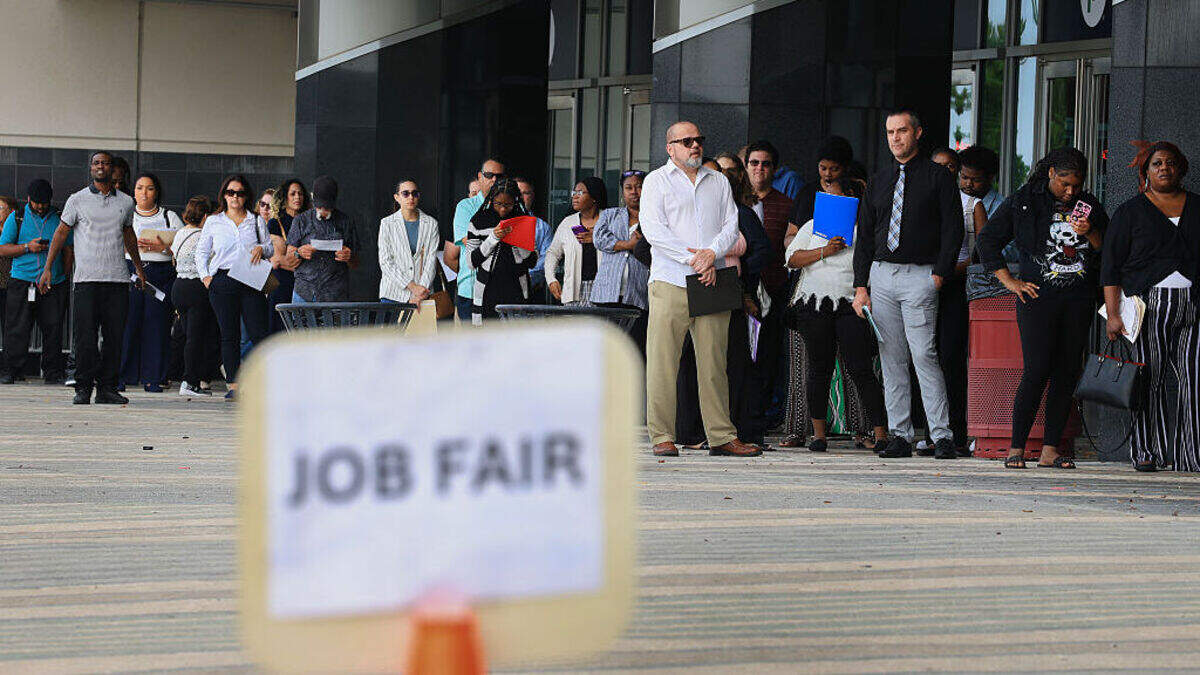
Like many recent college graduates, Mendez has struggled to secure entry-level work as graduate underemployment climbs to 42.5%, its highest level since 2020. Graduates are entering a labor market defined by fewer entry-level openings, the growing role of artificial intelligence and employers increasingly seeking candidates with experience that extends beyond a college degree.
And for many recent graduates, the challenge is not just finding a job — it’s finding one that pays enough to build a life in South Florida.
As entry-level opportunities become harder to secure and wages struggle to keep pace with the region’s rising costs, some young Miami professionals are choosing to launch their careers elsewhere.
Miami recently landed at No. 35 on a list of 53 metro areas where young professionals are finding work, far behind Tampa and Orlando, according to payroll data.
For Ned Murray, associate director of FIU’s Metropolitan Center and an expert on South Florida’s housing market, Miami’s poor ranking wasn’t a surprise.
“We hear stories coming from local businesses. They’ll be the first to tell you that they’re having a really hard time not only retaining workers but also attracting workers,” he said. “And it’s because young people just can’t afford to live here.”
Mendez said she isn’t very hopeful about being able to return to Miami anytime soon.
“I love Miami. I built my community there and have my family over there,” she said. “If there’s an opportunity in Miami, I would be happy to move back. But I honestly don’t think I could afford to live there on my own without a high-paying job.”
Why is Miami struggling to attract and retain college graduates?
A recent study by ADP Research found that several Sun Belt cities are emerging as hotspots for young professionals, offering a strong mix of hiring opportunities, wages and affordability.
The analysis examined payroll data from more than 400,000 workers ages 20 to 29 between January 2025 and January 2026. Among the nation’s top destinations for early-career workers was Tampa, which ranked second overall, just behind Birmingham, Alabama. Orlando ranked 20th.
Read more Catholic leaders urge DeSantis to halt record-setting Florida execution
Miami, meanwhile, landed at No. 35.
Cost of living is a major factor.
“Miami maintained its steady hiring, but stagnant wages and high costs kept it near the bottom on affordability, behind only San Francisco,” the study’s authors wrote.
According to United Way data, a single adult in Miami-Dade needs at least $47,784 a year just to make ends meet. That figure does not include any savings, even for emergencies. It covers only basic necessities, such as housing, food, childcare, transportation, healthcare, taxes, and essential technology like a cellphone and internet access.
For young workers just starting their careers, keeping pace with those costs can be especially challenging.
“Entry-level jobs, typically the wages or even the salaries — if they’re professional — are not going to be as much as if you had some experience or even a master’s degree,” Murray said. “But if you have to survive, you have to get started somewhere.”
The financial pressure is driving young people to look elsewhere.
About 81% of residents in the Miami metropolitan area report feeling stressed by rising prices, according to Census Bureau data — one of the highest rates among major U.S. metro areas, surpassing both Los Angeles and New York. That strain appears to be contributing to population losses.
Miami-Dade County lost roughly 10,000 residents last year, according to new Census estimates, and experts say younger residents are disproportionately likely to leave. In an economic forecast released last year, the Florida Chamber of Commerce projected that the state’s working-age population — adults between 18 and 64 — would decline between 2023 and 2025, shrinking the available workforce.
“Young people have mobility. You can just get up and say, ‘I’m out of here,’” said Murray. “So we are losing some of our best and brightest.”
Nearly 60% of renters in the Greater Miami area are rent-burdened, meaning they spend at least 30% of their income on housing, according to U.S. Census data.
And a shortage of affordable housing has left many middle- and lower-income workers struggling to find a place to live that’s within their budgets.
“People talk about, you know, living paycheck to paycheck, but even that doesn’t cut it,” said Murray. “Because once you are paying out that much money the first of the month, you have nothing left over.”
Murray says keeping graduates in South Florida is vitally important. He pointed to entry-level jobs in manufacturing, aerospace and the computer industry, as well as those in law firms and school systems.
“There are really important jobs fundamental to the economy that need young people with consistent grades, and if we’re not filling those, then we’re really gonna struggle,” he said.
For Mendez, after she earns her bachelor’s degree in environmental engineering from UCF, she plans to pursue a master’s degree. She hopes to land a job in a laboratory or in water resources management.
“It’s bittersweet,” she said. “Because I know that I’m gonna have a lot more opportunities by going back to school, or at least I hope so. But also, I’m leaving behind a lot of people that I care about.”
Read more Man looking at 90 years in prison for injuring Pinecrest cop’s foot gets probation











Post Comment