‘Noem lied’: Emails suggest DHS ignored federal law to end TPS for 350k Haitians
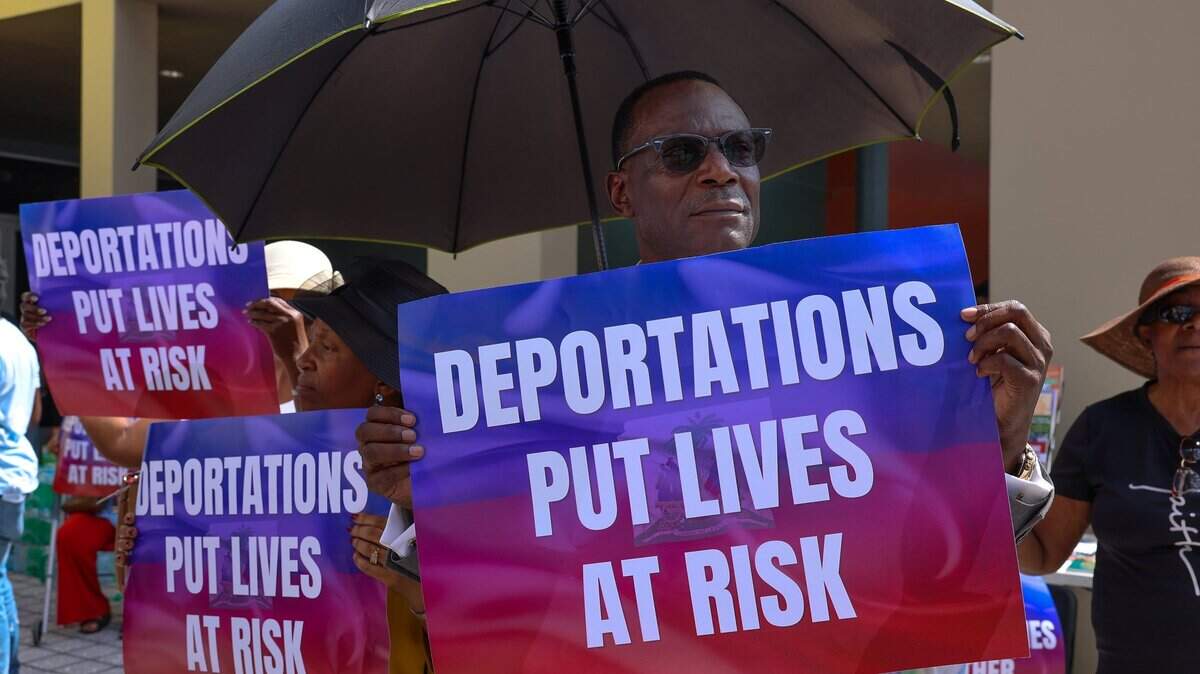
The Department of Homeland Security did not follow the law when it ended Temporary Protected Status for Haiti, according to internal government documents filed as part of a Supreme Court case that could determine the fate of hundreds of thousands of immigrants in the United States, many of them South Florida residents.
Read more Is Alligator Alcatraz empty? ICE says detainees were moved due to hurricanes
Under federal law, DHS must consult with “appropriate agencies” to evaluate on-the-ground conditions of a country due for a TPS designation renewal. The agency said last summer in a press release that then-agency Secretary Kristi Noem based the decision to terminate TPS for Haiti on a “U.S. Citizenship and Immigration Services review of the conditions in Haiti and in consultation with the Department of State.” The federal register notice about the termination also said that DHS had consulted the “appropriate” agencies.
But that legally mandated consultation with the State Department didn’t happen, according to an email exchange between USCIS officials while they evaluated a separate TPS termination for Venezuela.
“Since the statute requires [Noem] to consult with other federal agencies (traditionally the Department of State) and we have not received a recommendation from them, can [Noem] choose anything other than an auto-extension?,” a USCIS official asked on June 13, 2025.
Another official from USCIS replied: “I can share that [Noem] recently elected to terminate Haiti without country conditions from the Department of State.”
Separate emails also shared in the trove of internal documents reveal how USCIS officials first urged for an automatic extension of Haiti’s TPS and how agency leadership reversed that recommendation.
The development comes as the Supreme Court is weighing a case based on two emergency requests from the Trump administration, asking to end TPS protections for 348,000 Haitians and 6,000 Syrians. Should the justices accept the government’s argument that TPS decisions are not reviewable by judges, it would pave the way to deport hundreds of thousands of people.
The case is significant in Florida, where over a third of all Haitians with TPS — about 145,000 people — lived as of March 2025. It could also have consequences beyond these two nationalities and leave immigrants under other countries’ TPS designations without the ability to challenge TPS terminations through the federal courts.
On Wednesday, lawyers representing the TPS holders asked the Supreme Court to dismiss the consolidated case, arguing that the documents reveal that the justices don’t yet have all the facts and that the Haiti termination was pre-ordained and prejudice-fueled.
READ MORE: Decades after landmark immigration case, Haitian protections return to Supreme Court
“It should matter that former DHS Secretary Noem lied,” said Emi MacLean, attorney with the ACLU of Northern California, representing the plaintiffs in a parallel lawsuit. “The Supreme Court should not be complicit. Checks and balances exist for a reason, and the government’s actions here demonstrate exactly why the government must not be granted unfettered discretion.”
Meanwhile, a Haitian TPS holder identified only as A.A., said in an ACLU statement: “It makes me sad that the U.S. government is misrepresenting the truth about conditions in Haiti to be able to deport people like me.”
In response to questions about whether Noem had consulted the Department of State when terminating Haiti’s TPS, the agency on Wednesday sent the original press release from June 2025 announcing the termination. A State Department spokesperson deferred the Herald to Homeland Security on matters of Temporary Protected Status.
Other emails also reveal how the termination of TPS occurred within the Homeland Security bureaucracy. A draft of the Haiti termination was already in the works in late April, prior to a country conditions reviewInternal documents filed in the case show that as of May 27, a draft from a senior official recommended “no decision/automatic extension…based on a review of current conditions in Haiti.”
Read more Hialeah mayor driving with flashing red and blue lights when pulled over in Miami
“This recommendation is being made in light of recent escalation of violence; the rapidly evolving nature of the security environment makes it premature to commit to any permanent policy decision at this time,”
But emails and documents show that the draft recommendation was reversed after landing on now-USCIS Director Joseph Edlow’s desk, even after other USCIS leadership cleared it. After Edlow gave edits “verbally,” according to a May 30, 2025 email, the recommendation became termination of Haiti’s TPS. The draft recommendation said that “an extension of TPS for Haiti is contrary to U.S. national interest.” It also deleted mentions about extreme gang violence plaguing the Caribbean country.
A the decision to terminate Haiti’s TPS said that “as of June 2, USCIS has not received input from the Department of State on Haiti’s TPS designation.” Edlow, a Trump appointee, was confirmed by the Senate in July.
Haiti was first designated for TPS in January 2010, after a 7.0-magnitude earthquake claimed about 316,000 lives, devastated Port-au-Prince, and destroyed critical infrastructure. The Biden administration expanded the designation in the aftermath of the assassination of President Jovenel Moïse and another earthquake in August 2021.
The country continues to experience dire conditions. The United Nations has estimated that gang violence killed over 2,300 people since the beginning of the year and about 1.5 million others are currently displaced. Meanwhile, 5.8 million Haitians, or 52% of the total population, face crisis levels of food insecurity, the international organization found.
President Trump has been trying to terminate Haiti’s TPS designation since his first term.In response to the Haiti TPS termination, multiple lawsuits ensued.
In February, District Judge Ana C. Reyes, in Washington D.C., blocked the termination of Haiti’s TPS and kept the deportation protections ongoing. She noted that the administration’s Department of State has issued “Do not Travel” advisories for Americans to Haiti and that Noem had made discriminatory and prejudiced remarks about Haitians. Like the recently-revealed correspondence, Reyes also noted that Noem “did not consult other agencies at all” in the termination of the designation.
READ MORE: Federal judge blocks termination of Haitian TPS, keeps protections from ending Tuesday
In response, the Trump administration filed an emergency request to the Supreme Court in March, asking the justices to allow the administration to end Haiti’s TPS. Solicitor General D. John Sauer said that lower courts were overreaching their authority and weighing in on “an area of wide executive Branch Latitude.” It marked the fourth time the administration went to the Supreme Court to weigh on TPS after lower courts sided with beneficiaries of the program.
The Supreme Court consolidated the government’s emergency requests to end TPS for Syria and Haiti, agreeing to hear oral arguments in April. A decision is due in coming weeks.
The Haitian Bridge Alliance, a rights group that advocates for Haitians immigrants, urged the Supreme Court to reject the government’s ask to end TPS and affirm lower court’s rulings upholding the protections.
“The rule of law requires more than a decision—it requires a fair and lawful process,” said Guerline Jozef, Executive Director of Haitian Bridge Alliance, in a statement Wednesday.
Read more Miami-Dade might be off the hook for half of planned $46M subsidy for World Cup










Post Comment