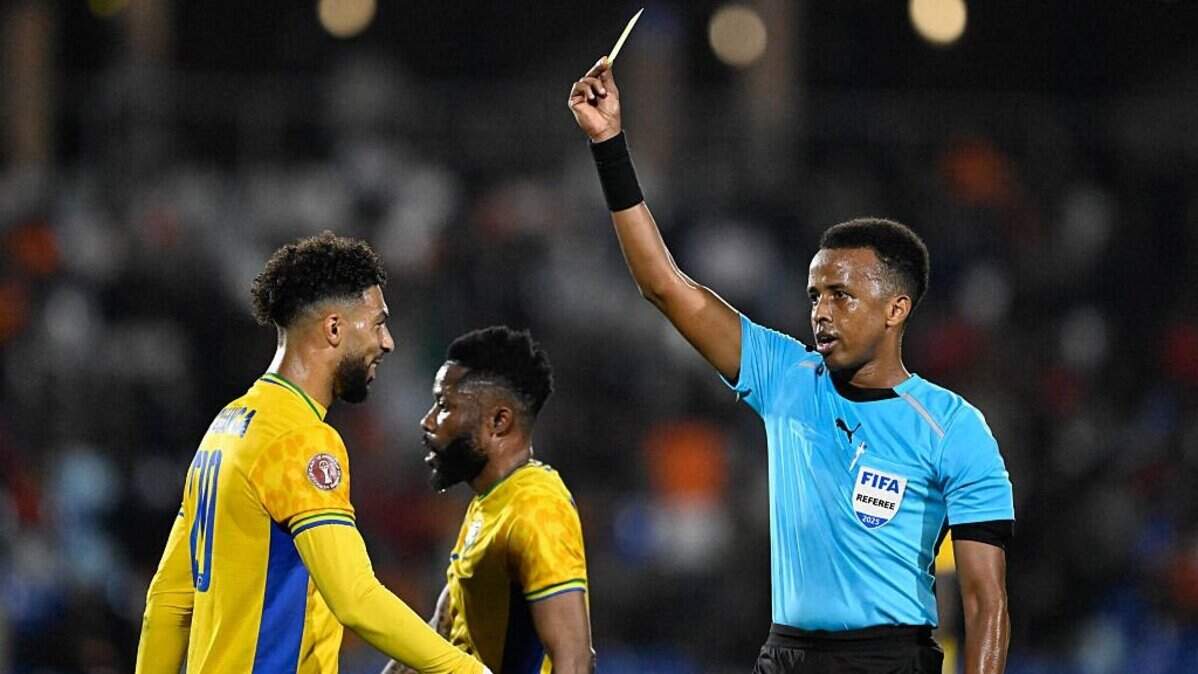
Somali referee denied entry to U.S. at Miami airport ahead of the World Cup
Immigration officials at Miami International Airport refused to allow a renowned Somali referee to enter the United States ahead of his participation as an official in the FIFA World Cup.
Read more Magnitude 6.1 earthquake near Cuba’s western side felt throughout southern Florida
A Customs and Border Protection spokesperson told the Miami Herald that on June 6, the referee flew in to Miami from Istanbul to Miami and underwent additional immigration screening and was determined to be inadmissible to the United States.
“All travelers seeking entry into the United States, including athletes, coaches, and staff, are subject to CBP inspection and vetting,” said the spokesperson. “Admissibility determinations are made on a case-by-case basis using law enforcement, national security, and immigration information available at the time of inspection. CBP officers have the authority to question travelers, conduct inspections, and determine admissibility consistent with U.S. law.”
Media reports have identified the Somali referee as Omar Abdulkadir Artan, 34. He is slated to officiate matches in the upcoming international soccer competition taking place in cities throughout the United States, Canada and Mexico.
Abdulkadir Artan is the first Somalian to referee in the final phase of the World Cup, according to Sports News Africa. He has refereed for FIFA since 2018 and won awards for his work. The Confederation of African Football named him the best male referee in 2025. According to AFP, Abdulkadir Artan had a valid U.S. visa. He was reportedly returned to Turkey.
The Somali Ministry of Sports and Somalia’s embassy in Washington, D.C., did not immediately respond to a request for comment. The Miami World Cup Host Committee spokesperson referred the Herald to FIFA for more information.
READ MORE: Haiti player’s U.S. visa ordeal reveals obstacles facing some World Cup countries
Government and FIFA officials at a press conference last week said that players, fans, and others coming to the United States for the World Cup shouldn’t face issues passing immigration at airports, except those coming from Haiti and Iran. Four countries — Haiti, Iran, Ivory Coast and Senegal — in this year’s World Cup face U.S. travel restrictions imposed by President Donald Trump after his return to power last year. The measures have complicated travel not only for fans hoping to attend matches in the United States, but also for the players and team officials, despite exemptions for athletes, coaching staff and federation personnel.
The only Haitian player who lives in the gang-ridden Caribbean country encountered difficulties securing a visa. So did members of the South African team and its support staff. Iranian officials have said that the U.S. visa delays have placed the squad at a competitive disadvantage. As a result of its complications, the team was forced to relocate its base camp from Arizona to Tijuana, Mexico.
Read more This Coral Gables commissioner won’t seek reelection. Here’s why
But the refusal of entry for Abdulkadir Artan raises questions whether travelers will face issues in coming weeks as the World Cup kicks off June 11 in Mexico. Miami’s first match is June 15.
Last week, the International Sports Press Association President wrote to FIFA about the denial of entry visas to accredited journalists. He also emphasized that many were being given single entry visa, which means that if they leave to cover a match in Mexico or Canada, they cannot come back to the U.S.
“The cases are countless and, I repeat, unacceptable. Politicians always say that sports unites and builds bridges…but in this case we are going in the opposite direction,” Gianni Merlo, the association president, said.
The episode is a flashpoint in the debate around President Donald Trump’s immigration agenda. Upon taking office, Trump issued proclamations banning the entry and issuance of visas for citizens of dozens of countries, including Somalia. While the White House says the measures are necessary for national security, advocates and lawyers say they are a tactic to limit immigration from countries that Trump officials deem undesirable.
Trump has made repeatedly offensive and racist comments about Somalia in particular. He has called Somalis “garbage” and the country that they come from “hell,” among other derogatory names.
In the build up to the World Cup, more than 120 civil society groups issued a joint travel advisory, warning soccer fans, even those with visas, about the risk of noncitizens facing immigration detention or deportations during their travels to the United States.
Miami Herald Staff Writers Jacqueline Charles, Vinod Sreeharsha and Michelle Kaufman contributed to this report.
Read more George Pino’s Miami boat-crash trial begins. Follow for the latest updates
This is a developing story. Check back for updates.










Post Comment