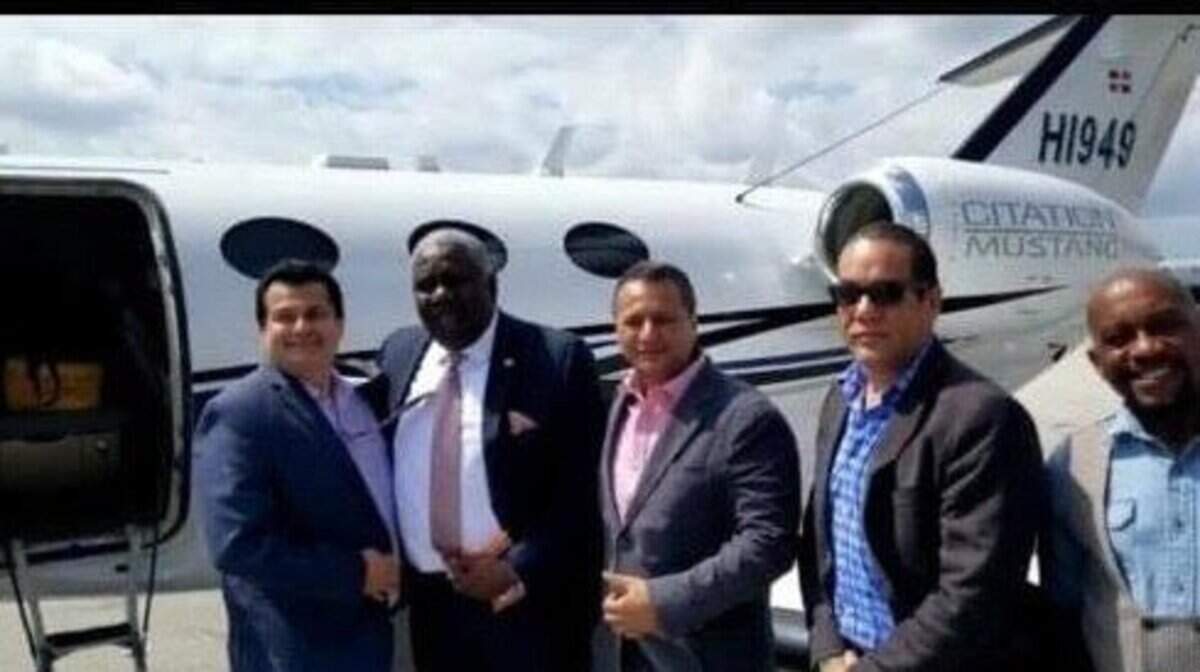
South Florida pastor found guilty on all counts in Haiti president assassination
A Miami federal jury on Wednesday convicted a Haitian-American pastor of conspiring to kidnap or kill Haitian President Jovenel Moïse, finding him guilty on all counts related to the sprawling international conspiracy that culminated in the July 7, 2021, assassination and triggered a power vacuum in the volatile country.
Read more Boxing promoter Don King’s Palm Beach jai-alai dream ends in bankruptcy auction
With the verdict reached over just one day, Christian Emmanuel Sanon, 67, becomes the fifth defendant convicted in the case, following the convictions earlier this year of four South Florida men on similar charges of conspiracy charges as well as providing material support and leading a military expedition against a country with which the United States is at peace. He faces a possible life sentence on the most serious charge. Sanon, who was already in custody, will be sentenced at 10 a.m. on Feb. 10. His lawyers asked for him to remain at the Federal Detention Center in Miami due to doctor’s appointments.
Sanon was supposed to go to trial earlier this year with the four defendants, but his trial was postponed due to undisclosed health reasons. During that trial, another Miami federal jury in U.S. District Judge Jacqueline Becerra’s courtroom convicted South Florida residents: Antonio “Tony” Intriago and Arcángel Pretel Ortiz, the owners of Doral-based Counter Terrorist Unit Security and Counter Terrorist Unit Federal Academy, collectively known as CTU; James Solages, a Haitian-American handyman who served as CTU’s representative in Haiti; and Walter Veintemilla, a Broward financier whose Worldwide Capital Lending Group loaned CTU $175,000 on behalf of Sanon.
There are still 24 defendants awaiting trial, Assistant U.S. Attorney Sean McLaughlin said as lawyers addressed Sanon’s confinement. They include former government functionary Joseph Félix Badio, who emerged during the first trial as a central figure in the plot, and 17 former soldiers in Colombia’s Army. Indicted in Haiti, where the case has stalled, they were transferred in September to face charges in the United States a week before Sanon’s trial.
A married father of three adult children, Sanon is accused of conspiring with the men who were convicted at trial of hatching the plot to kidnap or kill Moïse in 2021. The group’s members hired the Colombian mercenaries to carry out the deadly assault as they planned to obtain infrastructure contracts from Sanon after he would replace Moïse as president. Although the group dropped Sanon as their presidential candidate before the middle-of-the-night fatal attack on Moïse, he was still involved in communications with group members and provided the Colombian ex-soldiers with ballistic vests for the assault on the president’s home near Port-au-Prince.
From the start, Sanon, who was also indicted in the Haiti investigation as the intellectual author of the crime, faced an uphill battle. Certain evidence in the case was kept under seal due to the involvement of former U.S. government informants in the conspiracy. Becerra also did not allow the defense to argue there were multiple conspiracies, meaning if jurors thought Sanon was guilty of conspiring to kidnap Moïse but not kill him, they still had to convict.
Before beginning their deliberations on Tuesday, the 12-member jury was instructed by Becerra on the law, which included the definition of conspiracy. It’s a kind of partnership for criminal purposes, she read off the instructions and, at its heart, “is the making of the unlawful plan.”
“The government does not have to prove that the conspirator succeeded in carrying out the plan,” the judge said. “A person may be a conspirator even without knowing all the details.”
On Wednesday, before arriving at their unanimous verdict, jurors sent a question about Count 10, which charged Sanon with failing to file export information related to the bulletproof vests. He was in Port-au-Prince when the ballistic vests, disguised as “X-ray protective vests,” were shipped from Mami. Jurors wanted to know, among other things, if the person had to physically be in the United States. In their question they also offered their first hint of where they were leaning. They used the word “co-conspirator.”
Sanon maintained innocence during trial
Sanon, who described himself as a doctor and pastor, had maintained his innocence throughout the eight-week trial. After the verdict, Sanon turned to his lawyer, Zeljka Bozanic, and spoke in her ear. He remained stoic. His family, which had been present throughout the trial, was not there, but defense lawyer Humberto Dominguez asked if he wanted him to call his son. The judge, Becerra, went to the jury room to thank each of the jurors after they were polled. The reading of the verdict took less than 10 minutes.
“We are of course very disappointed in the verdict, and we plan to file a motion for a new trial and an appeal,” Dominguez said after. He added that Sanon is in “very good spirits because he’s a man of faith.“
During the trial, Sanon and his attorneys described him as a man with Haiti’s best interests at heart who was deceived and pushed aside by ruthless partners that turned a political plan to oust Moïse, 53, into a plan to kill the president. Taking the witness stand in his own defense, Sanon said he “shook” and was “very upset” after learning about the killing.
“It hurt,” he testified, telling jurors that he had supported a constitutional reform process by Moïse that would have allowed naturalized U.S. citizens like himself to play a greater role in the country’s political life.
McLaughlin told jurors during closing that it was one more lie from Sanon, whom he and the other prosecutors characterized as a desperate con artist motivated by “greed, wealth and power” as he faced financial ruin.
“This case was about greed, arrogance, and … his lust for power, and you all saw that on full display in this trial,” McLaughlin said during the government’s rebuttal. “The self-owned savior of Haiti, the self-proclaimed medical and administrative genius, the purported mover and shaker, the man with a vision.”
The trial drew Haitian social media influencers as well as ordinary Haitians, some of whom came wanting to see Badio, the ex-government official whose trial is still two years away, or to hear for themselves how one man’s political aspirations ended with him be accused in a presidential assassination that further plunged Haiti into a gang-fueled abyss.
During his testimony, Sanon described himself as “a planter of churches,” and claimed to have created three political parties while also being responsible for lowering the price of fuel in the country. The fuel-price claim, McLaughlin said, was “all bluster, all nonsense,” — all part of the con.
“The purported doctor, pastor, humanitarian, do-gooder routine, all designed to get people to believe in him … follow him, give him their money. Give him their time. Give him their effort,” he said.
Charged with eight crimes
Sanon was charged with eight crimes. The most serious were conspiring to kill or kidnap a person outside the United States, namely Moïse, and conspiring to provide material support to cause his death. Sanon was also charged with providing that material support, resulting in the president’s death. Each of those three counts carries up to life in prison.
Sanon was also charged with two counts of conspiring to commit an offense against the United States, which carries a maximum of five years for each count; participating in a military expedition against Haiti, a friendly nation of the United States, which has a maximum of three years imprisonment; smuggling ballistic vests from the U.S. to Haiti, which has a maximum of 10 years; and submitting false or misleading information on export forms. That count carries a maximum of five years.
Read more A bulldozer-friendly state law threatens art deco hotels — so Miami Beach is suing
Sanon’s lawyers argued that prosecutors had failed to prove he was part of a conspiracy to violently overthrow Moïse and install himself as president, a scheme that the government contended was driven not just by political ambition but the prospect of lucrative infrastructure contracts.
“There is no testimony or no text messages that show that Mr. Sanon had any knowledge of what the ultimate conspiracy to kidnap or kill the president would be,” Bozanic said.
“There was no agreement, and he did not provide any material support,” she added.
Bozanic acknowledged that Sanon had helped provide food to former soldiers from Colombia, who had been recruited by CTU to go to Haiti and have since been indicted in the assassination after storming Moïse’s residence at night. The men, she said, were providing security to him, and the act doesn’t establish his participation in a criminal conspiracy.
“He cannot provide material support for something that he doesn’t know is a conspiracy to kill or kidnap the president,” she argued.
Federal prosecutors offered a sharply different account, portraying Sanon not as an unwitting participant but as the architect of the conspiracy that ultimately led to Moïse’s killing inside his home in the hills above Port-au-Prince.
“He founded it. He came up with the idea. He gathered all the people who joined it virtually, and he was the one who set in motion the series of events that led to the assassination of President Moïse,” Assistant U.S. Attorney Jason Wu said.
Wu dismissed the defense’s contention that Sanon had been unaware of the plot.
“The argument that he did not know about it is akin to Steve Jobs saying he didn’t know the iPhone was going to come out of Apple in the mid-2000s,” Wu said.
Prosecutors argued that Sanon had brought together Solages and Joseph Vincent, another Haitian American, who accompanied the squad of Colombian former soldiers to Moïse’s residence on July 7. The attackers falsely identified themselves as American law enforcement officers, shouting “DEA operation” and “U.S. Army.”
The government also accused Sanon of helping unite the conspirators through CTU, which initially hired the Colombians to provide security to a VIP and flew them to Port-au-Prince via the Dominican Republic. Text messages introduced into evidence showed CTU’s Intriago and Pretel, then an active FBI informant, isolating Sanon and leaving him in the dark as they sidestepped him as the replacement for Moïse in favor of a fired judge from Haiti’s superior court, after discovering he had neither money nor the popular support he claimed.
Prosecutors said the operation was financed through arrangements involving Veintemilla and other backers, including Frederick Bergmann, Jr., Sanon’s longtime friend and business associate, following meetings in April and May 2021 in Doral, Fort Lauderdale and Miramar.
Bergmann, 67, was among 11 defendants originally indicted in the case. He later was among six conspirators who pleaded guilty before the first trial began this past May. Bergmann was the only defendant who was not charged with the main conspiracy, to kidnap or kill a person outside the United States. The accountant, who is Caucasian and referred to Sanon as his “soul brother,” received a nine-year sentence after admitting to shipping the 20 ballistic vests to Haiti, which were utilized by the Colombians on the night Moïse was killed.
Bergmann offered some of the most damaging testimony against Sanon, telling jurors the pastor said he had “sold his soul to the devil” after Moïse was killed.
Still, during the trial, text messages showed Bergmann acting as an integral consultant to Sanon, even writing a “Freedom speech” that prosecutors introduced as evidence. He was also included in a graphic of co-conspirators that Wu showed during his closing. There were photographs of more than 50 individuals shown, including Bob Balthazar and Helen Manich, who have not been formally charged but were referred to as “co-conspirators” during the trial. Former FBI informants, the two were in frequent communication with Sanon as the plot unfolded, evidence introduced during trial showed.
In all, 45 people have been indicted in the case, including 29 others who were added to a sixth superseding indictment with Sanon. The group included individuals charged with fraudulently obtaining government loans allegedly to help finance the plot. Three names remain redacted after prosecutors recently transferred an attorney in Haiti, Phénil Gordon Désir, who served as the head of Sanon’s political party, Ayiti 2054.
During closing arguments, Sanon’s defense attorney showed their own graphic, this one listing six co-conspirators who were confirmed to be former government informants for the FBI and DEA.
Wu told jurors that testimony from multiple witnesses, including government cooperators, established that Sanon had discussed removing Moïse from power months before the assassination.
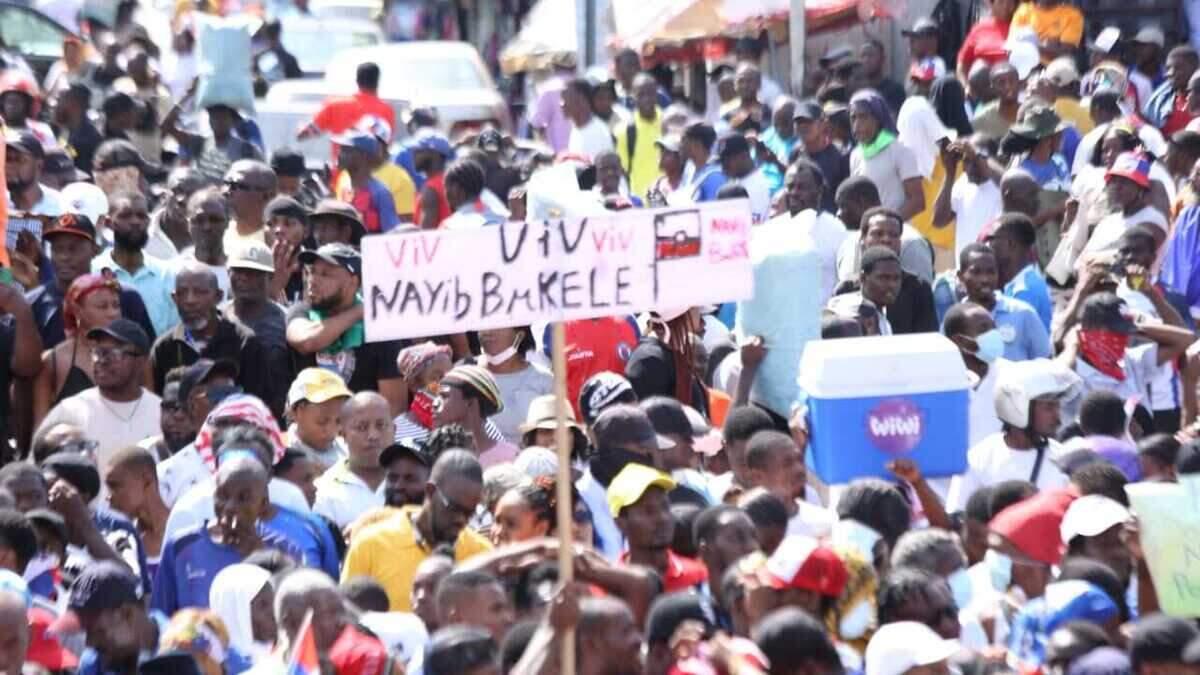
“Sanon openly said that there would be a gigantic protest, and under the cover of the protest, they could either assassinate or arrest President Moïse,” Wu told the jury. He also told them that the co-conspirators often spoke in code and with euphemisms.
“Whenever you hear the word arrest in this case, I want you to remember that means kidnapping. That was their little code word,” Wu said. “None of these random men, private citizens … had any authority to arrest the president of a nation. They had no authority to arrest anyone here in the United States, much less Haiti.”
Read more Payouts to FL immigration contractors surpass $1.2B, outstanding debts remain
This story was originally published November 18, 2026 at 4:54 PM.







Post Comment