Boxing promoter Don King’s Palm Beach jai-alai dream ends in bankruptcy auction
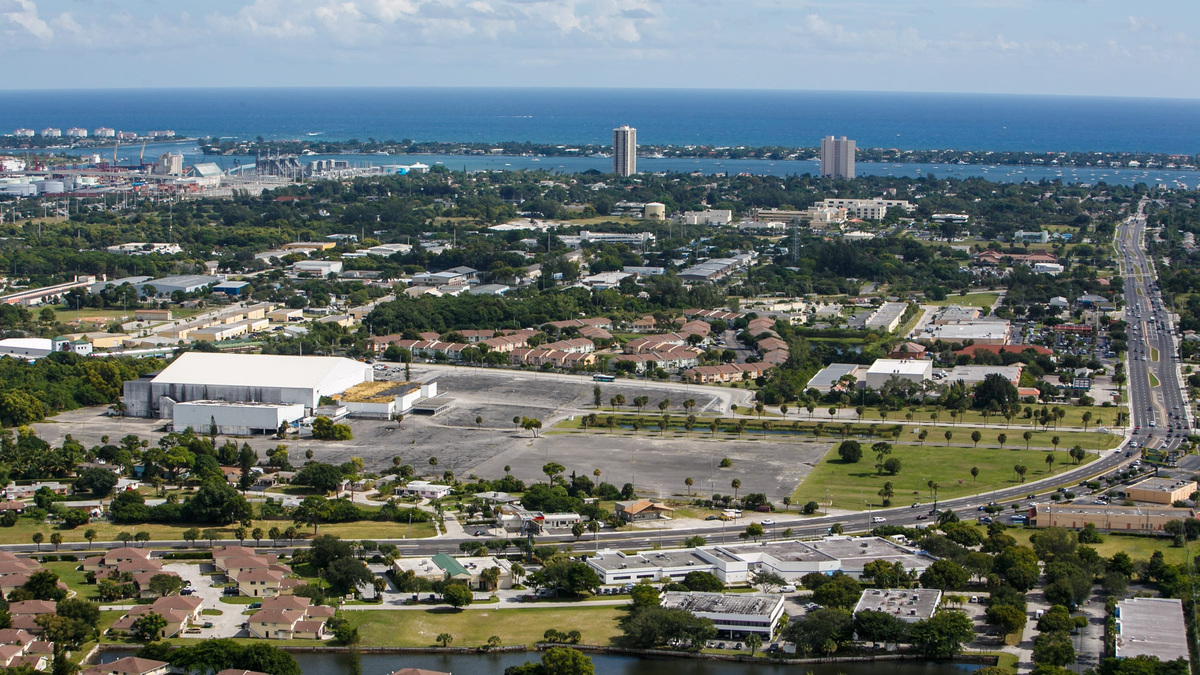
The effort to revitalize the site of the long shuttered Palm Beach Jai-Alai fronton by famed boxing promoter Don King ended in a bankruptcy auction last week, when the property drew a $56 million bid from a New Jersey developer.
Read more A bulldozer-friendly state law threatens art deco hotels — so Miami Beach is suing
The proposed sale, which still requires bankruptcy court approval, could finally bring an end to King’s vision for the sprawling 53-acre property he once hoped to transform into a major sports and entertainment destination to rival venues in Las Vegas.
Located in Mangonia Park, a small municipality between West Palm Beach and Riviera Beach at the northern end of the Tri-Rail line, the property has been largely vacant for more than three decades. King’s plans never materialized, and the site became entangled in mounting debt and a foreclosure fight that culminated in last week’s auction.
Today, part of the neglected property is used for parking for the nearby Tri-Rail station.
The winning bid came from New Jersey-based K&K Developers, an affiliate of Garden Communities. The company’s bid of $56.05 million topped a $55 million offer from Palm 50 Acres LLC, an affiliate of the lender that had been pursuing foreclosure against King and his business entities.
Future plans for the massive property were not made public, but Garden Communities is “known as a real estate owner, builder and manager in the luxury multifamily niche,” according to their website.
When King and his late wife, Henrietta, acquired the property in 1999 for $6.25 million, he envisioned much more than reopening the jai-alai fronton. He planned to turn the site into a sprawling sports and entertainment destination.
King’s plans included spending more than $20 million to renovate the old fronton and transforming it into an arena for major international boxing matches, concerts, tennis matches and other sporting events.
King, 95, who lives in Boca Raton, is famous for promoting some of Muhammad Ali’s and Mike Tyson’s most memorable fights, from the 1970s through the 1990s. He has also been involved in business deals that ended in legal disputes. Last year, a Deerfield Beach warehouse he owned ended up in foreclosure.
At the time, King’s plans seemed plausible. The wild-haired promoter had staged some of boxing’s biggest spectacles, including the 1974 heavyweight championship bout between Muhammad Ali and George Foreman in Zaire, known as the “Rumble in the Jungle,” and Ali’s 1975 showdown with Joe Frazier in the Philippines, the “Thrilla in Manila.”
Read more Payouts to FL immigration contractors surpass $1.2B, outstanding debts remain
He later promoted the 1997 heavyweight rematch between Mike Tyson and Evander Holyfield, in which Tyson bit off part of Holyfield’s ear.
King, a longtime friend of President Donald Trump, also floated other ambitious ideas over the years. In 2003, he proposed building a stadium for the Florida Marlins on the property, with boxing matches staged there during the baseball offseason. In 2013, he offered the land to the Miami Dolphins as a possible stadium site.
But the plans never came together. Lengthy zoning, traffic and permitting reviews, financing difficulties and the absence of a development partner repeatedly stalled the proposals.
The property has a colorful history dating to the days when jai-alai was one of South Florida’s biggest attractions. At one time, several jai-alai frontons operated throughout the region.
Jai-alai arrived in Florida in 1924, when the first fronton opened in Hialeah. The sport became a popular attraction in South Florida, drawing spectators who watched the fast-paced matches and placed bets.
The Palm Beach Jai-Alai fronton opened in Mangonia Park in 1955. The facility was destroyed by fire in 1978, rebuilt and eventually closed in 1994 as the sport’s popularity declined.
While the Palm Beach fronton has remained closed, jai-alai is experiencing a revival in Miami, where the sport is celebrating its 100th anniversary.
The original Miami Jai-Alai Fronton, which opened in 1926, reopened in February after an extensive renovation. The building, now known as JAM Arena, is the new home of the World Jai-Alai League, which previously held its matches at Magic City Casino.
The league’s 2026 fall season, known as Season X, began Sept. 15 and features six teams competing in a modern team-based format. The season runs through Dec. 11, when the championship is scheduled to take place.
Read more Is South Florida experiencing a ‘rain bomb?’ Here’s what to know






Post Comment