The draft QBs and six things that have become clear offensively for Dolphins
Six developments that are becoming very clear about the Dolphins’ offensive personnel as they exit their bye week:
Read more Why Malik Washington has become the Dolphins’ most reliable pass catcher
▪ Malik Willis is likely not the long-term answer. But if the Dolphins draft a quarterback with their first pick, there won’t necessarily be a clear-cut choice among several interesting options.
With Texas’ Arch Manning regressing from a potential No. 1 overall pick to 24th on Mel Kiper’s Big Board, this probably won’t be the Jeremiah Smith-or-Manning decision that so many expected before the season.
Instead, it looks like a more complicated one, with five potentially comparable quarterbacks competing to go first. None is a sure thing, and three of the five could stay in college.
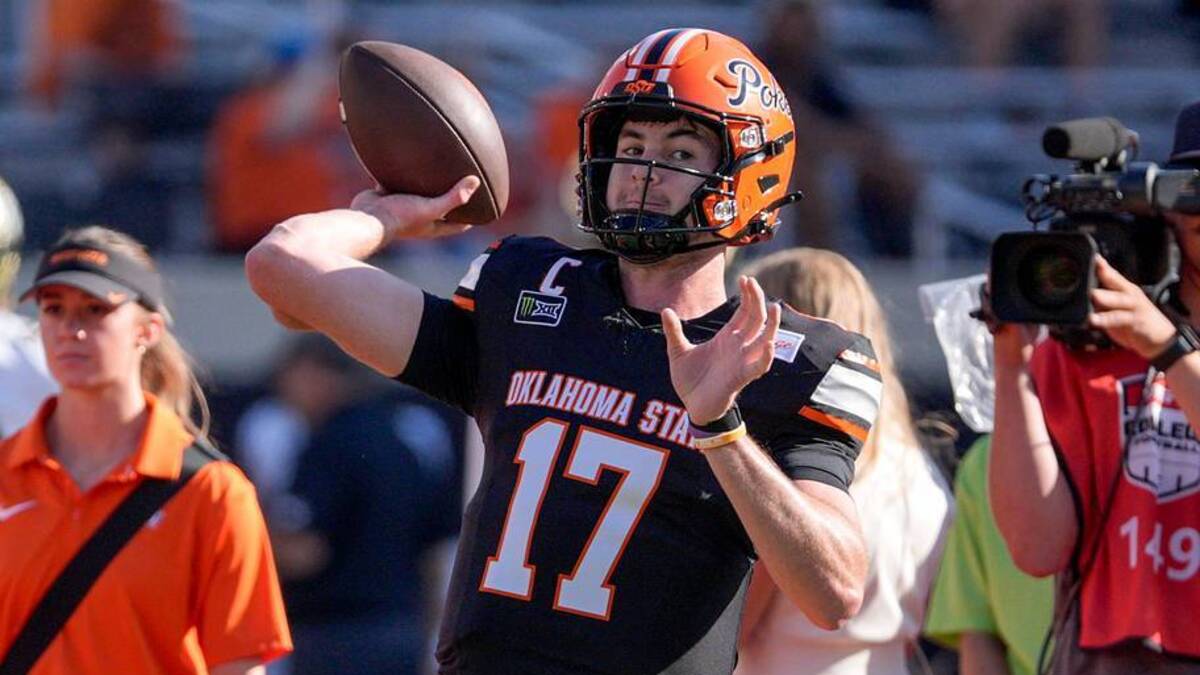
In Kiper’s first Big Board of the season, he has four QBs in his top 10: Oklahoma State’s Drew Mestemaker second among all draft prospects (behind Smith), UM’s Darian Mensah fourth (behind Notre Dame cornerback Leonard Moore), Mississippi quarterback Trinidad Chambliss sixth (behind Texas edge player Colin Simmons), Notre Dame’s CJ Carr eighth and Missouri’s Austin Simmons 10th. The order assuredly will change in the months to come.
Mestemaker, Carr and Simmons must decide whether to turn pro or stay in school another year.
Size is the big question with the 6-0 Chambliss. Mestemaker and Simmons don’t have large bodies of work, and the left-handed Simmons couldn’t get his team in the end zone against Mississippi last week in his first disappointing performance of the season.
With Mensah, there are concerns about ball security and, to an extent, arm strength; his first interception of the season, against FSU, came on a pass that was underthrown. “Terrible decision, bad throw,” Kiper said. With Carr, his average physical traits (by NFL QB standards) give pause for thought.
Perhaps Manning and Oregon’s injured Dante Moore will enter the discussion again.
As ESPN’s Kiper Jr. said and everyone knows, Ohio State receiver (and Miami Gardens native) Smith is “very clearly the best player in this draft class.” If the Dolphins prefer to draft a quarterback, some team might offer an enticing package to move up to No. 1 to take Smith.
For example, what if the Dolphins pick first and the Chargers select second and want to pair Justin Herbert with a transformational receiver? Moving down a spot would leave the Dolphins with potentially a franchise quarterback and additional picks.
If Miami picks first, Sullivan needs to have a strong conviction that at least one of these quarterbacks is elite to justify passing on a potential Hall-of-Fame talent in Smith.
Here’s our view on Willis: I’m not ready to say with certainty that he can’t be a starting quarterback on a contender, but it appears unlikely. Aside from his mobility/ability to escape pressure and his proficiency in throwing on the run (two very valuable skills), Willis hasn’t done anything else at even an average level of what’s expected from a franchise quarterback.
The poor decision-making, surprisingly shaky accuracy, inability to elevate a weak supporting cast and difficulty moving through progressions quickly are all serious red flags. There’s no evidence so far this season that he can be a consistently effective pocket passer.
▪ There’s not a single thing more important during the next few months than Sullivan determining whether any of the aforementioned arms is a franchise quarterback, to the point that he would bypass drafting a generational receiver in Smith.
Here’s how Kiper sizes up his top five QBs:
The 6-3 Mestemaker: “His toolbox is pretty incredible. I love the way he scans the field and bides his time in the pocket. Mestemaker has the big arm to make all of the throws… but he also has the mobility to pick up nice chunks of yardage on the ground.”
The 6-3 Mensah: “Smooth thrower of the football,” Kiper said. “He doesn’t have the ‘wow’ arm strength, he doesn’t have that rocket arm, right, that howitzer. But he’s very accurate, he can move within the pocket. If you need a third down with the legs he can do that.”
The 6-0 Chambliss: “A lot will be made about Chambliss’ smaller frame and the fact that he’ll be 25 years old before the 2027 NFL season even begins, but he’s the ultimate point guard at the quarterback position. I’m really impressed with his pocket presence and mobility, and the mechanics are sound. He’s a playmaker who sees the field well… He always seems to respond when challenged.”
The 6-2 Carr: “There’s a lot to like in Carr’s game. He’s smart and processes quickly before and after the snap. He’s accurate to all levels and throws with anticipation. And while his arm strength is good but not great, he can cause conflict for defenses with his mobility. Just as it is for Darian Mensah on the other sideline, the Nov. 7 matchup with Miami will be important.”
The 6-4 Simmons: “This might be a little bit of a surprise to some folks, but go watch the tape. There is no better thrower of the football in the collegiate ranks right now than this young lefty. Simmons can sling it with the best of them — the ball explodes out of his hands. But he’s also very accurate and mixes in good touch with all that velocity… There’s a chance Simmons returns to school for another year, but he deserves to be here on the Big Board because of his outstanding skill set and high ceiling.”
Kiper, incidentally, ranked Manning 24th, and that was days before another disappointing performance in a loss to Florida. “Too inconsistent,” Kiper said. He has Moore 25th; Moore hasn’t played since sustaining a concussion Sept. 26 against Southern Cal.
Read more Former Miami Hurricanes and Kansas City Chiefs standout Allen Bailey dies at 37
▪ A case could be made to keep Kadyn Proctor at left guard, but Miami absolutely must see him play several games at right tackle before the season ends.
Proctor already has proven he can be a very good left guard. The 16 rushes directly behind Proctor have averaged 6.0 per carry, which ranks third among all NFL left guards. Among 45 guards who entered Miami’s bye week with 100 or more run blocking attempts, PFF ranks Proctor 15th.
The pass protection (one sack, 10 pressures) has been decent and figures to improve with experience.
With Austin Jackson permitting three sacks and 19 pressures (third most among all NFL tackles entering the bye), the chances he returns next season appear slim. Miami needs to see Proctor at right tackle —and not just for a game or two — to know whether to prioritize left guard or right tackle this offseason.
▪ Will Kacmarek and Ollie Gordon II have firmly placed themselves in the building block category. Jonah Savaiinaea has a puncher’s chance to do the same.
In five games, Kacmarek has displayed the strength, toughness and technique to suggest he can become a reliable long-term in-line blocking tight end. (And he’s functional as a receiver.)
Pro Football Focus rates him the 10th-best tight end, among 77, as a run blocker. Overall, PFF rates him 25th — well ahead of the more ballyhooed Kyle Pitts and Jets first-round rookie Kenyon Sadiq.
Only five players with at least 40 carries have averaged more yards per rush than Gordon, who has scampered for 5.0 yards per run on 47 attempts.
Only eight running backs with at least as many carries have averaged more yards after contact than Gordon’s 3.38.
Savaiinaea’s pass protection has improved dramatically; he hasn’t allowed a sack this season after permitting eight last year, most among NFL guards. His run blocking isn’t great (PFF ranks him 63rd of 75 guards in that area), but he has done enough to suggest he can be a competent starter, at the very least.
▪ Caleb Douglas displayed one very important quality before his ankle injury in Week 3.
What stood out about Douglas early in the season, besides the intriguing combination of size (6-4) and speed, was his ability to get open.
Per Next Gen Stats, his 5.28 average yards of separation (albeit on just 10 targets) ranked first among all receivers entering Miami’s bye, and second in the league behind only Cleveland tight end Harold Fannin Jr. Douglas has resumed practicing this week and possibly could return Sunday at the Jets (1 p.m., CBS 4).
▪ Willis and the receivers all deserve blame for the fact that Chris Bell and Kevin Coleman Jr. have caught only 10 of 32 targets, which is awful.
Bell, still rounding into form after last November’s ACL injury, has caught only 5 of 15 targets, but playerprofiler.com says only seven of those targets have been catchable. Coleman has caught only 5 of 17 targets, but only five passes have been deemed catchable.
But the receivers also bear some responsibility; Bell has two drops (per PFF) and stepped out of bounds before catching a long TD pass that was overturned against the Vikings.
Per PFF, Bell and Coleman are getting separation from defensive backs on only about half their targets. They entered the bye week among the league’s worst five receivers in the metric of “lowest percentage of targets with separation.” Bell was ranked third-worst, Coleman fifth-worst.
Practice update
Receiver Caleb Douglas (ankle), safety Kyle Louis (on injured reserve/knee), guard Jonah Savaiinaea (ankle) and running back Jaylen Wright (foot) all practiced on Wednesday. Cornerback Reese Taylor (quad) did not practice.
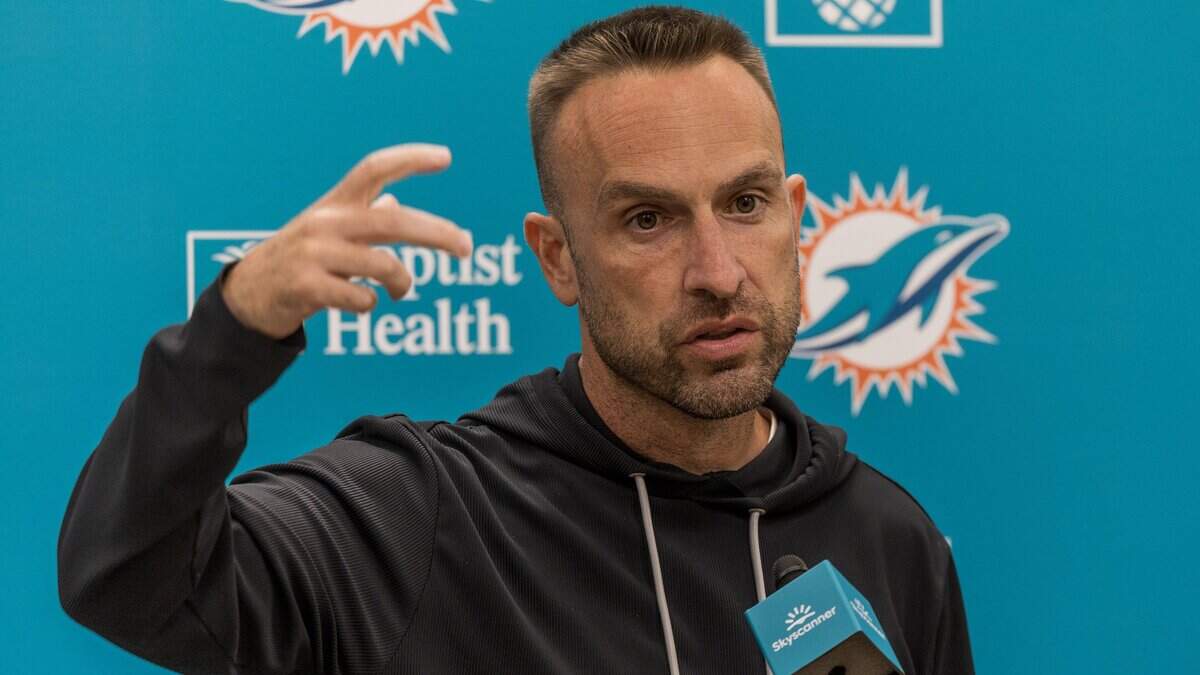
Here’s what Jeff Hafley said Wednesday about several injuries and Dolphins’ personnel moves.
On Thursday, we’ll address six defensive personnel realities that are starting to become clear.
Read more Man charged in deadly Illinois spa fires was angry after sexual encounter, ATF says
This story was originally published October 21, 2026 at 2:19 PM.





Post Comment