Florida issues arrest warrant for Raúl Castro. But can it bring him to trial?
Florida’s top law enforcement officials vowed Monday to pursue former Cuban leader Raúl Castro for his role in the 1996 shootdown of two Brothers to the Rescue planes off the island’s coast.
Read more How to make the most of annual meeting season for HOAs and condo communities
But the announcement of a state arrest warrant left one important question unanswered: How does Florida intend to bring Castro, who still lives in Cuba, before a Miami judge?
Florida Attorney General James Uthmeier acknowledged that the 95-year-old former Cuban president is unlikely to surrender voluntarily. He argued, however, that the warrant could restrict Castro’s international travel and potentially lead to his arrest if he visits a country willing to extradite him.
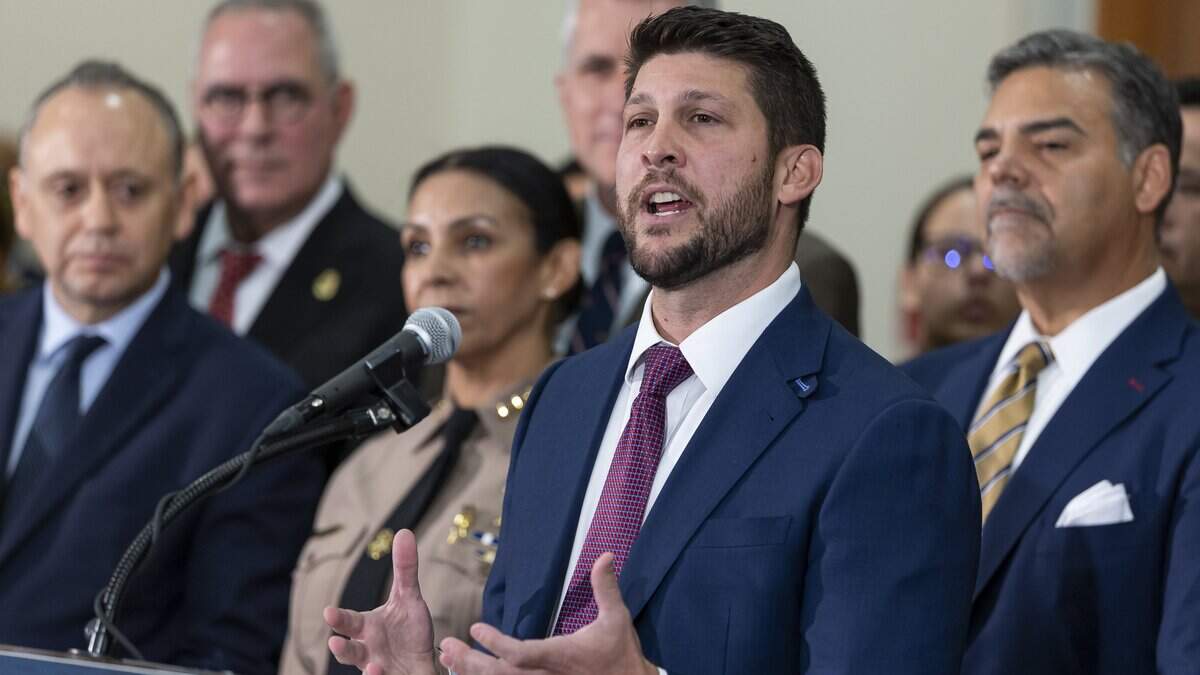
“It’s not just a piece of paper,” Uthmeier said at a news conference at Florida International University’s College of Law, held in a courtroom dedicated to the four men killed when Cuban fighter jets destroyed their unarmed civilian aircraft over international waters on Feb. 24, 1996.
“If he ends up in a friendly country for whatever reason with extradition agreements, then he will end up here,” Uthmeier said, suggesting Castro could face arrest during international travel, including trips for medical treatment.
But an arrest warrant issued by a Florida judge does not automatically require another country to detain or extradite someone. Such an outcome would depend on that country’s laws, applicable extradition arrangements and cooperation from federal authorities.
The warrant, signed Friday by Miami-Dade Chief Circuit Judge Ariana Fajardo Orshan, charges Castro with conspiracy to commit first-degree murder in the deaths of Carlos Costa, Pablo Morales, Mario de la Peña and Armando Alejandre Jr. Three were American citizens and the fourth was a legal permanent resident.
Florida’s prosecution comes five months after the U.S. Justice Department announced federal charges against Castro arising from the same attack. The federal indictment contains seven counts, including four counts of first-degree murder, while the state case contains a single conspiracy charge.
The announcement also came on the first day of early voting in Miami-Dade County, where Uthmeier, a Republican and former chief of staff to Gov. Ron DeSantis, faces Democrat José Javier Rodríguez in the Nov. 3 election for attorney general.
Rodríguez accused Uthmeier on Monday of using the Castro prosecution for political purposes, questioning why the state waited until the election was under way to announce charges stemming from a crime committed more than three decades ago.
“If we can arrest the murderous Raúl Castro from Tallahassee, I will be the first to do it as Attorney General,” Rodríguez told the Miami Herald in a text message. “But that shouldn’t stop James Uthmeier from tackling the cost of insurance, high electric bills and the issues he continues to ignore.”
Rodríguez also accused Uthmeier of trying to divert attention from controversies involving Hope Florida and Alligator Alcatraz, the state’s immigration detention facility. “They’ve come to my community to mock us with these unserious displays rather than show us respect,” he said.
Asked at Monday’s news conference why he waited until that day to announce an arrest warrant signed the previous Friday, Uthmeier said his office had been working on the case for weeks and needed to assemble law enforcement officials.
“We announced the arrest warrant today the minute we could get our law enforcement officials together,” Uthmeier said.
He did not directly address the allegation of political motivation, instead emphasizing the reopened investigation and the importance of seeking justice for the victims’ families.
What the state case adds
The Florida prosecution is considerably narrower than the federal case announced May 20 by the U.S. Justice Department.
In a superseding indictment filed in April in Miami federal court, prosecutors charged Castro with seven counts: four counts of first-degree murder, two counts of destroying civilian aircraft resulting in deaths and one count of conspiracy to kill U.S. nationals. Five Cuban military pilots were also named as defendants.
Florida has charged Castro alone with one count of conspiracy to commit first-degree murder.
Both cases describe much of the same operation, including Cuban intelligence agents who infiltrated Brothers to the Rescue in Miami, gathered information about its aircraft and flight plans and relayed intelligence to authorities in Havana.
Both also describe Operation Scorpion, a Cuban intelligence effort that federal prosecutors say helped pave the way for the shootdown. The federal indictment identifies instructions directing undercover Cuban spies not to fly with Brothers to the Rescue around the time of the attack.
Much of the evidence cited in Florida’s affidavit was already described in the federal indictment.
U.S. Attorney Jason A. Reding Quiñones, who joined Uthmeier at Monday’s announcement, acknowledged that the federal investigation supplied the groundwork for Florida’s prosecution.
“Our federal investigation provided the foundation,” Reding Quiñones said. “James and his team took that work, evaluated it under Florida law and took action.”
He said that the federal and state cases can proceed independently under the legal principle known as dual sovereignty, which allows separate governments to prosecute violations of their respective criminal laws even when the charges arise from the same conduct.
“That means two separate prosecutions, each standing on their own,” Reding Quiñones said.
But that does not mean the two trials could necessarily proceed at the same time. If Castro were arrested, the government that first obtained custody would generally have priority, although federal and state authorities could arrange for him to be transferred temporarily to face charges in the other jurisdiction. Florida would not necessarily have to wait until he completed a federal prison sentence to bring him to trial.
The U.S. Supreme Court reaffirmed that principle in a 2019 ruling. The constitutional protection against double jeopardy generally does not prohibit separate state and federal prosecutions for the same underlying conduct.
Uthmeier offered another reason for pursuing state charges: A president’s power to pardon federal offenses does not extend to crimes prosecuted under Florida law.
“If you have a communist sympathizer that ends up back in the White House, they cannot pardon, they cannot commute, they cannot immunize these dictators from our state proceedings,” he said.
There is no indication that a federal pardon for Castro is under consideration.
Investigation continues
Uthmeier acknowledged that Florida cannot independently secure Castro’s custody while he remains in Cuba.
“We are not the federal government,” he said. “There’s obviously other officials that deal with the diplomatic and the military and national affairs efforts.”
The attorney general nevertheless pledged to continue preparing the state prosecution and investigating others who may have participated.
Read more Sheriff’s Office releases identity of man found dead in Weston pool with rope
“We’ve gotta build a case here,” Uthmeier said. “We’ve put forward evidence. We’ve got witness testimony.”
He said investigators have assembled evidence of coordination among Cuban intelligence operatives that led to Castro ordering the killings. He did not identify new witnesses or previously undisclosed evidence during the news conference.
Uthmeier also discussed separate investigations into suspected Cuban regime connections to public-assistance fraud and organizations operating in Florida. He did not present specific evidence supporting those broader allegations.
Why Florida claims jurisdiction
The state warrant is supported by a seven-page affidavit prepared by Florida Department of Law Enforcement Special Agent Supervisor Jorge Gonzalez.
According to the affidavit, Cuban intelligence operatives conducted activities in Miami-Dade and Monroe counties that investigators contend formed part of a conspiracy to murder the occupants of the Brothers to the Rescue aircraft.
Those activities, according to the state, provide the basis for Florida to assert jurisdiction over the conspiracy, even though the killings occurred outside U.S. territorial waters.
The affidavit identifies Cuban agents René González and Juan Pablo Roque as members of the Wasp Network, an espionage operation that infiltrated the Miami-based organization during the 1990s.
Investigators say that the operatives collected information about Brothers to the Rescue flights and transmitted it to Cuban intelligence officials.
In January 1996, according to both the federal indictment and the state affidavit, Cuban intelligence instructed its agents to report on U.S. military personnel and activity at Boca Chica Naval Air Station in Key West. The operatives were also directed to obtain information about the Brothers to the Rescue aircraft and upcoming flights.
By February, Cuban intelligence had instructed González and Roque not to participate in Brothers to the Rescue flights during the period surrounding Feb. 24, when Cuban dissidents planned demonstrations on the island.
Roque left Florida on Feb. 23 and returned to Cuba. The following day, Cuban fighter jets destroyed two of the organization’s three aircraft, killing the four Miamians aboard.
The state affidavit also cites a recorded statement attributed to Castro on June 21, 1996, several months after the shootdown, in which he described instructions he had given military commanders following an earlier Brothers to the Rescue flight.
“I said: Fine, shoot them down at sea when they show up, and those who have the authority are not to consult anyone,” Castro said, according to an English translation reproduced in the affidavit.
The statement concerns an earlier confrontation with the organization, rather than an explicit order issued during the Feb. 24 attack. The affidavit does not explain in detail how investigators authenticated the recording.
The federal indictment claims that Castro authorized the use of deadly force against Brothers to the Rescue after the organization’s January 1996 flights.
The 1996 shootdown
Brothers to the Rescue was founded to search for Cuban migrants stranded in the Florida Straits. Its pilots flew unarmed civilian aircraft, initially concentrating on locating rafters and helping them reach safety.
The organization later became increasingly involved in supporting pro-democracy activities in Cuba, including flights that dropped leaflets over the island.
On Feb. 24, 1996, three Brothers to the Rescue aircraft departed Opa-locka Airport and headed toward Cuba.
According to the federal indictment, Cuban fighter pilots sought and received authorization to destroy two of the planes, both of which were flying over international waters.
At approximately 3:21 p.m., a Cuban MiG fired an air-to-air missile that destroyed the aircraft carrying Costa and Morales.
Seven minutes later, another missile destroyed the plane carrying de la Peña and Alejandre.
All four men were killed.
The federal indictment states the planes were traveling away from Cuba when they were destroyed and that the Cuban military gave their occupants no warning.
Cuba maintained that the aircraft had violated its airspace. U.S. authorities and an international investigation concluded that the planes were shot down in the Florida Straits over international waters.
Federal prosecutors brought charges against Cuban military personnel in 2003, but Castro himself was not named as a defendant until the superseding indictment filed this year.
Families still seeking justice
Miami-Dade Sheriff Rosie Cordero-Stutz, who attended Monday’s press conference at FIU, told the gathering that the families of the dead men have spent three decades demanding accountability.
“You should never have had to have waited this long, and you should never have had to have wondered whether the world had forgotten,” she said.
Cordero-Stutz said the new warrant could not undo the loss but demonstrated that authorities had not abandoned the case.
Marcel Felipe, a Cuban exile leader who helped advocate for the prosecution, described years of unsuccessful efforts to persuade local, state and federal officials to pursue charges.
He recalled approaching Uthmeier about the possibility of reopening the matter and said the attorney general responded that his office would examine the legal arguments.
Felipe also rejected describing the four men as victims, saying they understood the risks of their mission.
Read more ‘Suspicious envelope’ sent to Rep. Debbie Wasserman Schultz’s office, police say
“I think of them as heroes.”
This story was originally published October 19, 2026 at 1:34 PM.






Post Comment