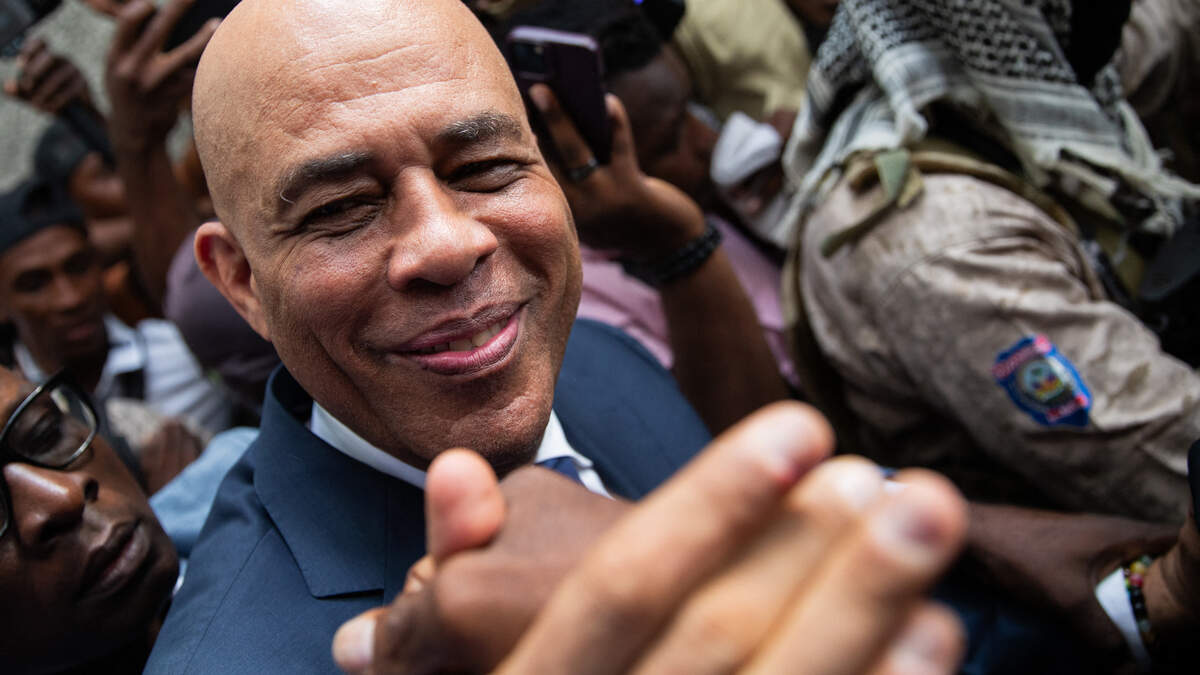
Martelly puts elections rumors to rest, registers to run for Haiti presidency
Former Haitian President Michel Martelly has registered to run for the presidency of the Caribbean nation, joining a growing list of candidates hoping to lead a troubled Haiti despite facing sanctions from the United States, Canada and the European Union — or in the case of the former singer, all three.
Read more National No Kings movement hosts South Florida events to promote early voting
Martelly’s name was among 16 listed Friday on the Provisional Electoral Council’s website as having preliminary registered to run. The list also includes another former president, Jocelerme Privert, and a former member of the lower house of Parliament, Gary Bodeau. Privert who oversaw the country’s last general elections in 2016, has been sanctioned by Canada. Bodeau has been sanctioned by the U.S. Treasury Department under a federal act that targets perpetrators of serious human rights abuse and corruption, and faces Canadian sanctions as well.
Martelly, a former singer who became president in 2011 in a controversial election after Haiti’s devastating 2010 earthquake, has been sanctioned by both nations as well as the European Union. While the U.S. cited drug trade ties in its 2024 designation, the Canadian government and the EU, which blacklisted the former leader in December, cited gang financing. The European Union accused Martelly of arming and financing several gangs to promote his political agenda, defend his personal and economic interest, and control territory.
For weeks, speculation has swirled that Martelly, widely known by his stage name “Sweet Micky,” was preparing his presidential bid. His official registration finally came days after Haiti’s transitional authorities published a revised electoral decree – the third in four months – easing requirements for candidates seeking to run for president, Parliament and local offices.
The changes, which eliminated a requirement from Haiti’s central bank that’s considered a safeguard against individual under sanctions, have raised concerns that people accused of corruption or supporting armed gangs could be elected to office. In response, the ambassadors of France and Spain made public statements emphasizing the importance of a credible electoral process and the need for Haiti’s next president to have integrity.
Albert Ramdin, secretary general of the Organization of American States, also has said that candidates with criminal ties should be barred from running. Haiti is supposed to hold its long overdue general elections on Dec. 13 but the elections council has announced that it will be publishing a new calendar, a strong indication that the vote will be postponed.
On Friday, Ramdin met Prime Minister Alix Didier Fils-Aimé to discuss the vote and the security situation in Haiti in Washington.
On Wednesday, the United Nations Security Council adopted a U.S. resolution renewing Haiti’s sanctions regime, including an arms embargo, asset freeze and a travel ban for a year. The council also extended the mandate of a Haiti Panel of Experts, but member nations failed to designate any new people for international sanctions despite a damning report from the panel detailing continued involvement of politicians in the country’s gang violence.
Read more This Cuban restaurant that was shut down last year is reopening in Coral Gables
Ultimately it is up to the Haitian electoral council to decide if a candidate meets the legal and constitutional requirement to run. Martelly’s registration under a new political grouping, Debloke, will place the council under heavy scrutiny.
In seeking to return to the National Palace, Martelly faces several obstacles, which raise questions about whether his bid is a serious attempt at a political comeback or a maneuver to position himself as a potential kingmaker in the race.
Among the questions electoral council members will need to decide is whether he meets the constitutional requirement of having maintained habitual residence in Haiti for the last five years. Although Martelly flew to Haiti in mid-July to answer a judge’s summons in the investigation of the 2021 assassination of Jovenel Moïse, he had lived in Miami since leaving the presidency in February 2016. His exit from office without an elected successor came after a presidential runoff was twice delayed amid allegations of massive fraud that favored Moïse.
The secretary general of the nine-member electoral council, Nemrod Sanon visited North Miami this week and defended the changes to the electoral framework. He pushed back on criticism that easing the rules will open the door for candidates sanctioned by foreign governments, calling it a “negative campaign.” He cited a requirement for all candidates to obtain a report from Haiti’s judicial police as part of the screening process.
Haiti recently extended its online registration deadline to Oct. 31, from the original Oct. 9, and the list of candidates is expected to grow.
Others who have registered to run for president include former Prime Minister Claude Joseph, Delmas Mayor Wilson Jeudy and government prosecutor Jean Ernest Muscadin.
Muscadin, who works out of the Nippes region, has been repeatedly accused by the United Nations and human rights groups of carrying out extrajudicial killings of suspected gang members. He and Wilson both face questions about whether they resigned from their government posts within the period required by the revised electoral decree.
Read more Miami isn’t a cheesesteak town. A new spot in Overtown wants to change that








Post Comment