
Death penalty on the table for Miami man accused of killing witness, appeal court says
Prosecutors can seek the death penalty in the case of a Miami-Dade man accused of having a witness killed for cooperating with the government, an appeals court has ruled.
Read more BSO calls death suspicious after body and rope found in pool behind Weston home
In a 20-page order, the 3rd District Court of Appeal cleared the way for prosecutors to seek the death penalty against Julio Montez Morris, 38. A Miami-Dade judge had previously found that prosecutors were blocked from asking a jury to send Morris to Florida’s Death Row because a prosecutor mistakenly filed a waiver of the death penalty in the case.
Prosecutors appealed that ruling, and a panel made up of Judges Edwin Scales, Monica Gordo and Kansas Gooden agreed, saying the trial judge treated a “mistaken administrative filing as a binding exercise of prosecutorial discretion.”
Morris, who has been in the Pretrial Detention Center since 2013, is accused in the 2012 murder of 29-year-old Jazzmon Parker. As Morris was facing trial for Parker’s killing, Ezell Finklea, a 61-year-old military veteran and witness who cooperated with Miami-Dade prosecutors despite threats to his life, was gunned down.
Finklea, a neighbor who knew Morris, witnessed Parker’s murder and told police that he saw Morris execute the victim in the middle of the street. Finklea and his friend Ira Williams, 70, were shot to death when someone walked up to Finklea’s car along Northwest 30th Avenue and fired more than a dozen shots.
READ MORE: On trial for murder, Miami man charged with ordering assassination of key witness
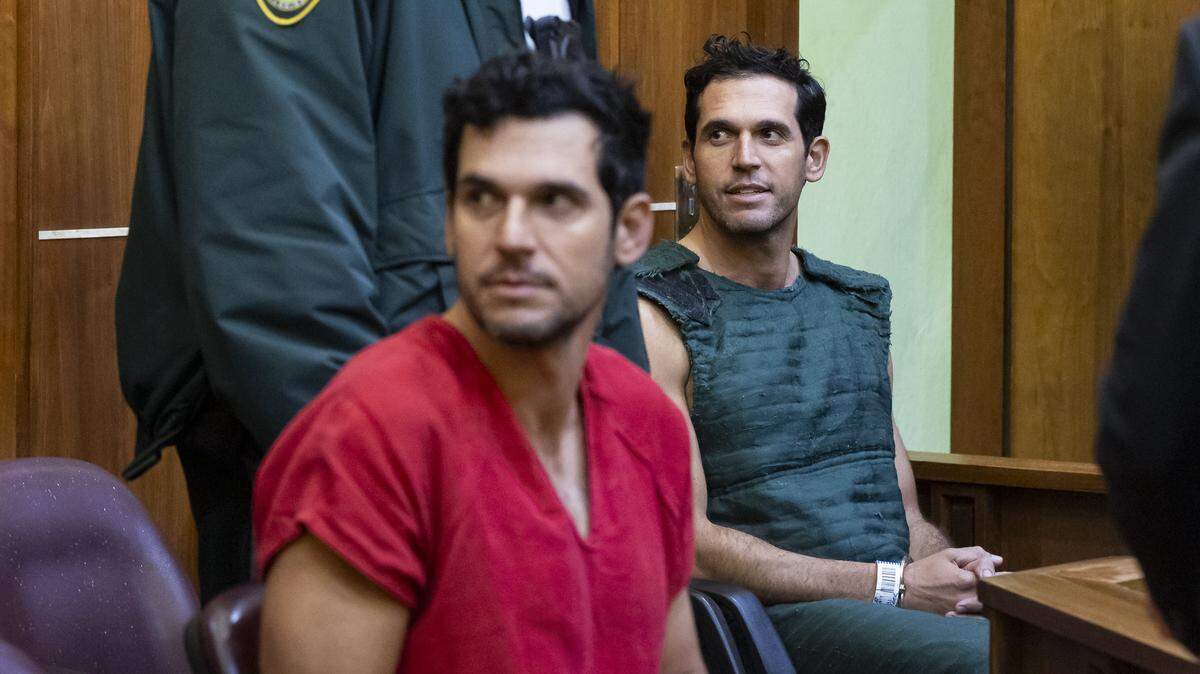
Morris, his cousin Howard Tranard Waters, 36, and James Williams Kelly, 41, were indicted in connection to both killings. Waters remains jailed at the Pretrial Detention Center, and Kelly is under house arrest.
Prosecutors are seeking the death penalty against the trio.
But complications surfaced in June 2024, when a prosecutor uncovered that a deputy chief assistant at the Miami-Dade State Attorney’s Office’s legal division had filled out a death penalty waiver form in Morris’ case. The assistant was auditing death penalty cases and was “unaware” that Morris had been charged in connection to Finklea’s and Williams’ murders, according to the appeal court opinion.
The waiver, the opinion says, was intended to be an administrative record and was supposed to apply only as to Parker’s murder. The waiver bypassed the office’s policies, which requires a recommendation from its death penalty committee.
The waiver was also not announced in open court and “went unnoticed by everyone” until the prosecutors discovered it in 2024 and contacted Morris’ attorneys, according to the appeal opinion.
Read more Traffic alert: Gas rupture shuts down stretch of Florida’s Turnpike in Broward
At a hearing following the discovery, Morris’ defense attorneys argued that the law does not allow that a death penalty waiver be rescinded. Prosecutors, however, argued that they never intended the waiver to apply, especially considering how it was never announced in court.
Miami-Dade Circuit Judge Alberto Milian, who is presiding over the case, found that the waiver was likely filled in error but said prosecutors were “’stuck with that mistake,” according to the opinion. Milian then ruled that prosecutors were prohibited from seeking the death penalty against Morris on all counts.
The appeals court’s opinion issued Wednesday, which supplemented an opinion filed on July 15, found that Milian blocked prosecutors from exercising their discretion, which includes seeking the death penalty. The court reasoned that the judge’s ruling “will prevent the State from prosecuting its case against Morris as a death penalty case…”
The court also pointed out that the attorneys in Morris’ case were litigating for several years, unaware of the waiver’s existence.
The “Florida Constitution provides that the decision to charge and prosecute is an exclusively executive function, and the state attorney has complete discretion in deciding whether and how to prosecute,” the appeal court said in its opinion.
In July, prosecutors Scott Warfman and Christine Zahralban tried to have Milian removed from Morris’ case, saying they had a “well-grounded fear” that the judge is biased against them seeking the death penalty.
“The State’s fear is not based on adverse rulings,” the filing states. “Rather, the State’s fear is based on the reasonable perception that Judge Milian has pre-judged the State’s efforts to have a jury decide whether the death penalty should be imposed on these defendants for these murders, and is biased against the State’s efforts to seek the death penalty in this case.”
Judge Milian denied that request in September. The next hearing in the case is set for Nov. 13.
Read more BSO investigating body found in pool behind home in gated Weston neighborhood











Post Comment