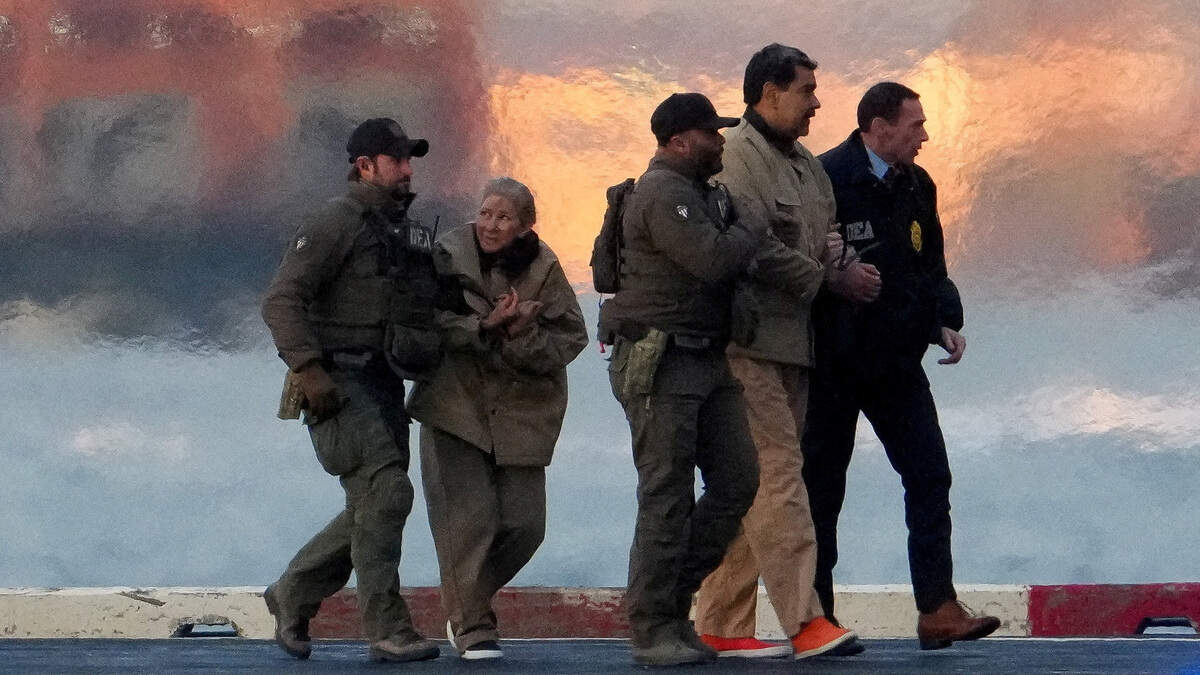
Maduro and wife reject new torture charges as legal battle intensifies in New York
Former Venezuelan strongman Nicolás Maduro and his wife, Cilia Flores, pleaded not guilty Thursday to new federal charges accusing them of directing a campaign of torture against political opponents and American citizens imprisoned in Venezuela, as a New York judge postponed their trial until June 14, 2027.
Read more Ex-Florida congressman Matt Gaetz doxes women who accused him of sex trafficking
The couple appeared before U.S. District Judge Alvin Hellerstein in Manhattan to answer allegations contained in an expanded indictment filed last week. The new charges accuse Maduro and Flores of conspiring to commit torture as part of a system of political repression that prosecutors say relied on brutal interrogations, arbitrary detentions and the mistreatment of prisoners to maintain their hold on power.
Flores, Venezuela’s former first lady, told the judge she was “completely innocent” before entering her not-guilty plea, according to the Spanish news agency EFE.
Both defendants entered the courtroom wearing ankle shackles and appeared to be in good health. They greeted Hellerstein in Spanish, according to reports of the hearing. As he left the courtroom, Maduro raised his hand in a farewell gesture toward the judge.
Hellerstein agreed to a joint request from prosecutors and defense attorneys to delay the trial by two weeks, giving both sides additional time to prepare and file pretrial motions.
The judge also scheduled a hearing for Dec. 17 to consider defense motions seeking dismissal of the case.
The latest court appearance marks another development in the extraordinary federal case against Maduro, 63, and Flores, 69, who were captured by U.S. forces in Caracas on Jan. 3 and transported to New York to face criminal charges.
Both had previously pleaded not guilty to charges involving narcoterrorism, cocaine trafficking and firearms offenses. They remain in federal custody in Brooklyn.
The revised indictment adds conspiracy to commit torture to the existing prosecution and extends the narcoterrorism conspiracy allegation to Flores, who had not previously faced that charge.
The torture accusations substantially broaden the case, bringing allegations of political persecution and abuse in Venezuelan detention facilities into a prosecution initially centered on international drug trafficking.
Prosecutors describe system of torture
The 30-page indictment filed Oct. 8 portrays torture as a deliberate instrument of government policy rather than the isolated misconduct of individual security officers.
Federal prosecutors claim Maduro personally ordered the torture of detainees, received reports about their treatment and sometimes directed security officials to intensify their abuse.
Flores is accused of participating in decisions to torture prisoners and helping oversee a network of officials responsible for detaining and interrogating people perceived as threats to the government.
According to the indictment, detainees were subjected to electric shocks, simulated drowning, beatings, asphyxiation, sleep deprivation and threats against their relatives.
Some of the victims were Venezuelan military officers and political opponents accused of plotting against Maduro, according to the indictment, while others were Americans detained in Venezuela, including individuals prosecutors say were held partly to give the government leverage in negotiations with Washington.
The indictment identifies several senior Venezuelan officials through coded designations, stating they supervised interrogations, ordered torture and reported directly to Maduro about specific prisoners.
In one incident, prosecutors say Maduro and Flores ordered members of their security details to torture a law enforcement official suspected of stealing proceeds from narcotics trafficking.
Read more Defense rests in death penalty trial of killer who suffocated wife, her girls
The officer was tied to a military trailer, beaten with a shovel and rifle butt, kicked and subjected to other abuse, including injuries to his genitals, according to prosecutors.
The indictment also describes the detention of a Venezuelan military officer in 2013 who was transported to a camp controlled by Colombia’s FARC guerrilla organization. Prosecutors say he was beaten, suspended by his hands and feet and subjected to simulated drowning during two days of interrogation.
Maduro later asked about the officer’s treatment and watched a recording of his forced confession, according to prosecutors.
During the government’s response to protests in 2014, Maduro instructed officials to increase the intensity of interrogations involving military personnel suspected of disloyalty, prosecutors say.
At one meeting, prosecutors say, he used a hand gesture and told officials to “squeeze them harder.”
Americans in custody
Some of the most detailed allegations concern American citizens imprisoned in Venezuela.
The indictment recounts the November 2017 arrest of six U.S. oil executives on corruption allegations involving a company affiliated with Venezuela’s state-owned oil company, PDVSA.
Prosecutors say their detention was viewed by senior Venezuelan officials as a means of pressuring Washington. The executives were released in October 2022.
Another American, identified in the indictment as Victim-7, was arrested in January 2022 and subjected to beatings, asphyxiation and electric shocks to his arms, legs and genitals, the court documents say; at the Boleíta Norte detention facility in Caracas, officers also injected him with an unknown substance that caused seizures.
A senior Venezuelan official watched as the prisoner received electric shocks, laughed at his suffering and instructed officers to continue, prosecutors say.
The American returned to the United States in October 2022.
Another U.S. citizen, identified as Victim-8, was detained in August 2023 while traveling to Venezuela to visit relatives.
According to prosecutors, intelligence officers attacked him from behind, causing a serious back injury, and subsequently subjected him to electric shocks.
At Boleíta Norte, an officer told him he had been kept alive because officials discovered he was an American citizen and believed he could be useful in a prisoner exchange with Washington.
The indictment also describes an American detained in January 2025 who was beaten repeatedly over two days, suffering permanent damage to one eye. He was released in January 2026 after being warned not to discuss his treatment publicly, prosecutors say.
The charging document does not identify the American detainees by name.
This article was complemented with information from el Nuevo Herald’s wire services.
Read more Murder of Liberty City activist was possibly fueled by revenge, police say






Post Comment