Defense rests in death penalty trial of killer who suffocated wife, her girls
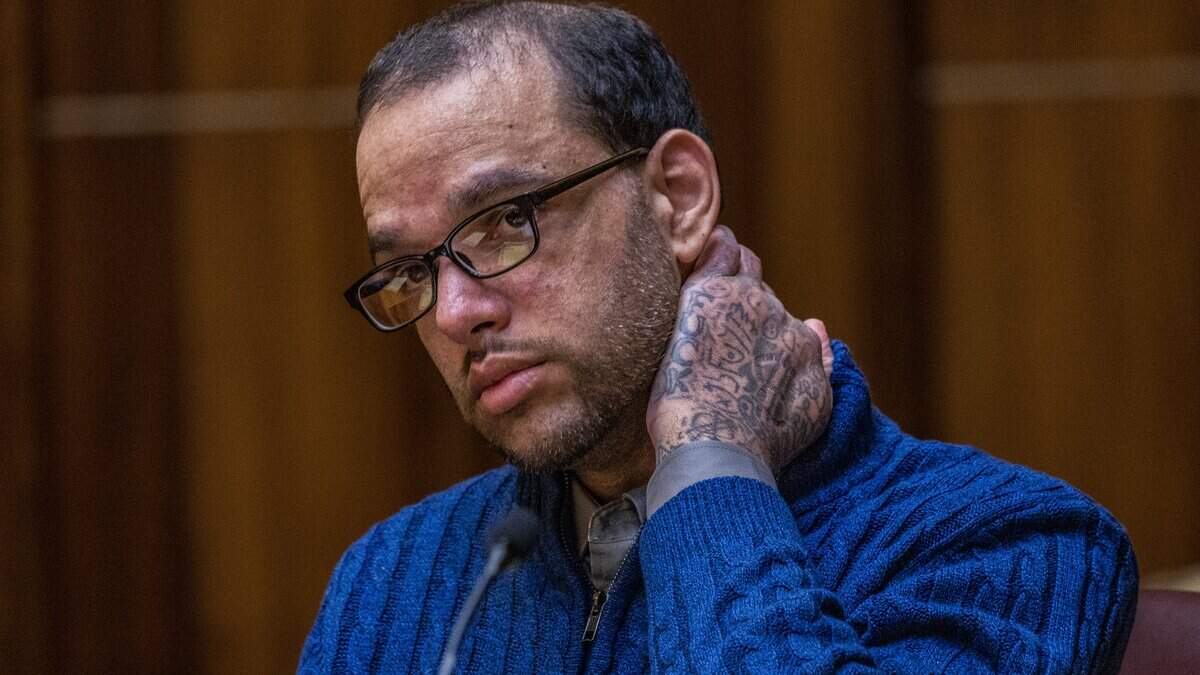
The defense rested its case on Thursday in the death penalty case of Alberto Sierra, who admitted to snuffing the lives of his estranged wife and her two young daughters with a plastic bag.
Read more Murder of Liberty City activist was possibly fueled by revenge, police say
Raul Banasco, a former Florida prison warden, was the last witness to testify on Sierra’s behalf. Sierra, Banasco said, would have to work a job at the prison if he were sentenced to life. But if Sierra were sent to Florida’s Death Row, he would spend most of his time locked up in a small, single-person cell, Banasco added.
Sierra declined to take the stand just before attorney Khurrum Wahid rested the defense’s case. Miami-Dade Circuit Judge Marisa Tinkler Mendez asked Sierra whether he approved of his attorneys not calling additional witnesses who were listed to testify during the trial.
“Yes, ma’am,” Sierra said.
Prosecutors will now present a rebuttal evidence, seeking to cast doubt on evidence Sierra’s defense presented about the effect of a brain injury he sustained when he was 12 years old.
Sierra, 42, admitted to suffocating his estranged wife, Gladys Machado, 29, and her daughters Julia, 6, and Daniela, 3, with a plastic bag on Nov. 10, 2012. Their bodies were found three days later inside a closet at the Flagami home they once shared.
READ MORE: Evidence shows mother, 2 girls suffered ‘slow death’ as killer suffocated them
The fate of Sierra is in the hands of 12 jurors who are tasked with deciding whether Sierra, who pleaded guilty to the murders, should be condemned to death or sentenced to life in prison.
Throughout the trial, Sierra’s legal team has focused on brain damage stemming from an accident in which Sierra was pummeled by a car as a child. Several of Sierra’s family members testified that he was hit by a car in 1996 at age 12. His mother, Mercedes Pedraza, said Sierra wasn’t the same after the accident, testifying that he would have frequent tantrums, refused to follow rules and ultimately dropped out of high school.
READ MORE: Killer who suffocated wife, her 2 girls has ‘extensive brain damage,’ expert says
Neuropsychologist Erin Bigler on Tuesday testified that Sierra was missing part of his brain, and his ”extensive brain damage” was consistent with being hit by a car.
Mom makes final pleas
Pedraza, Sierra’s mother, walked out of the courtroom in tears Wednesday evening after completing her testimony. Pedraza was called to the stand for three days due to scheduling conflicts.
“Alberto is my son,” Pedraza said. “I’m not justifying what he did. I’m not making up any excuses, but he’s my son.”
READ MORE: Family of killer who suffocated wife, her girls, testify hoping to save his life
During Pedraza’s testimony, prosecutors highlighted how Pedraza was an affectionate mother to Sierra and his brother, Dayron Porrata. Porrata recounted growing up in Cuba with Sierra, who he described as a “regular kid” who was outgoing and “very hyper.” He also remembered Sierra’s recovery after the car accident being extensive, and Sierra needing help with daily functions, like eating, getting out of bed and showering.
“He was not the same brother,” Porrata said, adding that he still loved Sierra even though he confessed to the brutal crimes.
Read more This Coral Gables hotel is closing 2 restaurants — but 2 new spots are coming
Pedraza testified that she remembers the car accident happening around Mother’s Day 1996, shortly after the family moved to South Florida from Cuba. She said she got a call that Sierra was being taken to Jackson Memorial Hospital as she was out buying a cake to celebrate.
Questioning Pedraza, prosecutor Abbe Rifkin said there were no police or hospital records related to the accident. Rifkin also pointed out how, after the crash, Sierra built a car engine, learned English, worked in construction, installed marble and formed his own business. Sierra, Pedraza testified, didn’t want to follow the rules or do household chores before the accident.
Rifkin also emphasized that Pedraza had Sierra psychologically evaluated years after the crash, and a psychologist said “nothing was wrong with him.”
Pedraza also testified she had a good relationship with Machado, Julia and Daniela. She said she stayed in touch with Machado even after Machado and Sierra separated, and Machado never cut them off from the girls.
READ MORE: Killer calmly confessed to suffocating his wife, her 2 girls with a plastic bag
“He expressed affection to the two girls he killed?” Rifkin asked.
“Correct,” Pedraza said.
Rifkin then asked Pedraza about the days leading up to — and following the murders. Pedraza said Sierra told her that he and Machado were “going to be back together” the weekend of the murders. That led Pedraza to clean the home Sierra and Machado once shared — and where Machado, Julia and Daniela were later found slain — so the family could celebrate their reunion.
But when Sierra returned to his mother’s Kendall home that Sunday, Sierra told her he saw Machado and it “didn’t work out,” Pedraza testified. She said he was acting normally and didn’t appear to be stressed; she remembers seeing him watching TV.
Pedraza also recalled how she texted her son when she heard Machado was missing on Monday. Pedraza asked Sierra if he knew anything about Machado’s whereabouts. In a later text, Sierra instructed his mother not to tell anyone that he met up with Machado on the weekend of the murders.
“What happened? Why?” Sierra’s mother said in a message. She later texted, “I really hope you have nothing to do with this.”
Sierra, Pedraza said, has never told her what happened the day of the murders. And she has never asked him about it again, although she regularly calls her son and visits him whenever possible.
Juror dismissed in tail end of trial
On Wednesday, the judge dismissed a juror who emailed her a slew of questions, including whether Sierra’s defense attorneys and expert witnesses were being paid for by taxpayer dollars.
The juror, who is a cancer survivor, said the trial was affecting his sleep and health. He also asked the judge whether he could create a GoFundMe to assist Machado’s family and fundraise money for the education of Machado’s only surviving child.
The judge let the juror go after telling the attorneys his comments caused her “great concern.”
Read more From low post to the police force: Stoudemire graduates from MDC police academy









Post Comment