‘Powerless and angry’: Venezuelans left in the dark over future of electricity cuts
In Los Guayos, near the Venezuelan city of Valencia, worsening power cuts leave María Añez and her family with little respite. The heat is sweltering, mosquitoes buzz around the apartment and routine tasks are a constant struggle.
Read more U.S. seizes $2.8 million worth of fuel headed to Cuba firm, mostly at Broward port
But it is her teenage daughter Añez worries about most. Lately, the outages have triggered episodes of anxiety.
“I had to go into debt to buy a rechargeable fan just for her,” she said. “Now we experience power cuts every day, lasting six hours – sometimes longer.”
Venezuela is in the midst of an electricity crisis that is leaving many parts of the country without power for hours at a time. While power outages have gone on for years, they have become more frequent this year due to increased demand – partly due to increased oil production amid the deepening relation with the United States.
The government has increasingly relied on rationing as electricity supply falls short of demand.
Añez feels guilty that her son, mother and aunt, who also live in the house, have to manage without a fan.
“I don’t have any money left to buy more rechargeable fans because everything I earn goes towards food,” she said.
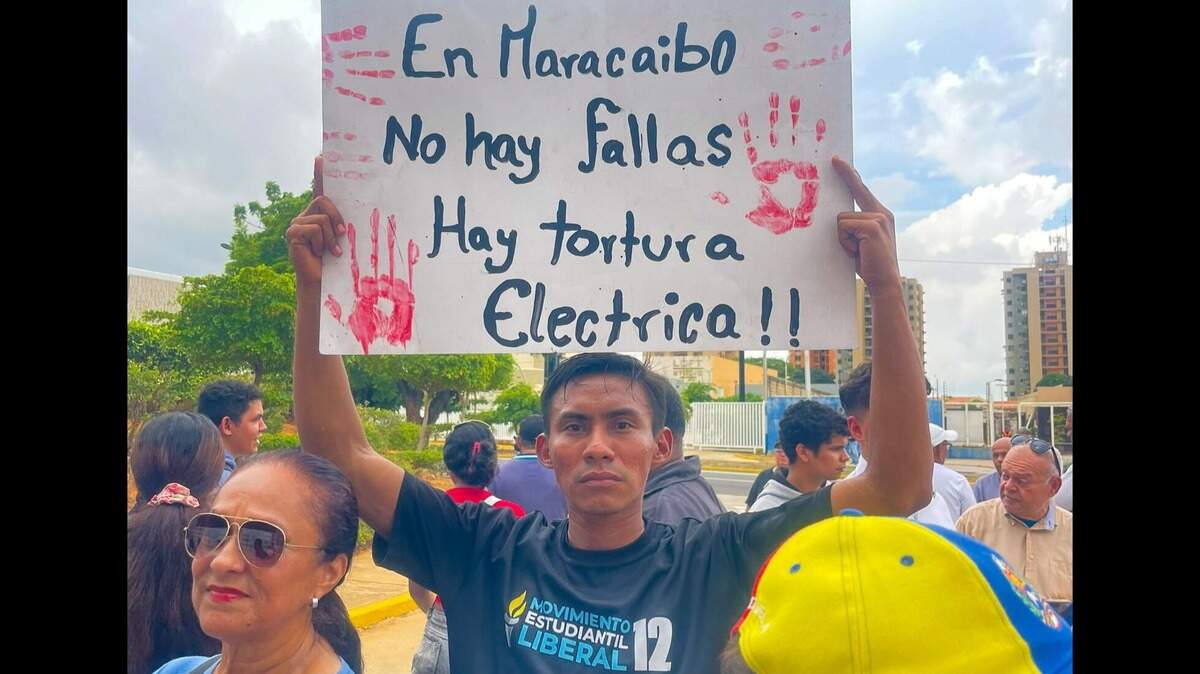
Many have taken to the streets in towns and neighborhoods to protest the worsening situation, with roadblocks, tire-burning and residents holding up signs criticizing the government for not providing adequate solutions.
“The protests are a cry of despair. We must go out to raise our voices. We know that it does not solve the issue but we have to make it visible,” Jesús Romero, a 24-year-old architecture student in Maracaibo, told the Miami Herald.
He said people can’t work, study, sleep or charge their phones. Zulia is an oil-rich region of Venezuela, but in some areas residents say they are left without power for up to 12 hours a day due to electricity rationing.
“Everyone talks about the oil that is mostly here in Zulia, but no one talks about the torture we are living with the energy crisis,” he said.
ANOVA Policy Research, a consultancy firm based in Caracas, reported that 62.8% of households experienced daily electricity cuts in 2026, compared with 37.1% in 2024. Only 6.9% reported continuous electricity.
“We’re in a critical situation,” said Jesús Vásquez, cofounder of Monitor Ciudad, a public-services monitoring initiative from the Ciudad Sin Límites organization. “The electrical system has clearly deteriorated and is operating at its limit.”
A recent study by Monitor Ciudad, which tracks public utilities, found that in Caracas, which has historically suffered fewer cuts than many other areas, the suspensions totaled an average of 1.5 hours per week. In the western state of Táchira, the cuts fluctuated between 34 and 58 hours per week.
Seven percent of those surveyed reported the loss of electronic equipment such as refrigerators and televisions due to voltage fluctuations.
Citizens have had to adapt, Vásquez explained, but the ability to do so often depends on what they can afford.
“The easiest thing is to buy a fan that runs on rechargeable batteries. There are also rechargeable light bulbs. They would be the basic, essential measures most people can take,” he said. “Then some people buy backup power generation devices, UPS systems, energy storage devices, which you plug in and they connect to the power supply.”
Read more Team from Miami’s Rusty Pelican opens a waterfront restaurant in Fort Lauderdale
The economic cost
Reynaldo Goitía has a business in the city of Lechería in northeastern Venezuela renting out musical instruments for concerts and artists. He also edits online videos. The power cuts have affected both and his income has fallen.
“Events, especially outside the main cities, have almost completely collapsed,” he said, adding that the massive twin earthquakes in June exacerbated the issue and brought the entertainment sector to a standstill. “Batteries don’t last long enough and meeting deadlines becomes a race against time.”
But he said responsibilities such as rent, school, university, utilities and food don’t stop: “Getting on with daily life under these conditions not only hits your finances extremely hard, it also causes a very serious level of stress and mental exhaustion.”
Why it’s happening
The government says supply will improve in the final quarter of 2026 and will add 1,300 megawatts to the country’s electricity grid to mitigate outages.
Interim President Delcy Rodríguez recently said on X that the government has a “clear plan” to address the challenges facing the electricity system and is already implementing it.
The government has long blamed U.S. sanctions for the blackouts. More recently it has pointed to the weather pattern known as El Niño. Electricity expert Nelson Hernández said the climate phenomenon does have some impact, but that there are other factors too.
“This situation has worsened because of the increase in oil production over the past nine months, which has resulted in electricity supplies to citizens being restricted to provide electricity to the oil industry,” he said.
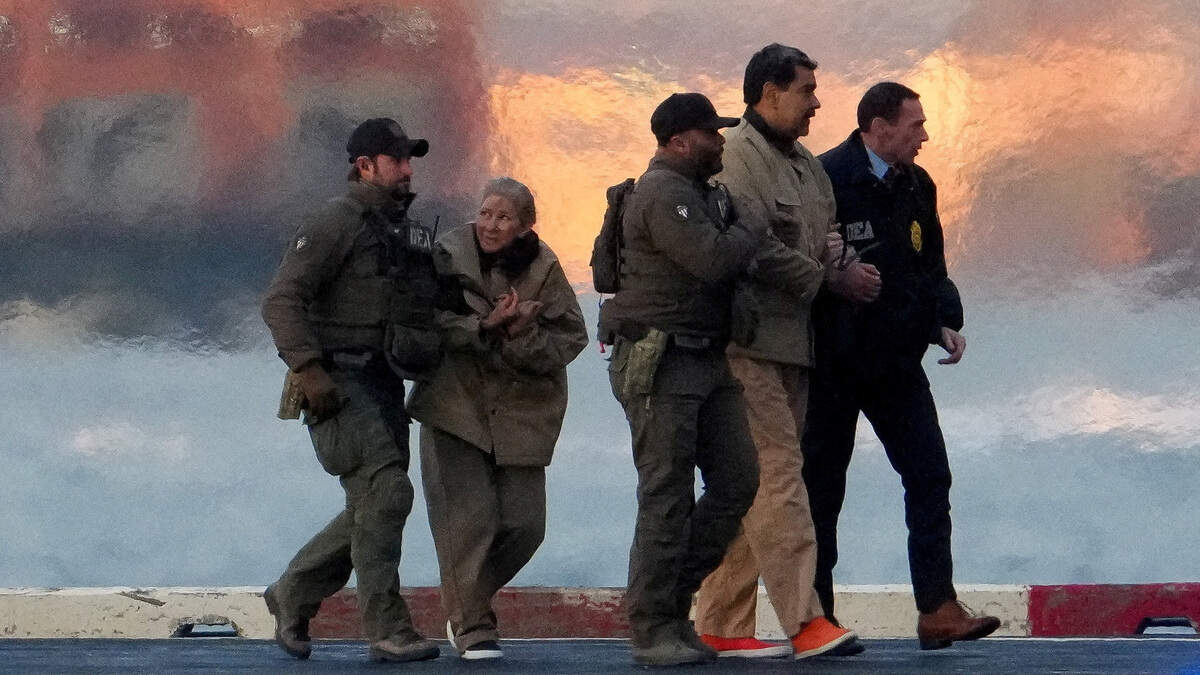
Since Nicolas Maduro’s capture by U.S. special forces in January, relations between Washington and Caracas have shifted, with the Trump administration easing restrictions and opening Venezuela’s oil industry to greater U.S. involvement. Oil production has risen sharply, with OPEC figures showing output reaching around 1.2 million barrels a day in August, up from around 900,000 barrels a day at the start of the year – an increase of 30 percent.
But Hernández also stressed the problems are by no means new.
“The crisis in the National Electricity System is not an isolated event, but the accumulated result of more than a decade of profound management failures, a lack of transparency, inadequate strategic planning and technological obsolescence,” he said.
In 2003, the government was already warned of a possible electricity crisis if investment and maintenance in the grid were not carried out, he said. In early 2010, drought lowered water levels at the Guri dam, prompting then-President Hugo Chávez to declare a national electricity emergency. In 2019, a massive blackout left most of Venezuela without power for days.
The psychological cost
Many citizens told the Herald that the power outages are taking a toll on their mental health.
“I feel powerless and angry, and lately I feel like crying constantly,” said Antonellya Rodriguez, from Barquisimeto in the northwestern part of the country. For the past few weeks, power cuts have been happening every day, lasting between six and eight hours. “With the heat and mosquitoes, it is practically impossible to sleep. That is what affects you emotionally the most and leaves you feeling depressed.”
A year ago, her aunt, who had lung cancer, spent her final weeks at home.
“Some friends lent us an oxygen machine. But we lived in fear of the electricity being cut off. When it did go off, we had to encourage my aunt to try to breathe without that oxygen, which she desperately needed,” she said.
The fluctuations and short blackouts eventually damaged the machine. Her friends covered the repair costs, knowing the family could not afford it.
Many Venezuelans like her want a change of government and an improvement to their daily lives. But for now, they are quite literally left in the dark about the future of their country.
Read more Miami billionaire Ken Griffin adds $25 million to a South Florida hospital gift










Post Comment