Miami got a reality check on public transit dreams — was it all wishful thinking? | Opinion
Miami-Dade’s ambitious plan to connect most regions of the county with public transit has hit a costly reality.
Read more After tragedies in South Florida, here’s how to prevent hot-car deaths of kids
It will cost a lot of money to build five additional corridors that are part of the 2016 SMART plan. (A sixth corridor, the Bus Rapid Transit along U.S. 1 in South Dade, is already open.) The county faces a $7.6 billion revenue gap over the next 20 years to build and operate the lines, Mayor Daniella Levine Cava outlined in a recent memorandum.
With the rising costs of construction, it’s more expensive to build and operate the projects now than it was when they were envisioned a decade ago. The SMART plan is crucial in heavily-congested South Florida. But we must still wonder how realistic it was to sell the idea to residents that the plan could add public transportation options in even the farthest parts of Miami-Dade?
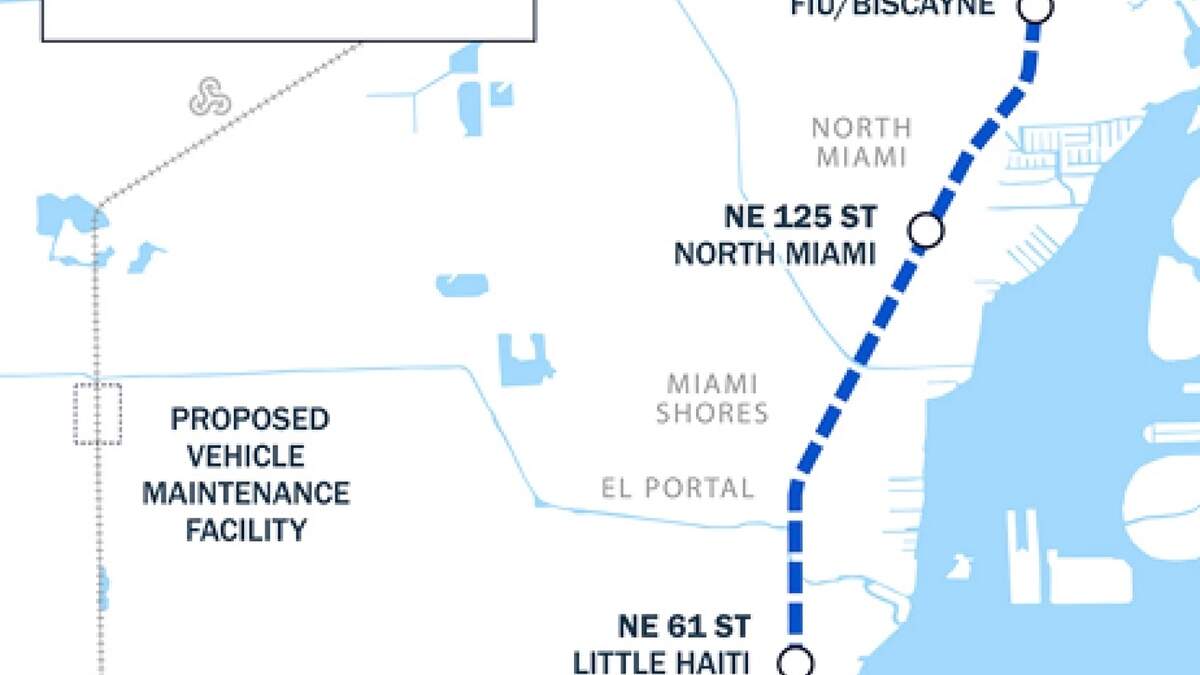
The plan includes a potential rail line to Miami Gardens, trains or express buses to Kendall and Florida International University, a commuter rail between Miami and Aventura that’s planned on existing Brightline tracks and a Metromover extension to South Beach that Miami Beach officials oppose.
Levine Cava was correct when she wrote in her memo that, “Maintaining the status quo and failing to advance high-capacity, fixed-route transit — as prioritized under the SMART Program — risks compounding a mobility crisis that consistently ranks Miami among the most congested regions in the United States.”
But if taxpayers want to have more public transportation, they may have to pay more.
As the Herald reported, the memo outlines three options to pay for SMART projects: borrowing money through voter-authorized bonds that would be paid back with an existing property tax dedicated to repaying Miami-Dade debt; asking voters to double the county’s current half-cent transportation sales tax approved in 2002; or temporarily increasing the county’s property-tax rate and earmarking the extra dollars for transit.
All of these would be hard sells. The Republican-led Florida DOGE has accused Miami-Dade and other local governments of overspending, and state lawmakers put a proposal on the November ballot to slash property taxes on owner-occupied homes, which could make the county’s public transportation plans more difficult to accomplish.
In the case of an additional sales tax, Miami-Dade officials would have to explain to voters how the current “half-penny” transportation tax has been used. The tax has generated billions of dollars that have paid for the three-mile extension of the Metrorail to Miami International Airport, but it has been besieged by failed promises and community anger. A promised 10-mile rail extension to the Broward County line has yet to materialize. The Metrorail’s “North Corridor” was originally supposed to open a decade ago, the Herald reported.
Read more Inside Victoria’s Beckham’s big night in Miami. Someone key was missing
Levine Cava’s latest memo isn’t the first time a mayor has raised doubts about whether Miami-Dade can fulfill its promise of public transportation expansion. In 2019, then-Mayor Carlos Giménez, now a congressman, wrote his own memo, saying that the 2002 half-percent sales tax had generated $3 billion but failed to deliver on its biggest promises. Giménez wrote that the plan was doomed by overly optimistic predictions on costs and federal aid and construction estimates that were too low.
What “people understand was ‘promised’ was never possible,” Giménez wrote.
Seven years and another mayor’s memo later, Miami-Dade needs to figure out, again, whether the promises officials made years and decades ago were only pie in the sky. They must tell voters the truth before they ask them for more money.
For the sake of local quality of life and commuters’ sanity, we hope Miami-Dade can finally figure out how to deliver on much-needed public transportation.
BEHIND THE STORY
MORE
What’s an editorial?
Editorials are opinion pieces that reflect the views of the Miami Herald Editorial Board, a group of opinion journalists that operates separately from the Miami Herald newsroom. Miami Herald Editorial Board members are: opinion editor Amy Driscoll and editorial writers Isadora Rangel and Mary Anna Mancuso. Read more by clicking the arrow in the upper right.
What’s the difference between an op-ed and a column?
Op-Eds, short for “opposite the editorial page,” are opinion pieces written by contributors who are not affiliated with our Editorial Board.
Columns are recurring opinion pieces that represent the views of staff columnists that regularly appear on the op-ed page.
How does the Miami Herald Editorial Board decide what to write about?
The Editorial Board, made up of experienced opinion journalists, primarily addresses local and state issues that affect South Florida residents. Each board member has an area of focus, such as education, COVID or local government policy. Board members meet daily and bring up an array of topics for discussion. Once a topic is fully discussed, board members will further report the issue, interviewing stakeholders and others involved and affected, so that the board can present the most informed opinion possible. We strive to provide our community with thought leadership that advocates for policies and priorities that strengthen our communities. Our editorials promote social justice, fairness in economic, educational and social opportunities and an end to systemic racism and inequality. The Editorial Board is separate from the reporters and editors of the Miami Herald newsroom.
How can I contribute to the Miami Herald Opinion section?
The Editorial Board accepts op-ed submissions of 650-700 words from community members who want to argue a specific viewpoint or idea that is relevant to our area. You can email an op-ed submission to [email protected]. We also accept 150-word letters to the editor from readers who want to offer their points of view on current issues. For more information on how to submit a letter, go here.
Read more ‘It looked like an apocalypse’: Miami rescuers describe their efforts in Venezuela











Post Comment