Nearly 80% of Venezuelans in poll reject oil deal with the United States
Eight in 10 Venezuelans oppose the sweeping oil agreement signed last month between the United States and Venezuela, while more than nine in 10 disapprove of President Donald Trump’s meeting with interim President Delcy Rodríguez in New York this week, according to a new poll that captures deep skepticism over Washington’s rapidly expanding relationship with Caracas.
Read more Deputies are investigating after finding two dead inside a Pembroke Pines home
The survey by Venezuelan polling firm Meganálisis found that 80% of respondents did not support the Aug. 28 oil agreement, compared with 13% who supported it and 8% who said they did not know.
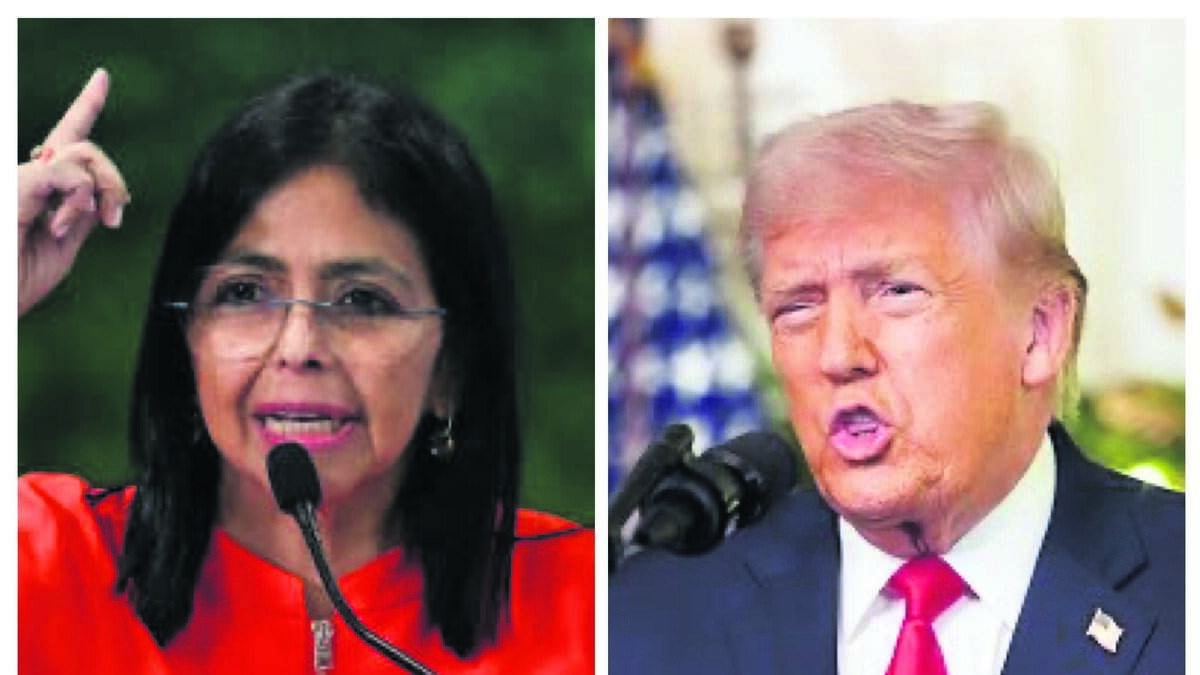
Disapproval was even greater when respondents were asked about Trump’s planned meeting with Rodríguez in New York, where she arrived Monday to attend the United Nations General Assembly.
In the survey, conducted before her trip, 91% said they did not approve of Trump meeting with Rodríguez, while just 4% approved and 5% said they did not know.
The findings provide a striking backdrop to Tuesday’s planned encounter between Trump and Rodríguez, the first face-to-face meeting between the two leaders since U.S. forces captured strongman Nicolás Maduro in Caracas in January and brought him to the United States to face federal drug-trafficking charges.
They also suggest that the dramatic rapprochement between Washington and Caracas — including the oil agreement and the Trump administration’s willingness to work directly with Rodríguez, Maduro’s former vice president — is encountering considerable resistance among Venezuelans.
Asked whether they would feel represented by Rodríguez if she participated in the U.N. General Assembly on Venezuela’s behalf, 94% said no. Only 3% said yes, while 4% did not know, according to the poll.
The flash poll was conducted online from Sept. 15-19 among 1,627 adults across Venezuela. Meganálisis reported a margin of error of 2.43 percentage points. The company said respondents were selected among internet users in Venezuela and that the survey used geographic quotas and safeguards intended to prevent duplicate responses.
The online methodology is important when interpreting the results because the sample was drawn from Venezuelan internet users rather than through face-to-face or telephone interviews of the broader adult population.
The survey questions themselves also warrant consideration. Although Meganálisis describes the questions about the oil deal and Trump-Rodríguez meeting as open questions with simple responses, the company accompanies the results with strongly worded analysis criticizing the agreement and Rodríguez’s legitimacy. Those comments represent the pollster’s interpretation of its findings, not responses independently volunteered by those surveyed.
Still, the results are broadly consistent with a longer Meganálisis survey conducted several weeks earlier that found widespread dissatisfaction with Venezuela’s political direction, skepticism toward Trump and a strong preference for holding a presidential election.
Skepticism about Trump and oil
That earlier survey, conducted in late August, found that 69% of respondents said they did not believe Trump wanted what was best for the Venezuelan people, while 21% said they believed he did, and 10% did not know or did not respond.
The results represented a dramatic reversal from the enthusiasm for Trump that Meganálisis recorded immediately after Maduro’s capture in January.
Meganálisis said its polling showed Trump’s approval in Venezuela at 92% in January, shortly after the U.S. operation, but only 21% by late August. Over the same period, his disapproval rating rose from 6% to 69%.
The firm attributed the reversal to frustration over the absence of a political transition and Trump’s growing relationship with Rodríguez, as well as perceptions that Washington’s policy toward Venezuela had become increasingly focused on oil. That explanation is Meganálisis’ interpretation of its own polling rather than an independently established reason for the change.
Another question produced an especially stark result. Respondents were asked whether, eight months after Maduro’s capture, they believed Trump had removed him “to free Venezuelans” or “to take the country’s oil.”
Read more Moldovan leaders say will seek parliament’s ok to declare energy, water emergency
Seventy percent chose oil, compared with 9% who selected freeing Venezuelans. Another 5% selected both motivations and 16% said they did not know.
The wording of that question offered respondents a limited and politically charged set of choices, however, making it difficult to determine how Venezuelans would have described Trump’s motivations without being presented with those alternatives.
Demand for a presidential election
Beyond attitudes toward Washington, the August survey points to widespread dissatisfaction with Venezuela’s unresolved political transition.
Asked which election was most urgently needed, 79% chose a presidential election. Only 7% selected an election for the National Assembly and 7% chose elections for governors and mayors; 7% did not know or did not respond.
Another 88% described it as “very urgent” for Chavismo to leave power, compared with 3% who considered it moderately urgent and 4% who said it was not urgent and that the movement should remain in power.
The poll also found overwhelming dissatisfaction with household economic conditions under Rodríguez. Asked whether their economic situation and quality of life had improved with Rodríguez in power, 93% said no, compared with 2% who said yes and 5% who did not know or did not respond.
That question, however, described Rodríguez as being kept in power by Trump, wording that embeds a contested political premise and could influence how respondents interpreted it.
The survey found similarly strong skepticism toward the political dialogue underway in Venezuela; 82% said they did not believe a dialogue led by Jorge Rodríguez and Dinorah Figuera was working toward the immediate well-being of most Venezuelans, while 9% said it was.
And 85% agreed when asked whether politicians and business leaders were using the transition and dialogue “to waste time and steal from Venezuela,” compared with 10% who disagreed.
Machado dominates presidential preference
The August poll also asked respondents whom they would support if a presidential election were held immediately.
Opposition leader María Corina Machado was the choice of 61% of respondents, according to Meganálisis. Rodríguez received 3%, while Edmundo González, the opposition candidate believed to have actually won the presidential elections in 2024 received 1%. No other named political figure reached 1%.
A sizable 16% said they would vote for none of the listed candidates and 10% said they did not know.
In a separate hypothetical matchup limited to Rodríguez and Machado, 75% chose Machado and 4% Rodríguez, with the remainder selecting neither candidate or saying they did not know.
Those numbers should not be treated as a forecast of an eventual election. The survey measured preferences during a particular period in late August, and Venezuela does not currently have a presidential election scheduled under the circumstances posed in the poll.
The August survey interviewed 1,129 adults nationwide using computer-assisted telephone interviews conducted by human operators. The firm said it used random sampling and geographically distributed the sample across Venezuela’s 23 states and the Capital District.
Read more Winners announced for 35th Athena Leadership Awards in West Palm









Post Comment